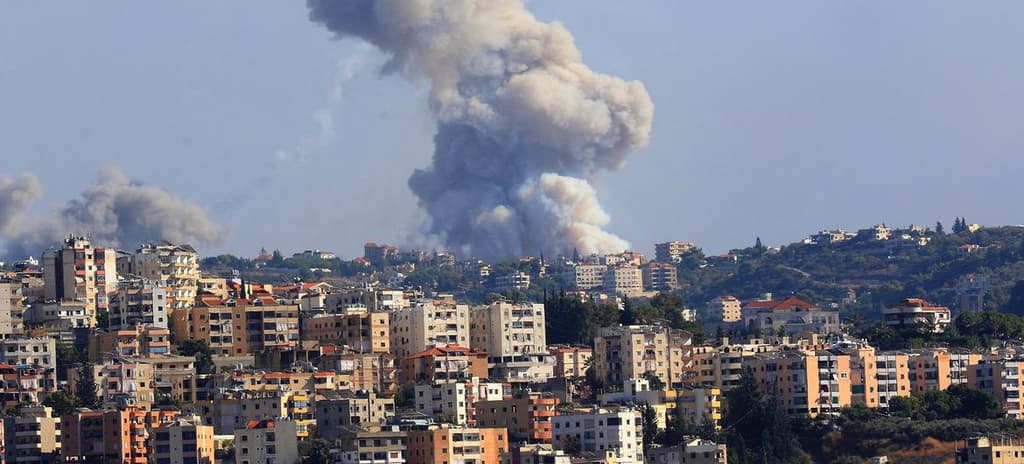
Yemen's Iran-backed Houthis escalated regional conflict on March 28 by launching ballistic missiles at Israel—their first direct attack since the US-Israeli war against Iran began last month—with the Israel Defense Forces intercepting the projectiles aimed at sensitive military sites. This follows Israel's prior airstrikes on Houthi sites in Yemen earlier in March, including Sanaa and port facilities, in response to drone and missile threats. Houthi vows of further assaults and threats to blockade the Bab al-Mandab Strait risk Red Sea shipping disruptions, prompting reports of IDF authorization for retaliatory strikes amid target identification. Traders weigh rapid escalation signals against diplomatic de-escalation efforts, with potential US involvement looming.
Experimental AI-generated summary referencing Polymarket data · UpdatedIsrael military action against Yemen by...?
Israel military action against Yemen by...?
$952,376 Vol.
March 31
31%
April 30
79%
June 30
87%
May 31
85%
$952,376 Vol.
March 31
31%
April 30
79%
June 30
87%
May 31
85%
For the purposes of this market, a qualifying "strike" is defined as the use of aerial bombs, drones or missiles (including cruise or ballistic missiles) launched by Israeli military forces that impact Yemen ground territory or any official Yemen embassy or consulate (e.g., if a weapons depot on Yemen soil is hit by an Israeli missile, this market will resolve to "Yes").
Missiles or drones that are intercepted and surface-to-air missile strikes will not be sufficient for a "Yes" resolution, regardless of whether they land on Yemen territory or cause damage.
Actions such as artillery fire, small arms fire, FPV or ATGM strikes directly, ground incursions, naval shelling, cyberattacks, or other operations conducted by Israeli ground operatives will not qualify.
The resolution source will be a consensus of credible reporting.
Market Opened: Jan 6, 2026, 11:51 AM ET
Resolver
0x65070BE91...For the purposes of this market, a qualifying "strike" is defined as the use of aerial bombs, drones or missiles (including cruise or ballistic missiles) launched by Israeli military forces that impact Yemen ground territory or any official Yemen embassy or consulate (e.g., if a weapons depot on Yemen soil is hit by an Israeli missile, this market will resolve to "Yes").
Missiles or drones that are intercepted and surface-to-air missile strikes will not be sufficient for a "Yes" resolution, regardless of whether they land on Yemen territory or cause damage.
Actions such as artillery fire, small arms fire, FPV or ATGM strikes directly, ground incursions, naval shelling, cyberattacks, or other operations conducted by Israeli ground operatives will not qualify.
The resolution source will be a consensus of credible reporting.
Resolver
0x65070BE91...Yemen's Iran-backed Houthis escalated regional conflict on March 28 by launching ballistic missiles at Israel—their first direct attack since the US-Israeli war against Iran began last month—with the Israel Defense Forces intercepting the projectiles aimed at sensitive military sites. This follows Israel's prior airstrikes on Houthi sites in Yemen earlier in March, including Sanaa and port facilities, in response to drone and missile threats. Houthi vows of further assaults and threats to blockade the Bab al-Mandab Strait risk Red Sea shipping disruptions, prompting reports of IDF authorization for retaliatory strikes amid target identification. Traders weigh rapid escalation signals against diplomatic de-escalation efforts, with potential US involvement looming.
Experimental AI-generated summary referencing Polymarket data · Updated


Beware of external links.
Beware of external links.
Frequently Asked Questions