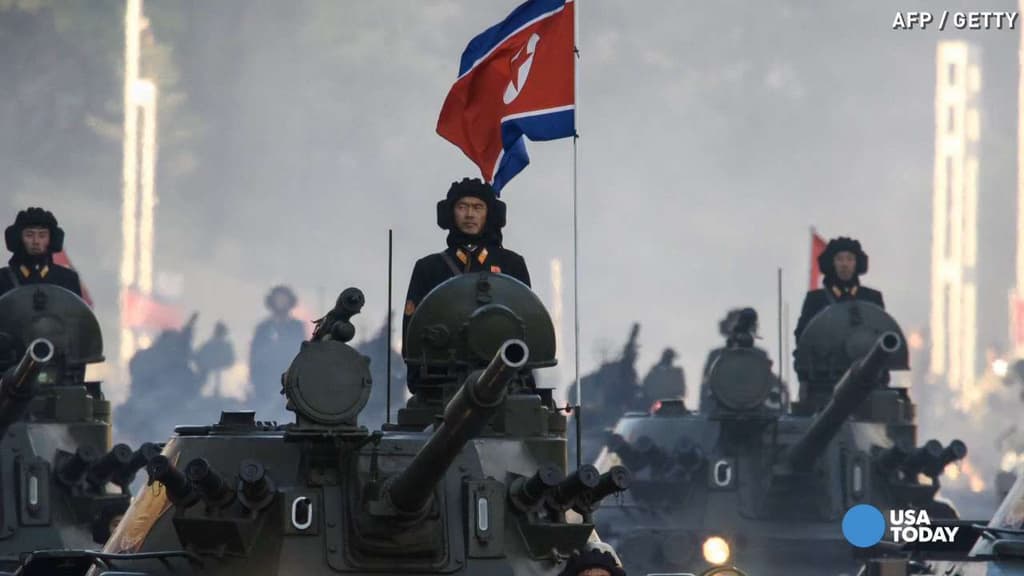
North Korea's persistent missile tests and provocative rhetoric toward South Korea, including a recent barrage of short-range ballistic missiles on October 30, 2024, have not signaled preparations for a full-scale invasion, reinforcing trader consensus at 92.5% for "No" before 2027. Pyongyang's focus remains on bolstering its nuclear arsenal and deepening military ties with Russia—evidenced by troop deployments to aid Moscow in Ukraine—amid crippling sanctions and domestic economic strains that limit offensive capabilities. Robust deterrence from U.S.-South Korea joint exercises, advanced South Korean defenses, and the 1953 armistice holding firm across the DMZ underpin the high odds, though sudden escalation from leadership instability or alliance fractures could shift probabilities.
Experimental AI-generated summary referencing Polymarket data · UpdatedWill North Korea invade South Korea before 2027?
Will North Korea invade South Korea before 2027?
$13,693 Vol.
$13,693 Vol.
$13,693 Vol.
$13,693 Vol.
The resolution source for this market will be will be official confirmation by South Korea, North Korea, the United Nations, or any permanent member of the UN Security Council, however a consensus of credible reporting will also be used.
Market Opened: Nov 5, 2025, 1:16 PM ET
Resolver
0x65070BE91...The resolution source for this market will be will be official confirmation by South Korea, North Korea, the United Nations, or any permanent member of the UN Security Council, however a consensus of credible reporting will also be used.
Resolver
0x65070BE91...North Korea's persistent missile tests and provocative rhetoric toward South Korea, including a recent barrage of short-range ballistic missiles on October 30, 2024, have not signaled preparations for a full-scale invasion, reinforcing trader consensus at 92.5% for "No" before 2027. Pyongyang's focus remains on bolstering its nuclear arsenal and deepening military ties with Russia—evidenced by troop deployments to aid Moscow in Ukraine—amid crippling sanctions and domestic economic strains that limit offensive capabilities. Robust deterrence from U.S.-South Korea joint exercises, advanced South Korean defenses, and the 1953 armistice holding firm across the DMZ underpin the high odds, though sudden escalation from leadership instability or alliance fractures could shift probabilities.
Experimental AI-generated summary referencing Polymarket data · Updated
Beware of external links.
Beware of external links.
Frequently Asked Questions