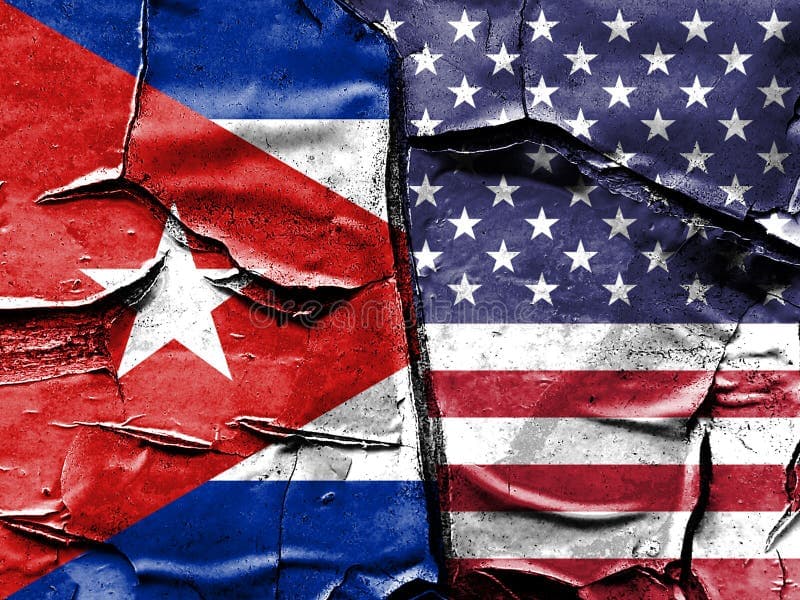
President Donald Trump's explicit threat yesterday—"Cuba's next"—at a Saudi investment conference has intensified US-Cuba tensions, following recent US airstrikes in Iran and operations in Venezuela. Cuban Deputy Foreign Minister confirmed military preparations for potential aggression amid an oil blockade, while signaling openness to negotiations after early March talks with Washington. A top US general denied invasion planning on March 19, emphasizing no active rehearsals. Absent concrete mobilizations or scheduled summits, traders assess the risk of airstrikes or limited strikes through escalating rhetoric versus diplomatic off-ramps, with historical US-Cuba friction providing baseline context.
Experimental AI-generated summary referencing Polymarket data · UpdatedUS strike on Cuba by...?
US strike on Cuba by...?
$2,777,386 Vol.
Dec 31, 2026
March 31
1%
December 31
37%
$2,777,386 Vol.
March 31
$1,472,376 Vol.
1%
December 31
$770,532 Vol.
37%
This market will resolve to "Yes" if a US-initiated drone, missile, or air strike on the soil of Cuba is announced or credibly reported to have occurred by the listed date ET. Otherwise, this market will resolve to "No".
For the purposes of this market, a qualifying "strike" is defined as the use of aerial bombs, drones, or missiles (including FPV and ATGM strikes as well as cruise or ballistic missiles) launched by any United States operatives, including military forces, intelligence agencies, or other U.S. government operatives, that physically impact ground territory within the listed country.
A strike on any area within the terrestrial territory (including rivers, lakes, ports, but excluding territorial sea) of the listed country counts.
Missiles or drones that are intercepted and surface-to-air missile strikes will not be sufficient for a "Yes" resolution, regardless of whether they land territory or cause damage.
Actions such as artillery fire, small arms fire, ground incursions, naval shelling, or cyberattacks will not qualify.
Any strike occurring during this market’s timeframe that is claimed by either Donald Trump or the U.S. government will qualify.
The primary resolution source will be a consensus of credible reporting.
This market will remain open until the end of the second day after the resolution time. If the date/time of a qualifying strike cannot be confirmed by a consensus of credible reporting by that time, it will resolve to "No" regardless of whether a strike was later confirmed to have taken place.President Donald Trump's explicit threat yesterday—"Cuba's next"—at a Saudi investment conference has intensified US-Cuba tensions, following recent US airstrikes in Iran and operations in Venezuela. Cuban Deputy Foreign Minister confirmed military preparations for potential aggression amid an oil blockade, while signaling openness to negotiations after early March talks with Washington. A top US general denied invasion planning on March 19, emphasizing no active rehearsals. Absent concrete mobilizations or scheduled summits, traders assess the risk of airstrikes or limited strikes through escalating rhetoric versus diplomatic off-ramps, with historical US-Cuba friction providing baseline context.
This market will resolve to "Yes" if a US-initiated drone, missile, or air strike on the soil of Cuba is announced or credibly reported to have occurred by the listed date ET. Otherwise, this market will resolve to "No".
For the purposes of this market, a qualifying "strike" is defined as the use of aerial bombs, drones, or missiles (including FPV and ATGM strikes as well as cruise or ballistic missiles) launched by any United States operatives, including military forces, intelligence agencies, or other U.S. government operatives, that physically impact ground territory within the listed country.
A strike on any area within the terrestrial territory (including rivers, lakes, ports, but excluding territorial sea) of the listed country counts.
Missiles or drones that are intercepted and surface-to-air missile strikes will not be sufficient for a "Yes" resolution, regardless of whether they land territory or cause damage.
Actions such as artillery fire, small arms fire, ground incursions, naval shelling, or cyberattacks will not qualify.
Any strike occurring during this market’s timeframe that is claimed by either Donald Trump or the U.S. government will qualify.
The primary resolution source will be a consensus of credible reporting.
This market will remain open until the end of the second day after the resolution time. If the date/time of a qualifying strike cannot be confirmed by a consensus of credible reporting by that time, it will resolve to "No" regardless of whether a strike was later confirmed to have taken place.
For the purposes of this market, a qualifying "strike" is defined as the use of aerial bombs, drones, or missiles (including FPV and ATGM strikes as well as cruise or ballistic missiles) launched by any United States operatives, including military forces, intelligence agencies, or other U.S. government operatives, that physically impact ground territory within the listed country.
A strike on any area within the terrestrial territory (including rivers, lakes, ports, but excluding territorial sea) of the listed country counts.
Missiles or drones that are intercepted and surface-to-air missile strikes will not be sufficient for a "Yes" resolution, regardless of whether they land territory or cause damage.
Actions such as artillery fire, small arms fire, ground incursions, naval shelling, or cyberattacks will not qualify.
Any strike occurring during this market’s timeframe that is claimed by either Donald Trump or the U.S. government will qualify.
The primary resolution source will be a consensus of credible reporting.
This market will remain open until the end of the second day after the resolution time. If the date/time of a qualifying strike cannot be confirmed by a consensus of credible reporting by that time, it will resolve to "No" regardless of whether a strike was later confirmed to have taken place.
Market Opened: Jan 4, 2026, 3:08 PM ET
Volume
$2,777,386End Date
Dec 31, 2026Market Opened
Jan 4, 2026, 3:08 PM ETResolver
0x65070BE91...This market will resolve to "Yes" if a US-initiated drone, missile, or air strike on the soil of Cuba is announced or credibly reported to have occurred by the listed date ET. Otherwise, this market will resolve to "No".
For the purposes of this market, a qualifying "strike" is defined as the use of aerial bombs, drones, or missiles (including FPV and ATGM strikes as well as cruise or ballistic missiles) launched by any United States operatives, including military forces, intelligence agencies, or other U.S. government operatives, that physically impact ground territory within the listed country.
A strike on any area within the terrestrial territory (including rivers, lakes, ports, but excluding territorial sea) of the listed country counts.
Missiles or drones that are intercepted and surface-to-air missile strikes will not be sufficient for a "Yes" resolution, regardless of whether they land territory or cause damage.
Actions such as artillery fire, small arms fire, ground incursions, naval shelling, or cyberattacks will not qualify.
Any strike occurring during this market’s timeframe that is claimed by either Donald Trump or the U.S. government will qualify.
The primary resolution source will be a consensus of credible reporting.
This market will remain open until the end of the second day after the resolution time. If the date/time of a qualifying strike cannot be confirmed by a consensus of credible reporting by that time, it will resolve to "No" regardless of whether a strike was later confirmed to have taken place.President Donald Trump's explicit threat yesterday—"Cuba's next"—at a Saudi investment conference has intensified US-Cuba tensions, following recent US airstrikes in Iran and operations in Venezuela. Cuban Deputy Foreign Minister confirmed military preparations for potential aggression amid an oil blockade, while signaling openness to negotiations after early March talks with Washington. A top US general denied invasion planning on March 19, emphasizing no active rehearsals. Absent concrete mobilizations or scheduled summits, traders assess the risk of airstrikes or limited strikes through escalating rhetoric versus diplomatic off-ramps, with historical US-Cuba friction providing baseline context.
This market will resolve to "Yes" if a US-initiated drone, missile, or air strike on the soil of Cuba is announced or credibly reported to have occurred by the listed date ET. Otherwise, this market will resolve to "No".
For the purposes of this market, a qualifying "strike" is defined as the use of aerial bombs, drones, or missiles (including FPV and ATGM strikes as well as cruise or ballistic missiles) launched by any United States operatives, including military forces, intelligence agencies, or other U.S. government operatives, that physically impact ground territory within the listed country.
A strike on any area within the terrestrial territory (including rivers, lakes, ports, but excluding territorial sea) of the listed country counts.
Missiles or drones that are intercepted and surface-to-air missile strikes will not be sufficient for a "Yes" resolution, regardless of whether they land territory or cause damage.
Actions such as artillery fire, small arms fire, ground incursions, naval shelling, or cyberattacks will not qualify.
Any strike occurring during this market’s timeframe that is claimed by either Donald Trump or the U.S. government will qualify.
The primary resolution source will be a consensus of credible reporting.
This market will remain open until the end of the second day after the resolution time. If the date/time of a qualifying strike cannot be confirmed by a consensus of credible reporting by that time, it will resolve to "No" regardless of whether a strike was later confirmed to have taken place.
For the purposes of this market, a qualifying "strike" is defined as the use of aerial bombs, drones, or missiles (including FPV and ATGM strikes as well as cruise or ballistic missiles) launched by any United States operatives, including military forces, intelligence agencies, or other U.S. government operatives, that physically impact ground territory within the listed country.
A strike on any area within the terrestrial territory (including rivers, lakes, ports, but excluding territorial sea) of the listed country counts.
Missiles or drones that are intercepted and surface-to-air missile strikes will not be sufficient for a "Yes" resolution, regardless of whether they land territory or cause damage.
Actions such as artillery fire, small arms fire, ground incursions, naval shelling, or cyberattacks will not qualify.
Any strike occurring during this market’s timeframe that is claimed by either Donald Trump or the U.S. government will qualify.
The primary resolution source will be a consensus of credible reporting.
This market will remain open until the end of the second day after the resolution time. If the date/time of a qualifying strike cannot be confirmed by a consensus of credible reporting by that time, it will resolve to "No" regardless of whether a strike was later confirmed to have taken place.
Volume
$2,777,386End Date
Dec 31, 2026Market Opened
Jan 4, 2026, 3:08 PM ETResolver
0x65070BE91...President Donald Trump's explicit threat yesterday—"Cuba's next"—at a Saudi investment conference has intensified US-Cuba tensions, following recent US airstrikes in Iran and operations in Venezuela. Cuban Deputy Foreign Minister confirmed military preparations for potential aggression amid an oil blockade, while signaling openness to negotiations after early March talks with Washington. A top US general denied invasion planning on March 19, emphasizing no active rehearsals. Absent concrete mobilizations or scheduled summits, traders assess the risk of airstrikes or limited strikes through escalating rhetoric versus diplomatic off-ramps, with historical US-Cuba friction providing baseline context.
Experimental AI-generated summary referencing Polymarket data · Updated
Beware of external links.
Beware of external links.
Frequently Asked Questions