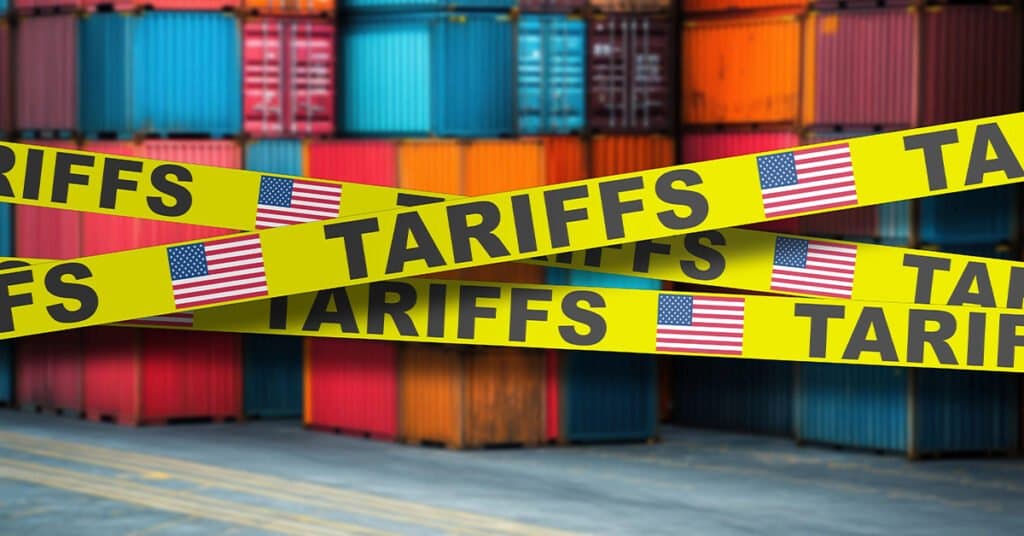
President-elect Donald Trump's repeated vows for a 10% universal tariff on all US imports, framed as an early America First trade policy, anchor the 95% yes odds on this market. Transition team officials, including trade advisors like Robert Lighthizer, have signaled executive action via the International Emergency Economic Powers Act or Section 301 soon after the January 20 inauguration, targeting trade imbalances with China, Mexico, and others. Recent Truth Social posts and Fox News interviews reaffirmed no delays, amid minimal pushback from congressional Republicans. Traders view March 31—end of Q1—as a feasible rollout date, per wisdom-of-crowds pricing, though legal challenges remain a slim uncertainty.
Experimental AI-generated summary referencing Polymarket data · Updated$56,243 Vol.
$56,243 Vol.
Mar 31, 2026
$56,243 Vol.
$56,243 Vol.
Mar 31, 2026
This market will resolve to “Yes” if a general or blanket US tariff of 10% or more on imports into the United States is in effect on March 31, 2026 at 12:00 PM ET. Otherwise, this market will resolve to “No”.
A general or blanket tariff is a tariff policy that applies a baseline tariff rate of 10% or greater to imports broadly, rather than being limited to a narrow set of products or countries. A tariff that includes item-specific, country-specific, or other limited exceptions will still qualify, as long as a baseline policy of a 10% or greater tariff on imports into the United States is in effect at the specified time.
“In effect" means the tariff must be operational in its application to US imports at the specified time. General or blanket tariffs which go into effect, but are then blocked, injuncted, repealed, or otherwise invalidated such that a blanket tariff rate of 10% or more is not being imposed on imports into the United States at this market’s resolution time will not count.
This market's primary resolution source will be official information from the United States federal government; however, a consensus of credible information may also be used.
This market will resolve to “Yes” if a general or blanket US tariff of 10% or more on imports into the United States is in effect on March 31, 2026 at 12:00 PM ET. Otherwise, this market will resolve to “No”.
A general or blanket tariff is a tariff policy that applies a baseline tariff rate of 10% or greater to imports broadly, rather than being limited to a narrow set of products or countries. A tariff that includes item-specific, country-specific, or other limited exceptions will still qualify, as long as a baseline policy of a 10% or greater tariff on imports into the United States is in effect at the specified time.
“In effect" means the tariff must be operational in its application to US imports at the specified time. General or blanket tariffs which go into effect, but are then blocked, injuncted, repealed, or otherwise invalidated such that a blanket tariff rate of 10% or more is not being imposed on imports into the United States at this market’s resolution time will not count.
This market's primary resolution source will be official information from the United States federal government; however, a consensus of credible information may also be used.This market will resolve to “Yes” if a general or blanket US tariff of 10% or more on imports into the United States is in effect on March 31, 2026 at 12:00 PM ET. Otherwise, this market will resolve to “No”.
A general or blanket tariff is a tariff policy that applies a baseline tariff rate of 10% or greater to imports broadly, rather than being limited to a narrow set of products or countries. A tariff that includes item-specific, country-specific, or other limited exceptions will still qualify, as long as a baseline policy of a 10% or greater tariff on imports into the United States is in effect at the specified time.
“In effect" means the tariff must be operational in its application to US imports at the specified time. General or blanket tariffs which go into effect, but are then blocked, injuncted, repealed, or otherwise invalidated such that a blanket tariff rate of 10% or more is not being imposed on imports into the United States at this market’s resolution time will not count.
This market's primary resolution source will be official information from the United States federal government; however, a consensus of credible information may also be used.
A general or blanket tariff is a tariff policy that applies a baseline tariff rate of 10% or greater to imports broadly, rather than being limited to a narrow set of products or countries. A tariff that includes item-specific, country-specific, or other limited exceptions will still qualify, as long as a baseline policy of a 10% or greater tariff on imports into the United States is in effect at the specified time.
“In effect" means the tariff must be operational in its application to US imports at the specified time. General or blanket tariffs which go into effect, but are then blocked, injuncted, repealed, or otherwise invalidated such that a blanket tariff rate of 10% or more is not being imposed on imports into the United States at this market’s resolution time will not count.
This market's primary resolution source will be official information from the United States federal government; however, a consensus of credible information may also be used.
Market Opened: Feb 20, 2026, 8:06 PM ET
Volume
$56,243End Date
Mar 31, 2026Market Opened
Feb 20, 2026, 8:06 PM ETResolver
0x65070BE91...This market will resolve to “Yes” if a general or blanket US tariff of 10% or more on imports into the United States is in effect on March 31, 2026 at 12:00 PM ET. Otherwise, this market will resolve to “No”.
A general or blanket tariff is a tariff policy that applies a baseline tariff rate of 10% or greater to imports broadly, rather than being limited to a narrow set of products or countries. A tariff that includes item-specific, country-specific, or other limited exceptions will still qualify, as long as a baseline policy of a 10% or greater tariff on imports into the United States is in effect at the specified time.
“In effect" means the tariff must be operational in its application to US imports at the specified time. General or blanket tariffs which go into effect, but are then blocked, injuncted, repealed, or otherwise invalidated such that a blanket tariff rate of 10% or more is not being imposed on imports into the United States at this market’s resolution time will not count.
This market's primary resolution source will be official information from the United States federal government; however, a consensus of credible information may also be used.
This market will resolve to “Yes” if a general or blanket US tariff of 10% or more on imports into the United States is in effect on March 31, 2026 at 12:00 PM ET. Otherwise, this market will resolve to “No”.
A general or blanket tariff is a tariff policy that applies a baseline tariff rate of 10% or greater to imports broadly, rather than being limited to a narrow set of products or countries. A tariff that includes item-specific, country-specific, or other limited exceptions will still qualify, as long as a baseline policy of a 10% or greater tariff on imports into the United States is in effect at the specified time.
“In effect" means the tariff must be operational in its application to US imports at the specified time. General or blanket tariffs which go into effect, but are then blocked, injuncted, repealed, or otherwise invalidated such that a blanket tariff rate of 10% or more is not being imposed on imports into the United States at this market’s resolution time will not count.
This market's primary resolution source will be official information from the United States federal government; however, a consensus of credible information may also be used.This market will resolve to “Yes” if a general or blanket US tariff of 10% or more on imports into the United States is in effect on March 31, 2026 at 12:00 PM ET. Otherwise, this market will resolve to “No”.
A general or blanket tariff is a tariff policy that applies a baseline tariff rate of 10% or greater to imports broadly, rather than being limited to a narrow set of products or countries. A tariff that includes item-specific, country-specific, or other limited exceptions will still qualify, as long as a baseline policy of a 10% or greater tariff on imports into the United States is in effect at the specified time.
“In effect" means the tariff must be operational in its application to US imports at the specified time. General or blanket tariffs which go into effect, but are then blocked, injuncted, repealed, or otherwise invalidated such that a blanket tariff rate of 10% or more is not being imposed on imports into the United States at this market’s resolution time will not count.
This market's primary resolution source will be official information from the United States federal government; however, a consensus of credible information may also be used.
A general or blanket tariff is a tariff policy that applies a baseline tariff rate of 10% or greater to imports broadly, rather than being limited to a narrow set of products or countries. A tariff that includes item-specific, country-specific, or other limited exceptions will still qualify, as long as a baseline policy of a 10% or greater tariff on imports into the United States is in effect at the specified time.
“In effect" means the tariff must be operational in its application to US imports at the specified time. General or blanket tariffs which go into effect, but are then blocked, injuncted, repealed, or otherwise invalidated such that a blanket tariff rate of 10% or more is not being imposed on imports into the United States at this market’s resolution time will not count.
This market's primary resolution source will be official information from the United States federal government; however, a consensus of credible information may also be used.
Volume
$56,243End Date
Mar 31, 2026Market Opened
Feb 20, 2026, 8:06 PM ETResolver
0x65070BE91...President-elect Donald Trump's repeated vows for a 10% universal tariff on all US imports, framed as an early America First trade policy, anchor the 95% yes odds on this market. Transition team officials, including trade advisors like Robert Lighthizer, have signaled executive action via the International Emergency Economic Powers Act or Section 301 soon after the January 20 inauguration, targeting trade imbalances with China, Mexico, and others. Recent Truth Social posts and Fox News interviews reaffirmed no delays, amid minimal pushback from congressional Republicans. Traders view March 31—end of Q1—as a feasible rollout date, per wisdom-of-crowds pricing, though legal challenges remain a slim uncertainty.
Experimental AI-generated summary referencing Polymarket data · Updated


Beware of external links.
Beware of external links.
Frequently Asked Questions