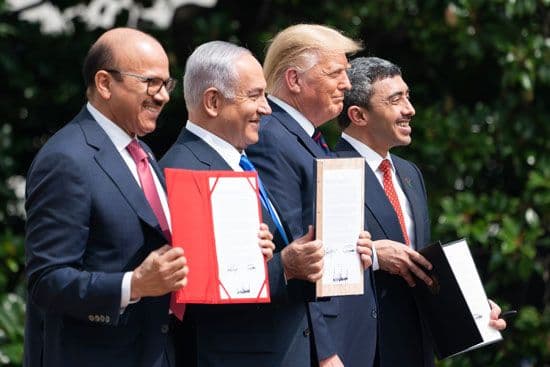
The Abraham Accords, normalizing Israel-Arab ties since 2020, saw Kazakhstan formalize entry in early 2026 as the first non-Arab addition, amid U.S. efforts to broaden the framework beyond traditional Middle East partners. Recent drivers include Secretary Rubio's April 14 hosting of Israeli-Lebanese ambassadors for direct peace talks—the first in decades—following Iran ceasefire signals and Strait of Hormuz reopening, reducing regional escalation risks. Somaliland pledged alignment after Israel's December 2025 recognition, while Saudi Arabia weighs strategic gains against Iran versus domestic opposition and Palestinian demands. Traders eye Gulf states like Kuwait amid Iran's isolation, with U.S.-brokered summits and bilateral negotiations key before 2027 resolution on full diplomatic declarations.
Resumen experimental generado por IA con datos de Polymarket. Esto no es asesoramiento de trading y no influye en cómo se resuelve este mercado. · Actualizado¿Qué país se unirá a los Acuerdos de Abraham antes de 2027?
¿Qué país se unirá a los Acuerdos de Abraham antes de 2027?
$526,543 Vol.
Somalilandia
44%
Siria
22%
Kuwait
20%
Líbano
20%
Arabia Saudita
18%
Azerbaiyán
18%
Omán
15%
$526,543 Vol.
Somalilandia
44%
Siria
22%
Kuwait
20%
Líbano
20%
Arabia Saudita
18%
Azerbaiyán
18%
Omán
15%
A formal signing refers to an official agreement between Israel and another country that is publicly acknowledged by both governments and clearly attributed to the Abraham Accords or their continuation.
The resolution source will be official government statements, however a consensus for credible reporting may also be used.
Mercado abierto: Nov 5, 2025, 1:53 PM ET
Resolver
0x65070BE91...A formal signing refers to an official agreement between Israel and another country that is publicly acknowledged by both governments and clearly attributed to the Abraham Accords or their continuation.
The resolution source will be official government statements, however a consensus for credible reporting may also be used.
Resolver
0x65070BE91...The Abraham Accords, normalizing Israel-Arab ties since 2020, saw Kazakhstan formalize entry in early 2026 as the first non-Arab addition, amid U.S. efforts to broaden the framework beyond traditional Middle East partners. Recent drivers include Secretary Rubio's April 14 hosting of Israeli-Lebanese ambassadors for direct peace talks—the first in decades—following Iran ceasefire signals and Strait of Hormuz reopening, reducing regional escalation risks. Somaliland pledged alignment after Israel's December 2025 recognition, while Saudi Arabia weighs strategic gains against Iran versus domestic opposition and Palestinian demands. Traders eye Gulf states like Kuwait amid Iran's isolation, with U.S.-brokered summits and bilateral negotiations key before 2027 resolution on full diplomatic declarations.
Resumen experimental generado por IA con datos de Polymarket. Esto no es asesoramiento de trading y no influye en cómo se resuelve este mercado. · Actualizado
Cuidado con los enlaces externos.
Cuidado con los enlaces externos.
Preguntas frecuentes