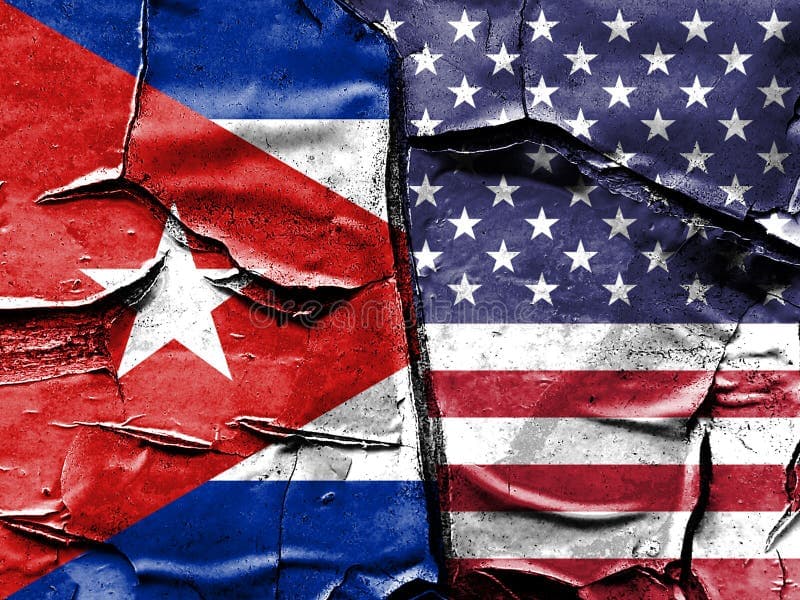
US foreign policy priorities centered on China, Russia, and Middle East conflicts, rather than Latin America, form the core driver behind traders' 77.5% implied probability against a US invasion of Cuba in 2026. No official statements, military deployments, or congressional actions signal such escalation, with recent State Department briefings reaffirming sanctions and migration controls over military intervention. Cuban economic woes and protests persist, but US responses remain diplomatic, including eased remittances under Biden and potential tightening post-Trump's 2024 victory—yet far short of invasion rhetoric. Historical restraint since the Cold War, coupled with international backlash risks, reinforces trader consensus on this low-probability event amid upcoming 2025 budget and defense reviews.
Experimental AI-generated summary referencing Polymarket data · Updated$1,173,241 Vol.
$1,173,241 Vol.
$1,173,241 Vol.
$1,173,241 Vol.
For the purposes of this market, land de facto controlled by Cuba or the United States as market creation, will be considered the sovereign territory of that country.
The resolution source for this market will be a consensus of credible sources.
Market Opened: Jan 4, 2026, 3:24 PM ET
Resolver
0x65070BE91...For the purposes of this market, land de facto controlled by Cuba or the United States as market creation, will be considered the sovereign territory of that country.
The resolution source for this market will be a consensus of credible sources.
Resolver
0x65070BE91...US foreign policy priorities centered on China, Russia, and Middle East conflicts, rather than Latin America, form the core driver behind traders' 77.5% implied probability against a US invasion of Cuba in 2026. No official statements, military deployments, or congressional actions signal such escalation, with recent State Department briefings reaffirming sanctions and migration controls over military intervention. Cuban economic woes and protests persist, but US responses remain diplomatic, including eased remittances under Biden and potential tightening post-Trump's 2024 victory—yet far short of invasion rhetoric. Historical restraint since the Cold War, coupled with international backlash risks, reinforces trader consensus on this low-probability event amid upcoming 2025 budget and defense reviews.
Experimental AI-generated summary referencing Polymarket data · Updated


Beware of external links.
Beware of external links.
Frequently Asked Questions