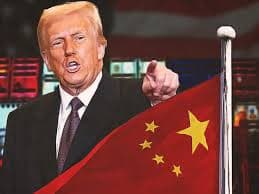
President Trump publicly denied pursuing a national emergency declaration over alleged foreign election interference after February 2026 reports of a draft executive order circulated by administration-aligned activists. That proposal cited unverified claims of Chinese involvement in prior elections to justify expanded federal authority over voting procedures ahead of the 2026 midterms, including restrictions on mail ballots. No such declaration has followed. Existing 2025 executive actions on election integrity have encountered court challenges, while Article I, Section 4 of the Constitution assigns primary election administration to states and Congress. Traders reflect this absence of action and explicit White House signals in pricing the outcome at roughly 90 percent against.
Experimental AI-generated summary referencing Polymarket data. This is not trading advice and plays no role in how this market resolves. · Updated$170,159 Vol.
July 17
42%
December 31
27%
$170,159 Vol.
July 17
42%
December 31
27%
A qualifying declaration must include formal language stating that a national emergency exists and must be issued under the National Emergencies Act (50 U.S.C. § 1621 et seq.). The declaration must explicitly reference interference in U.S. elections, election processes, election systems, voting procedures, ballots, or voting machines as the basis for the emergency. Statements, speeches, social media posts, draft orders, executive orders that do not formally declare a national emergency under the National Emergencies Act, or other actions that merely reference election interference without declaring a national emergency will not qualify.
Renewals or extensions of previously existing national emergencies will not qualify unless the text is materially modified to explicitly relate to election interference.
The primary resolution source will be the Federal Register and official White House publications, however a consensus of credible reporting may also be used.
Market Opened: Jul 14, 2026, 1:45 PM ET
Resolver
0x65070BE91...A qualifying declaration must include formal language stating that a national emergency exists and must be issued under the National Emergencies Act (50 U.S.C. § 1621 et seq.). The declaration must explicitly reference interference in U.S. elections, election processes, election systems, voting procedures, ballots, or voting machines as the basis for the emergency. Statements, speeches, social media posts, draft orders, executive orders that do not formally declare a national emergency under the National Emergencies Act, or other actions that merely reference election interference without declaring a national emergency will not qualify.
Renewals or extensions of previously existing national emergencies will not qualify unless the text is materially modified to explicitly relate to election interference.
The primary resolution source will be the Federal Register and official White House publications, however a consensus of credible reporting may also be used.
Resolver
0x65070BE91...President Trump publicly denied pursuing a national emergency declaration over alleged foreign election interference after February 2026 reports of a draft executive order circulated by administration-aligned activists. That proposal cited unverified claims of Chinese involvement in prior elections to justify expanded federal authority over voting procedures ahead of the 2026 midterms, including restrictions on mail ballots. No such declaration has followed. Existing 2025 executive actions on election integrity have encountered court challenges, while Article I, Section 4 of the Constitution assigns primary election administration to states and Congress. Traders reflect this absence of action and explicit White House signals in pricing the outcome at roughly 90 percent against.
Experimental AI-generated summary referencing Polymarket data. This is not trading advice and plays no role in how this market resolves. · Updated

Beware of external links.
Beware of external links.
Frequently Asked Questions