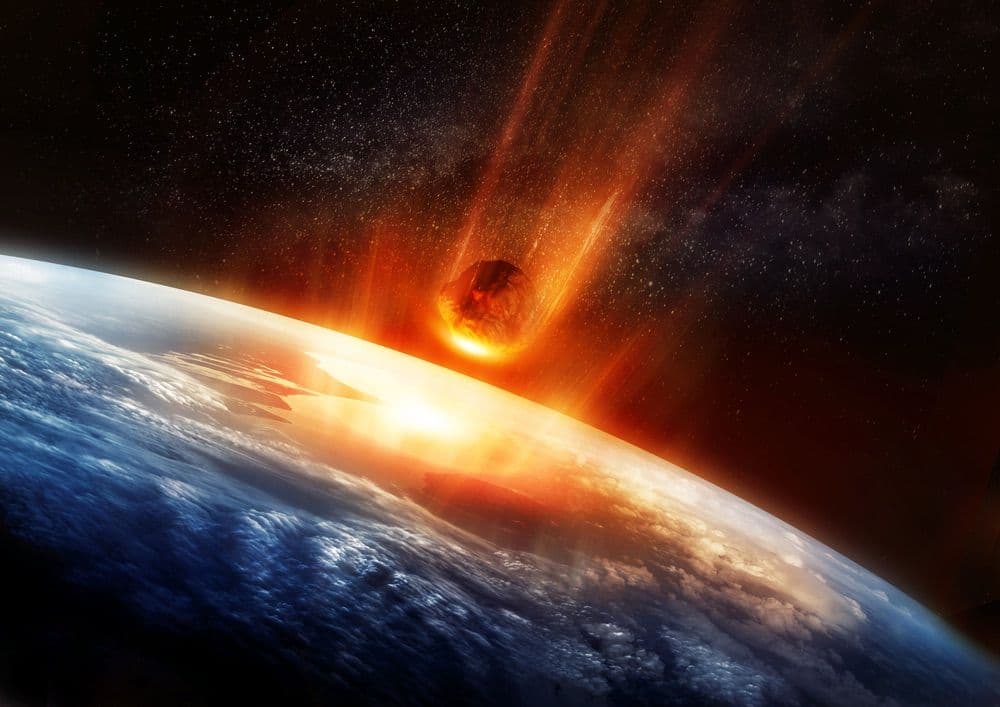
No catalogued near-Earth objects large enough to deliver a 10 kt or greater airburst remain on collision trajectories for 2026, according to NASA’s CNEOS and ESA monitoring. Recent fireball activity, including the March Ohio event releasing roughly 0.25 kt and smaller Massachusetts and Houston incidents, has stayed well below the threshold despite a statistically notable rise in eyewitness reports. That surge reflects improved detection networks and seasonal “fireball season” patterns rather than elevated hazard. Historical records show 10 kt-class impacts occur on decadal rather than annual timescales for meter-scale objects, keeping trader consensus heavily weighted toward “No.” Ongoing surveys could still reveal previously undetected small impactors before year-end, yet current orbital data and mid-year timing leave little room for a reversal.
Experimental AI-generated summary referencing Polymarket data. This is not trading advice and plays no role in how this market resolves. · UpdatedMajor meteor strike (10kt+) in 2026?
Major meteor strike (10kt+) in 2026?
$178,052 Vol.
$178,052 Vol.
$178,052 Vol.
$178,052 Vol.
The object must be classified as a natural meteoroid; events involving artificial objects or reentry vehicles do not qualify.
The primary resolution source will be the NASA JPL Fireball and Bolide Data repository: https://cneos.jpl.nasa.gov/fireballs/. The relevant field for determining impact energy is the “Impact Energy (kt)” column. If this dataset has not been updated to include all relevant dates by February 28, 2027, or if the NASA JPL Fireball and Bolide Data repository becomes permanently unavailable, this market may resolve based on a consensus of credible sources including the European Space Agency (ESA), the International Asteroid Warning Network (IAWN), the U.S. Department of Defense, or credible reporting of a scientific consensus, such as a NASA press release.
Market Opened: Dec 31, 2025, 1:18 PM ET
Resolver
0x65070BE91...The object must be classified as a natural meteoroid; events involving artificial objects or reentry vehicles do not qualify.
The primary resolution source will be the NASA JPL Fireball and Bolide Data repository: https://cneos.jpl.nasa.gov/fireballs/. The relevant field for determining impact energy is the “Impact Energy (kt)” column. If this dataset has not been updated to include all relevant dates by February 28, 2027, or if the NASA JPL Fireball and Bolide Data repository becomes permanently unavailable, this market may resolve based on a consensus of credible sources including the European Space Agency (ESA), the International Asteroid Warning Network (IAWN), the U.S. Department of Defense, or credible reporting of a scientific consensus, such as a NASA press release.
Resolver
0x65070BE91...No catalogued near-Earth objects large enough to deliver a 10 kt or greater airburst remain on collision trajectories for 2026, according to NASA’s CNEOS and ESA monitoring. Recent fireball activity, including the March Ohio event releasing roughly 0.25 kt and smaller Massachusetts and Houston incidents, has stayed well below the threshold despite a statistically notable rise in eyewitness reports. That surge reflects improved detection networks and seasonal “fireball season” patterns rather than elevated hazard. Historical records show 10 kt-class impacts occur on decadal rather than annual timescales for meter-scale objects, keeping trader consensus heavily weighted toward “No.” Ongoing surveys could still reveal previously undetected small impactors before year-end, yet current orbital data and mid-year timing leave little room for a reversal.
Experimental AI-generated summary referencing Polymarket data. This is not trading advice and plays no role in how this market resolves. · Updated
Beware of external links.
Beware of external links.
Frequently Asked Questions