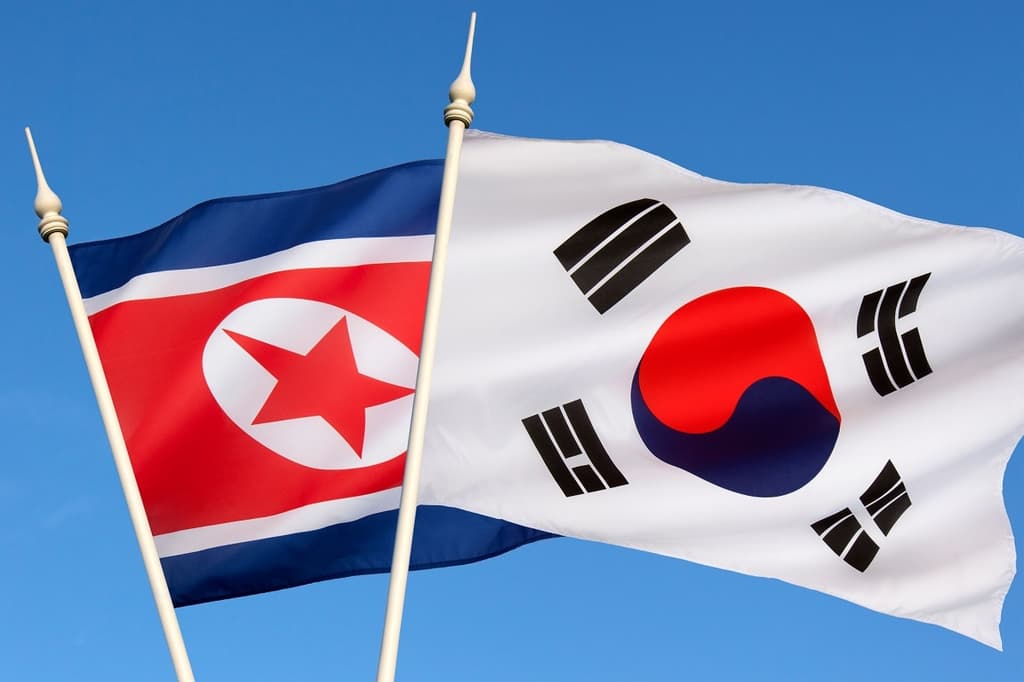
North Korean leader Kim Jong Un's March 2026 declarations at the Supreme People's Assembly and Ninth Party Congress formalized a "permanently hostile" policy toward South Korea, designating it the "principal enemy" and rejecting any inter-Korean dialogue or relations, driving trader consensus to an 88.5% implied probability of no direct talks by June 30. This stance, reinforced by North Korea's focus on nuclear expansion and military buildup amid its new five-year plan, contrasts with South Korean President Lee Jae Myung's repeated calls for resuming dialogue on March 1 and earlier, which Pyongyang has dismissed. Absent major diplomatic breakthroughs like U.S.-North Korea progress spilling over or de-escalation signals, traders see significant barriers persisting on the Korean Peninsula through mid-year.
Resumen experimental generado por IA con datos de Polymarket · Actualizado¿Corea del Norte y Corea del Sur entablarán conversaciones directas antes del 30 de junio?
¿Corea del Norte y Corea del Sur entablarán conversaciones directas antes del 30 de junio?
Sí
Sí
The talks may be in-person, by phone, or virtual, and must be publicly acknowledged by either government or reported by credible media.
Routine military deconfliction, backchannel exchanges, or talks conducted entirely through another country or organization will not count.
The resolutions source will be a consensus of credible reporting.
Mercado abierto: Nov 5, 2025, 2:23 PM ET
Resolver
0x65070BE91...The talks may be in-person, by phone, or virtual, and must be publicly acknowledged by either government or reported by credible media.
Routine military deconfliction, backchannel exchanges, or talks conducted entirely through another country or organization will not count.
The resolutions source will be a consensus of credible reporting.
Resolver
0x65070BE91...North Korean leader Kim Jong Un's March 2026 declarations at the Supreme People's Assembly and Ninth Party Congress formalized a "permanently hostile" policy toward South Korea, designating it the "principal enemy" and rejecting any inter-Korean dialogue or relations, driving trader consensus to an 88.5% implied probability of no direct talks by June 30. This stance, reinforced by North Korea's focus on nuclear expansion and military buildup amid its new five-year plan, contrasts with South Korean President Lee Jae Myung's repeated calls for resuming dialogue on March 1 and earlier, which Pyongyang has dismissed. Absent major diplomatic breakthroughs like U.S.-North Korea progress spilling over or de-escalation signals, traders see significant barriers persisting on the Korean Peninsula through mid-year.
Resumen experimental generado por IA con datos de Polymarket · Actualizado
Cuidado con los enlaces externos.
Cuidado con los enlaces externos.
Preguntas frecuentes