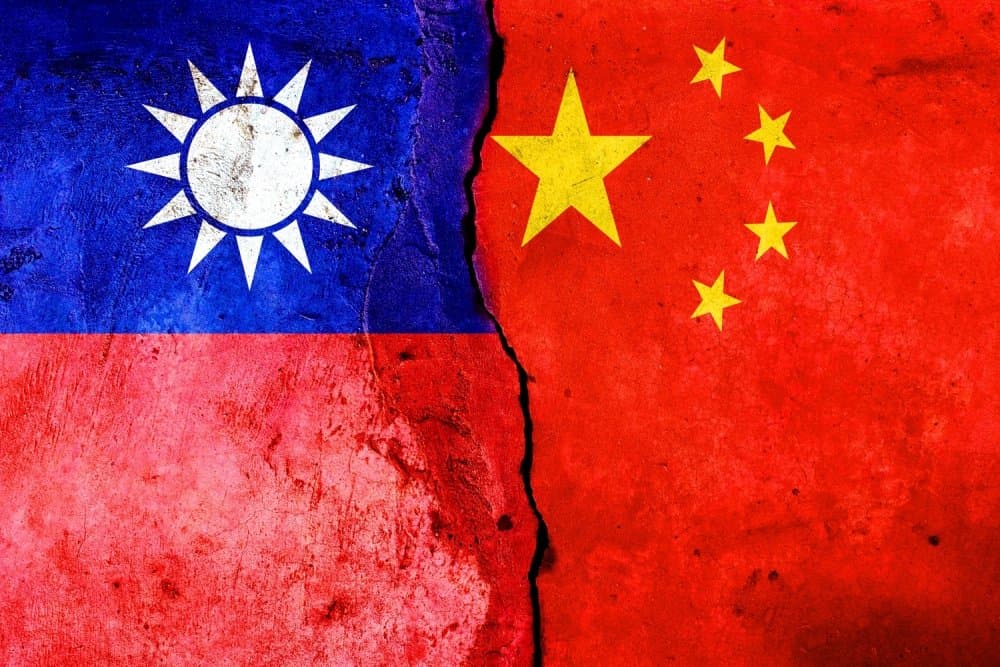
US intelligence agencies' March 19 assessment that Chinese leaders lack plans for a Taiwan invasion in 2027—and prefer unification without force—has solidified trader consensus at 96.8% against an invasion by June 30, anchoring the near-certain "No" pricing amid no observable PLA buildup or amphibious preparations. Recent de-escalation signals include a sharp drop in Chinese military flights near Taiwan for over a week in early March, followed by resumed but subdued activity, contrasting prior daily incursions. High economic costs, US deterrence, and Taiwan's fortifications further deter action in the tight three-month window. While improbable, scenarios like sudden cross-strait crisis, leadership shifts, or major diplomatic rupture could still prompt rapid escalation.
Experimental AI-generated summary referencing Polymarket data · Updated$2,124,100 Vol.
$2,124,100 Vol.
$2,124,100 Vol.
$2,124,100 Vol.
Territory under the administration of the Republic of China, including any inhabited islands, will qualify; however, uninhabited islands will not qualify.
The resolution source for this market will be official confirmation by China, Taiwan, the United Nations, or any permanent member of the UN Security Council; however, a consensus of credible reporting will also be used.
Market Opened: Dec 17, 2025, 3:24 PM ET
Resolver
0x65070BE91...Territory under the administration of the Republic of China, including any inhabited islands, will qualify; however, uninhabited islands will not qualify.
The resolution source for this market will be official confirmation by China, Taiwan, the United Nations, or any permanent member of the UN Security Council; however, a consensus of credible reporting will also be used.
Resolver
0x65070BE91...US intelligence agencies' March 19 assessment that Chinese leaders lack plans for a Taiwan invasion in 2027—and prefer unification without force—has solidified trader consensus at 96.8% against an invasion by June 30, anchoring the near-certain "No" pricing amid no observable PLA buildup or amphibious preparations. Recent de-escalation signals include a sharp drop in Chinese military flights near Taiwan for over a week in early March, followed by resumed but subdued activity, contrasting prior daily incursions. High economic costs, US deterrence, and Taiwan's fortifications further deter action in the tight three-month window. While improbable, scenarios like sudden cross-strait crisis, leadership shifts, or major diplomatic rupture could still prompt rapid escalation.
Experimental AI-generated summary referencing Polymarket data · Updated

Beware of external links.
Beware of external links.
Frequently Asked Questions