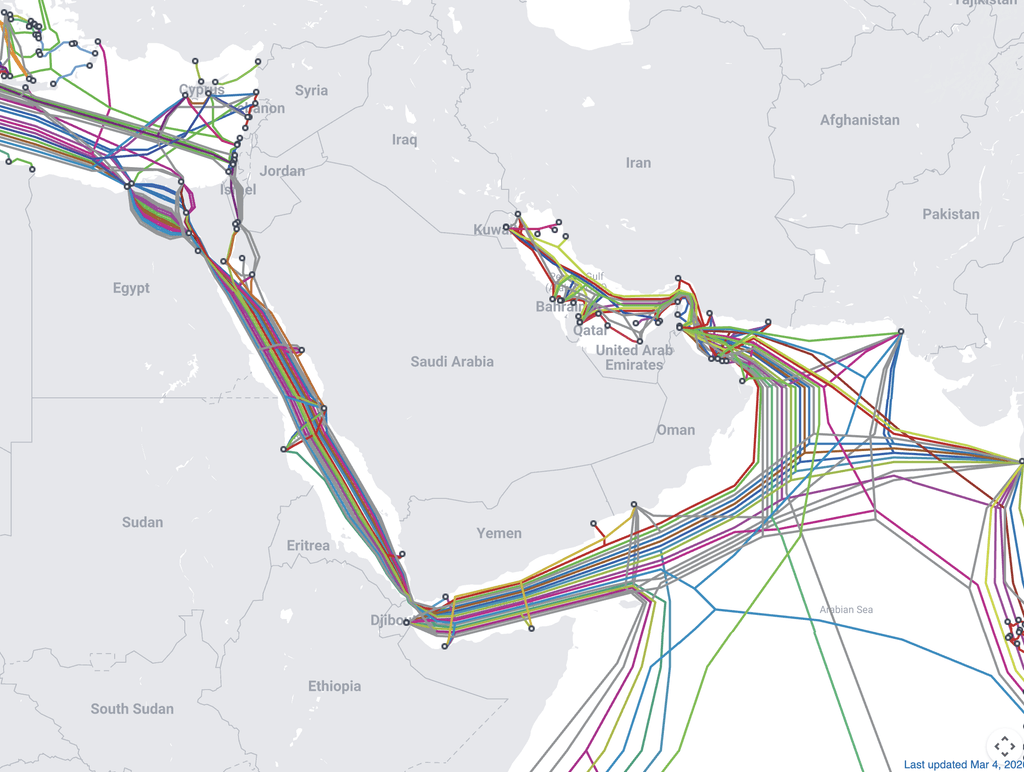
High trader confidence in "No" at 92.5% stems from the absence of any confirmed Iranian sabotage of undersea internet cables despite elevated Middle East tensions. Recent Red Sea incidents damaging SEACOM and EIG cables in February-March 2024 were linked to Houthi rebels—Iran's proxies—who denied involvement, with no direct Tehran attribution from officials. Iran's April 1 retaliatory drone and missile barrage against Israel followed Damascus consulate strikes but avoided infrastructure escalation. U.S. naval patrols and allied maritime security bolster defenses, while Iran's focus remains on nuclear talks and proxy warfare. Historical precedents show restraint on high-profile sabotage amid severe sanctions risks, aligning with this low-probability consensus absent new catalysts before April 30.
Resumen experimental generado por IA con datos de Polymarket · Actualizado¿Irán saboteará los cables submarinos de Internet antes del 30 de abril?
¿Irán saboteará los cables submarinos de Internet antes del 30 de abril?
Sí
$12,258 Vol.
$12,258 Vol.
Sí
$12,258 Vol.
$12,258 Vol.
Only actions that cause physical damage to the undersea internet cable infrastructure, e.g., physical sabotage, such as cutting, dragging, or explosive attacks, will be considered. Cyber attacks will not qualify, even if they have kinetic effects.
Qualifying incidents must occur in the region spanning the Persian Gulf, Strait of Hormuz, Gulf of Oman, Arabian Sea, Gulf of Aden, and Red Sea, including areas surrounding the Arabian Peninsula.
Attempted attacks that do not result in damage, or actions that are intercepted or fail to impact the cables, will not qualify for a "Yes" resolution.
Incidents which are broadly attributed to Iranian forces or Iranian-aligned groups will qualify regardless of the absence of definitive evidence or official Iranian denials.
The resolution source will be a consensus of credible reporting.
Mercado abierto: Mar 23, 2026, 6:23 PM ET
Resolver
0x65070BE91...Only actions that cause physical damage to the undersea internet cable infrastructure, e.g., physical sabotage, such as cutting, dragging, or explosive attacks, will be considered. Cyber attacks will not qualify, even if they have kinetic effects.
Qualifying incidents must occur in the region spanning the Persian Gulf, Strait of Hormuz, Gulf of Oman, Arabian Sea, Gulf of Aden, and Red Sea, including areas surrounding the Arabian Peninsula.
Attempted attacks that do not result in damage, or actions that are intercepted or fail to impact the cables, will not qualify for a "Yes" resolution.
Incidents which are broadly attributed to Iranian forces or Iranian-aligned groups will qualify regardless of the absence of definitive evidence or official Iranian denials.
The resolution source will be a consensus of credible reporting.
Resolver
0x65070BE91...High trader confidence in "No" at 92.5% stems from the absence of any confirmed Iranian sabotage of undersea internet cables despite elevated Middle East tensions. Recent Red Sea incidents damaging SEACOM and EIG cables in February-March 2024 were linked to Houthi rebels—Iran's proxies—who denied involvement, with no direct Tehran attribution from officials. Iran's April 1 retaliatory drone and missile barrage against Israel followed Damascus consulate strikes but avoided infrastructure escalation. U.S. naval patrols and allied maritime security bolster defenses, while Iran's focus remains on nuclear talks and proxy warfare. Historical precedents show restraint on high-profile sabotage amid severe sanctions risks, aligning with this low-probability consensus absent new catalysts before April 30.
Resumen experimental generado por IA con datos de Polymarket · Actualizado
Cuidado con los enlaces externos.
Cuidado con los enlaces externos.
Preguntas frecuentes