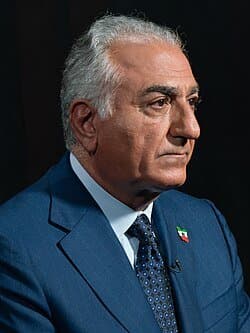
Trader consensus reflects the Iranian regime's resilience amid the ongoing six-week US-Israel war, with Mojtaba Khamenei—son of the late Supreme Leader Ali Khamenei—installed as new supreme leader by the Islamic Revolutionary Guard Corps (IRGC) in early March following his father's death. Despite airstrikes degrading Iran's missile capabilities and economic strain fueling protests, the IRGC enforces harsh crackdowns, internet blackouts, and continuity under the new leadership, as seen in recent rejections of US ultimatums and downed American aircraft. Exiled opposition figure Reza Pahlavi's recent CPAC and Liberty University speeches positioning himself for transitional leadership have gained Western attention but lack on-ground traction inside Iran, underscoring significant barriers like IRGC dominance barring his return before year-end.
Resumo experimental gerado por IA com dados do Polymarket · AtualizadoReza Pahlavi liderará o Irã em 2026?
Reza Pahlavi liderará o Irã em 2026?
Sim
$914,937 Vol.
$914,937 Vol.
Sim
$914,937 Vol.
$914,937 Vol.
Reza Pahlavi will be considered to hold power if he exercises primary governing authority over the Iranian state during the specified timeframe, including effective control over the armed forces, national institutions, and core executive decision-making, regardless of formal title, constitutional designation, or international recognition.
Formal appointment, recognition by the United Nations, or recognition by foreign governments is not required.
Indicators of de facto authority may include control over the armed forces and security services; control over executive ministries and state administrative institutions; enforcement of national laws; issuance of binding national directives; and effective control over the capital and core state infrastructure.
Symbolic status, foreign recognition without domestic control, exile leadership without effective authority inside Iran, nomination without effective authority, or ceremonial or transitional status without governing control will not qualify.
If Iran experiences a period in which no individual exercises effective governing control, this will not alone qualify for a “Yes” resolution unless Reza Pahlavi subsequently meets the criteria above within the specified timeframe.
The primary resolution source for this market will be a consensus of credible reporting.
Mercado Aberto: Feb 28, 2026, 10:36 PM ET
Resolver
0x65070BE91...Reza Pahlavi will be considered to hold power if he exercises primary governing authority over the Iranian state during the specified timeframe, including effective control over the armed forces, national institutions, and core executive decision-making, regardless of formal title, constitutional designation, or international recognition.
Formal appointment, recognition by the United Nations, or recognition by foreign governments is not required.
Indicators of de facto authority may include control over the armed forces and security services; control over executive ministries and state administrative institutions; enforcement of national laws; issuance of binding national directives; and effective control over the capital and core state infrastructure.
Symbolic status, foreign recognition without domestic control, exile leadership without effective authority inside Iran, nomination without effective authority, or ceremonial or transitional status without governing control will not qualify.
If Iran experiences a period in which no individual exercises effective governing control, this will not alone qualify for a “Yes” resolution unless Reza Pahlavi subsequently meets the criteria above within the specified timeframe.
The primary resolution source for this market will be a consensus of credible reporting.
Resolver
0x65070BE91...Trader consensus reflects the Iranian regime's resilience amid the ongoing six-week US-Israel war, with Mojtaba Khamenei—son of the late Supreme Leader Ali Khamenei—installed as new supreme leader by the Islamic Revolutionary Guard Corps (IRGC) in early March following his father's death. Despite airstrikes degrading Iran's missile capabilities and economic strain fueling protests, the IRGC enforces harsh crackdowns, internet blackouts, and continuity under the new leadership, as seen in recent rejections of US ultimatums and downed American aircraft. Exiled opposition figure Reza Pahlavi's recent CPAC and Liberty University speeches positioning himself for transitional leadership have gained Western attention but lack on-ground traction inside Iran, underscoring significant barriers like IRGC dominance barring his return before year-end.
Resumo experimental gerado por IA com dados do Polymarket · Atualizado
Cuidado com os links externos.
Cuidado com os links externos.
Frequently Asked Questions