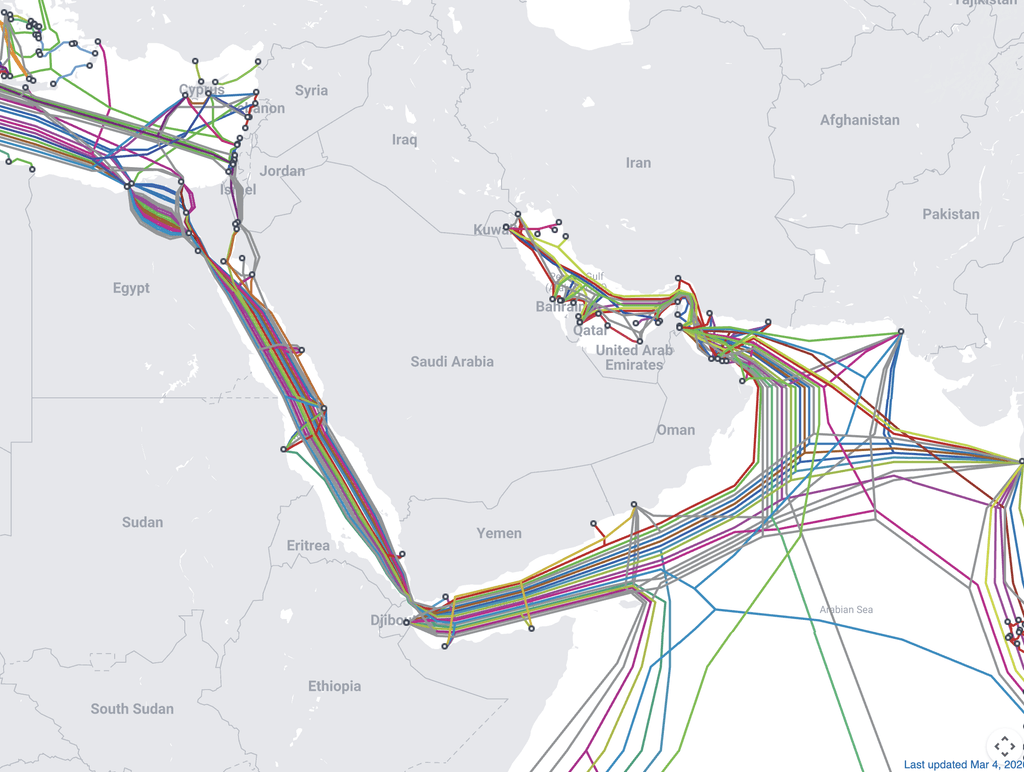
Trader consensus strongly favors no Iranian sabotage of undersea internet cables by April 30, with 93% implied probability on "No," anchored by the lack of verified intelligence, official Tehran statements, or attributed incidents implicating direct Iranian action. Recent Red Sea cable disruptions, such as those affecting SEACOM and EIG lines in February-March, have been linked to Houthi militants—Iran's proxy—rather than Iranian state operations, per maritime security reports. Amid Israel-Iran shadow war escalations via missiles and drones, no fresh threats or capabilities targeting submarine infrastructure have surfaced, underscoring traders' assessment of low near-term risk despite regional tensions.
Polymarketデータを参照したAI生成の実験的な要約 · 更新日はい
NEW
$12,110 Vol.
NEW
$12,110 Vol.
Apr 30, 2026
はい
NEW
$12,110 Vol.
NEW
$12,110 Vol.
Apr 30, 2026
This market will resolve to "Yes" if Iran or Iranian-aligned groups damage undersea internet cables between market creation and April 30, 2026, 11:59 PM ET. Otherwise, this market will resolve to “No”.
Only actions that cause physical damage to the undersea internet cable infrastructure, e.g., physical sabotage, such as cutting, dragging, or explosive attacks, will be considered. Cyber attacks will not qualify, even if they have kinetic effects.
Qualifying incidents must occur in the region spanning the Persian Gulf, Strait of Hormuz, Gulf of Oman, Arabian Sea, Gulf of Aden, and Red Sea, including areas surrounding the Arabian Peninsula.
Attempted attacks that do not result in damage, or actions that are intercepted or fail to impact the cables, will not qualify for a "Yes" resolution.
Incidents which are broadly attributed to Iranian forces or Iranian-aligned groups will qualify regardless of the absence of definitive evidence or official Iranian denials.
The resolution source will be a consensus of credible reporting.
This market will resolve to "Yes" if Iran or Iranian-aligned groups damage undersea internet cables between market creation and April 30, 2026, 11:59 PM ET. Otherwise, this market will resolve to “No”.
Only actions that cause physical damage to the undersea internet cable infrastructure, e.g., physical sabotage, such as cutting, dragging, or explosive attacks, will be considered. Cyber attacks will not qualify, even if they have kinetic effects.
Qualifying incidents must occur in the region spanning the Persian Gulf, Strait of Hormuz, Gulf of Oman, Arabian Sea, Gulf of Aden, and Red Sea, including areas surrounding the Arabian Peninsula.
Attempted attacks that do not result in damage, or actions that are intercepted or fail to impact the cables, will not qualify for a "Yes" resolution.
Incidents which are broadly attributed to Iranian forces or Iranian-aligned groups will qualify regardless of the absence of definitive evidence or official Iranian denials.
The resolution source will be a consensus of credible reporting.This market will resolve to "Yes" if Iran or Iranian-aligned groups damage undersea internet cables between market creation and April 30, 2026, 11:59 PM ET. Otherwise, this market will resolve to “No”.
Only actions that cause physical damage to the undersea internet cable infrastructure, e.g., physical sabotage, such as cutting, dragging, or explosive attacks, will be considered. Cyber attacks will not qualify, even if they have kinetic effects.
Qualifying incidents must occur in the region spanning the Persian Gulf, Strait of Hormuz, Gulf of Oman, Arabian Sea, Gulf of Aden, and Red Sea, including areas surrounding the Arabian Peninsula.
Attempted attacks that do not result in damage, or actions that are intercepted or fail to impact the cables, will not qualify for a "Yes" resolution.
Incidents which are broadly attributed to Iranian forces or Iranian-aligned groups will qualify regardless of the absence of definitive evidence or official Iranian denials.
The resolution source will be a consensus of credible reporting.
Only actions that cause physical damage to the undersea internet cable infrastructure, e.g., physical sabotage, such as cutting, dragging, or explosive attacks, will be considered. Cyber attacks will not qualify, even if they have kinetic effects.
Qualifying incidents must occur in the region spanning the Persian Gulf, Strait of Hormuz, Gulf of Oman, Arabian Sea, Gulf of Aden, and Red Sea, including areas surrounding the Arabian Peninsula.
Attempted attacks that do not result in damage, or actions that are intercepted or fail to impact the cables, will not qualify for a "Yes" resolution.
Incidents which are broadly attributed to Iranian forces or Iranian-aligned groups will qualify regardless of the absence of definitive evidence or official Iranian denials.
The resolution source will be a consensus of credible reporting.
マーケット開始日: Mar 23, 2026, 6:23 PM ET
音量
$12,110終了日
Apr 30, 2026マーケット開始日
Mar 23, 2026, 6:23 PM ETResolver
0x65070BE91...This market will resolve to "Yes" if Iran or Iranian-aligned groups damage undersea internet cables between market creation and April 30, 2026, 11:59 PM ET. Otherwise, this market will resolve to “No”.
Only actions that cause physical damage to the undersea internet cable infrastructure, e.g., physical sabotage, such as cutting, dragging, or explosive attacks, will be considered. Cyber attacks will not qualify, even if they have kinetic effects.
Qualifying incidents must occur in the region spanning the Persian Gulf, Strait of Hormuz, Gulf of Oman, Arabian Sea, Gulf of Aden, and Red Sea, including areas surrounding the Arabian Peninsula.
Attempted attacks that do not result in damage, or actions that are intercepted or fail to impact the cables, will not qualify for a "Yes" resolution.
Incidents which are broadly attributed to Iranian forces or Iranian-aligned groups will qualify regardless of the absence of definitive evidence or official Iranian denials.
The resolution source will be a consensus of credible reporting.
This market will resolve to "Yes" if Iran or Iranian-aligned groups damage undersea internet cables between market creation and April 30, 2026, 11:59 PM ET. Otherwise, this market will resolve to “No”.
Only actions that cause physical damage to the undersea internet cable infrastructure, e.g., physical sabotage, such as cutting, dragging, or explosive attacks, will be considered. Cyber attacks will not qualify, even if they have kinetic effects.
Qualifying incidents must occur in the region spanning the Persian Gulf, Strait of Hormuz, Gulf of Oman, Arabian Sea, Gulf of Aden, and Red Sea, including areas surrounding the Arabian Peninsula.
Attempted attacks that do not result in damage, or actions that are intercepted or fail to impact the cables, will not qualify for a "Yes" resolution.
Incidents which are broadly attributed to Iranian forces or Iranian-aligned groups will qualify regardless of the absence of definitive evidence or official Iranian denials.
The resolution source will be a consensus of credible reporting.This market will resolve to "Yes" if Iran or Iranian-aligned groups damage undersea internet cables between market creation and April 30, 2026, 11:59 PM ET. Otherwise, this market will resolve to “No”.
Only actions that cause physical damage to the undersea internet cable infrastructure, e.g., physical sabotage, such as cutting, dragging, or explosive attacks, will be considered. Cyber attacks will not qualify, even if they have kinetic effects.
Qualifying incidents must occur in the region spanning the Persian Gulf, Strait of Hormuz, Gulf of Oman, Arabian Sea, Gulf of Aden, and Red Sea, including areas surrounding the Arabian Peninsula.
Attempted attacks that do not result in damage, or actions that are intercepted or fail to impact the cables, will not qualify for a "Yes" resolution.
Incidents which are broadly attributed to Iranian forces or Iranian-aligned groups will qualify regardless of the absence of definitive evidence or official Iranian denials.
The resolution source will be a consensus of credible reporting.
Only actions that cause physical damage to the undersea internet cable infrastructure, e.g., physical sabotage, such as cutting, dragging, or explosive attacks, will be considered. Cyber attacks will not qualify, even if they have kinetic effects.
Qualifying incidents must occur in the region spanning the Persian Gulf, Strait of Hormuz, Gulf of Oman, Arabian Sea, Gulf of Aden, and Red Sea, including areas surrounding the Arabian Peninsula.
Attempted attacks that do not result in damage, or actions that are intercepted or fail to impact the cables, will not qualify for a "Yes" resolution.
Incidents which are broadly attributed to Iranian forces or Iranian-aligned groups will qualify regardless of the absence of definitive evidence or official Iranian denials.
The resolution source will be a consensus of credible reporting.
音量
$12,110終了日
Apr 30, 2026マーケット開始日
Mar 23, 2026, 6:23 PM ETResolver
0x65070BE91...Trader consensus strongly favors no Iranian sabotage of undersea internet cables by April 30, with 93% implied probability on "No," anchored by the lack of verified intelligence, official Tehran statements, or attributed incidents implicating direct Iranian action. Recent Red Sea cable disruptions, such as those affecting SEACOM and EIG lines in February-March, have been linked to Houthi militants—Iran's proxy—rather than Iranian state operations, per maritime security reports. Amid Israel-Iran shadow war escalations via missiles and drones, no fresh threats or capabilities targeting submarine infrastructure have surfaced, underscoring traders' assessment of low near-term risk despite regional tensions.
Polymarketデータを参照したAI生成の実験的な要約 · 更新日
外部リンクに注意してください。
外部リンクに注意してください。
よくある質問