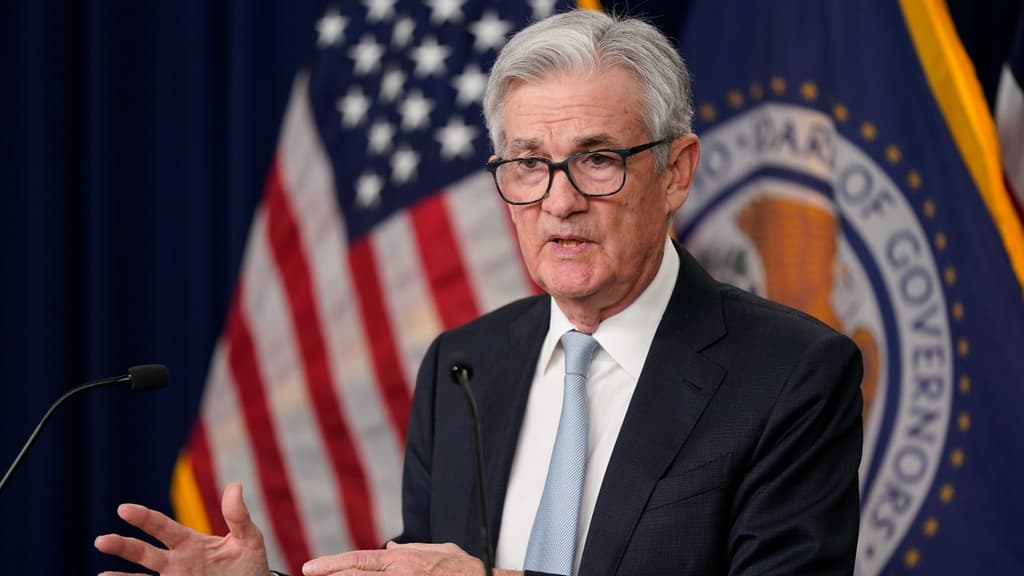
Polymarket traders assign a 38.2% implied probability to zero Fed rate cuts (0 bps) in 2026, closely followed by 24.5% for one 25 bps cut, reflecting the FOMC's March 18 decision to hold the federal funds rate steady at 3.5%-3.75% amid persistent inflation pressures. The updated Summary of Economic Projections revealed a median participant forecast for just one cut, with core PCE inflation revised upward to 2.7% for 2026 from 2.5%, driven by recent January CPI at 2.4% year-over-year and geopolitical oil spikes above $100 per barrel. Softening labor market signals, including weaker job growth, offer counterbalance but insufficient to prompt near-term easing, per CME FedWatch's 95% hold odds for April. Upcoming April payrolls, CPI, and FOMC meeting loom as key catalysts for sentiment shifts.
Résumé expérimental généré par IA à partir des données Polymarket · Mis à jourCombien de baisses de taux de la Fed en 2026 ?
Combien de baisses de taux de la Fed en 2026 ?
0 (0 bps) 38.2%
1 (25 bps) 25%
2 (50 pb) 18%
3 (75 points de base) 10%
$14,496,286 Vol.
$14,496,286 Vol.
0 (0 bps)
38%
1 (25 bps)
25%
2 (50 pb)
18%
3 (75 points de base)
10%
4 (100 pb)
6%
5 (125 pb)
2%
6 (150 points de base)
1%
7 (175 points de base)
1%
8 (200 points de base)
1%
9 (225 points de base)
<1%
10 (250 pb)
<1%
11 (275 points de base)
<1%
12+ (300+ bps)
1%
0 (0 bps) 38.2%
1 (25 bps) 25%
2 (50 pb) 18%
3 (75 points de base) 10%
$14,496,286 Vol.
$14,496,286 Vol.
0 (0 bps)
38%
1 (25 bps)
25%
2 (50 pb)
18%
3 (75 points de base)
10%
4 (100 pb)
6%
5 (125 pb)
2%
6 (150 points de base)
1%
7 (175 points de base)
1%
8 (200 points de base)
1%
9 (225 points de base)
<1%
10 (250 pb)
<1%
11 (275 points de base)
<1%
12+ (300+ bps)
1%
Emergency rate cuts outside of scheduled FOMC meetings will also count toward the total number of cuts in 2026. This market will remain open until December 31, 2026, 11:59 PM ET, to account for any such emergency actions.
For example, if the Fed cuts rates by 50 bps after a meeting, it would be considered 2 cuts (of 25 bps each).
This market will resolve early to "No" if the specified number of cuts becomes impossible — i.e., if more cuts have already occurred than the strike in question.
Note that cuts between 1–24 bps (inclusive) will also be considered 1 rate cut.
The resolution source for this market will be FOMC statements after meetings scheduled in 2026 according to the official calendar: https://www.federalreserve.gov/monetarypolicy/fomccalendars.htm. The level and change of the target federal funds rate is also published at the official website of the Federal Reserve at https://www.federalreserve.gov/monetarypolicy/openmarket.htm.
Marché ouvert : Sep 29, 2025, 6:08 PM ET
Resolver
0x2F5e3684c...Emergency rate cuts outside of scheduled FOMC meetings will also count toward the total number of cuts in 2026. This market will remain open until December 31, 2026, 11:59 PM ET, to account for any such emergency actions.
For example, if the Fed cuts rates by 50 bps after a meeting, it would be considered 2 cuts (of 25 bps each).
This market will resolve early to "No" if the specified number of cuts becomes impossible — i.e., if more cuts have already occurred than the strike in question.
Note that cuts between 1–24 bps (inclusive) will also be considered 1 rate cut.
The resolution source for this market will be FOMC statements after meetings scheduled in 2026 according to the official calendar: https://www.federalreserve.gov/monetarypolicy/fomccalendars.htm. The level and change of the target federal funds rate is also published at the official website of the Federal Reserve at https://www.federalreserve.gov/monetarypolicy/openmarket.htm.
Resolver
0x2F5e3684c...Polymarket traders assign a 38.2% implied probability to zero Fed rate cuts (0 bps) in 2026, closely followed by 24.5% for one 25 bps cut, reflecting the FOMC's March 18 decision to hold the federal funds rate steady at 3.5%-3.75% amid persistent inflation pressures. The updated Summary of Economic Projections revealed a median participant forecast for just one cut, with core PCE inflation revised upward to 2.7% for 2026 from 2.5%, driven by recent January CPI at 2.4% year-over-year and geopolitical oil spikes above $100 per barrel. Softening labor market signals, including weaker job growth, offer counterbalance but insufficient to prompt near-term easing, per CME FedWatch's 95% hold odds for April. Upcoming April payrolls, CPI, and FOMC meeting loom as key catalysts for sentiment shifts.
Résumé expérimental généré par IA à partir des données Polymarket · Mis à jour
Méfiez-vous des liens externes.
Méfiez-vous des liens externes.
Questions fréquentes