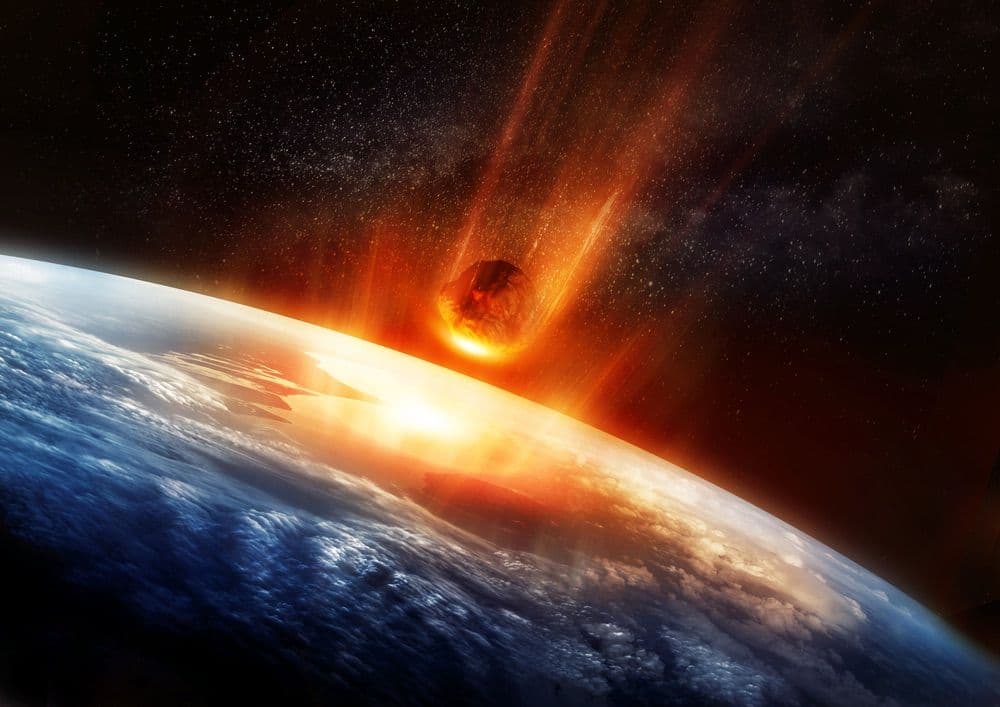
NASA's Center for Near-Earth Object Studies (CNEOS) Sentry system reports no tracked asteroids with potential Earth impacts in 2026, anchoring trader consensus toward "No" at 57% implied probability for a 5-kiloton-equivalent meteor strike. Small meteoroids roughly 3–5 meters in diameter, capable of ~5kt airbursts, enter Earth's atmosphere about once per year on average, per bolide frequency models, though most occur over oceans or evade detection by infrasound and seismic networks. Recent safe flybys of bus- and airplane-sized objects like 2026 EG1 and CN3 in March highlight effective monitoring without collision risks. Ongoing surveys by ATLAS and Catalina Sky Survey refine small near-Earth object catalogs, with traders weighing undiscovered population uncertainties against historical baselines showing infrequent confirmed events over land. Updated fireball data expected quarterly from CNEOS.
Résumé expérimental généré par IA à partir des données Polymarket · Mis à jourFrappe météorique de 5kt en 2026 ?
Frappe météorique de 5kt en 2026 ?
Oui
$275,801 Vol.
$275,801 Vol.
Oui
$275,801 Vol.
$275,801 Vol.
The object must be classified as a natural meteoroid; events involving artificial objects or reentry vehicles do not qualify.
The primary resolution source will be the NASA JPL Fireball and Bolide Data repository: https://cneos.jpl.nasa.gov/fireballs/. The relevant field for determining impact energy is the “Impact Energy (kt)” column. If this dataset has not been updated to include all relevant dates by February 28, 2027, or if the NASA JPL Fireball and Bolide Data repository becomes permanently unavailable, this market may resolve based on a consensus of credible sources including the European Space Agency (ESA), the International Asteroid Warning Network (IAWN), the U.S. Department of Defense, or credible reporting of a scientific consensus, such as a NASA press release.
Marché ouvert : Dec 31, 2025, 12:04 PM ET
Resolver
0x65070BE91...The object must be classified as a natural meteoroid; events involving artificial objects or reentry vehicles do not qualify.
The primary resolution source will be the NASA JPL Fireball and Bolide Data repository: https://cneos.jpl.nasa.gov/fireballs/. The relevant field for determining impact energy is the “Impact Energy (kt)” column. If this dataset has not been updated to include all relevant dates by February 28, 2027, or if the NASA JPL Fireball and Bolide Data repository becomes permanently unavailable, this market may resolve based on a consensus of credible sources including the European Space Agency (ESA), the International Asteroid Warning Network (IAWN), the U.S. Department of Defense, or credible reporting of a scientific consensus, such as a NASA press release.
Resolver
0x65070BE91...NASA's Center for Near-Earth Object Studies (CNEOS) Sentry system reports no tracked asteroids with potential Earth impacts in 2026, anchoring trader consensus toward "No" at 57% implied probability for a 5-kiloton-equivalent meteor strike. Small meteoroids roughly 3–5 meters in diameter, capable of ~5kt airbursts, enter Earth's atmosphere about once per year on average, per bolide frequency models, though most occur over oceans or evade detection by infrasound and seismic networks. Recent safe flybys of bus- and airplane-sized objects like 2026 EG1 and CN3 in March highlight effective monitoring without collision risks. Ongoing surveys by ATLAS and Catalina Sky Survey refine small near-Earth object catalogs, with traders weighing undiscovered population uncertainties against historical baselines showing infrequent confirmed events over land. Updated fireball data expected quarterly from CNEOS.
Résumé expérimental généré par IA à partir des données Polymarket · Mis à jour
Méfiez-vous des liens externes.
Méfiez-vous des liens externes.
Questions fréquentes