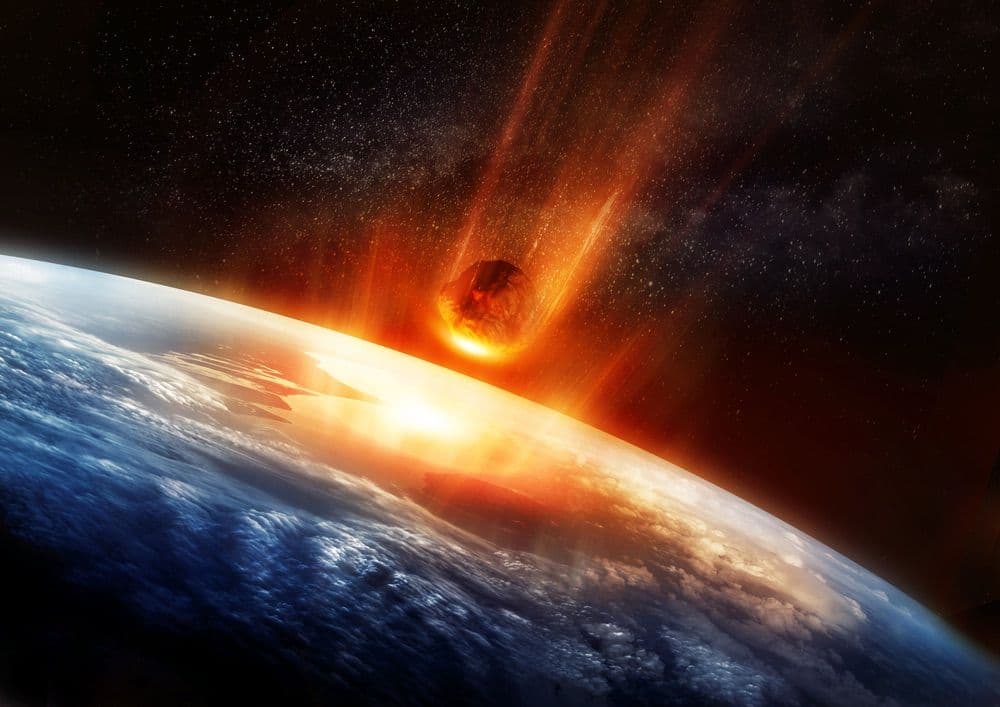
NASA's Center for Near-Earth Object Studies (CNEOS) confirms no known asteroids or meteoroids on a collision course with Earth in 2026 capable of delivering 1 megaton TNT-equivalent energy, the threshold for market resolution, driving the 97.8% "No" implied probability. Comprehensive surveys like Pan-STARRS and ATLAS detect over 99% of near-Earth objects larger than 140 meters, while smaller precursors to 1-megaton airbursts (roughly 25-meter stony meteoroids) are routinely cataloged with negligible undetected impact risk—historical bolide data shows such events occur roughly once every few decades. Trader consensus reflects this surveillance confidence, bolstered by zero Torino Scale alerts. A realistic upset would require an unforeseen small impactor evading detection until late 2025, though planetary defense models peg this at under 0.1% odds.
Résumé expérimental généré par IA à partir des données Polymarket · Mis à jour1 mégatonne de météorite en 2026 ?
1 mégatonne de météorite en 2026 ?
Oui
$92,188 Vol.
$92,188 Vol.
Oui
$92,188 Vol.
$92,188 Vol.
The object must be classified as a natural meteoroid; events involving artificial objects or reentry vehicles do not qualify.
The primary resolution source will be the NASA JPL Fireball and Bolide Data repository: https://cneos.jpl.nasa.gov/fireballs/. The relevant field for determining impact energy is the “Impact Energy (kt)” column. If this dataset has not been updated to include all relevant dates by February 28, 2027, or if the NASA JPL Fireball and Bolide Data repository becomes permanently unavailable, this market may resolve based on a consensus of credible sources including the European Space Agency (ESA), the International Asteroid Warning Network (IAWN), the U.S. Department of Defense, or credible reporting of a scientific consensus, such as a NASA press release.
Marché ouvert : Jan 2, 2026, 2:24 PM ET
Resolver
0x65070BE91...The object must be classified as a natural meteoroid; events involving artificial objects or reentry vehicles do not qualify.
The primary resolution source will be the NASA JPL Fireball and Bolide Data repository: https://cneos.jpl.nasa.gov/fireballs/. The relevant field for determining impact energy is the “Impact Energy (kt)” column. If this dataset has not been updated to include all relevant dates by February 28, 2027, or if the NASA JPL Fireball and Bolide Data repository becomes permanently unavailable, this market may resolve based on a consensus of credible sources including the European Space Agency (ESA), the International Asteroid Warning Network (IAWN), the U.S. Department of Defense, or credible reporting of a scientific consensus, such as a NASA press release.
Resolver
0x65070BE91...NASA's Center for Near-Earth Object Studies (CNEOS) confirms no known asteroids or meteoroids on a collision course with Earth in 2026 capable of delivering 1 megaton TNT-equivalent energy, the threshold for market resolution, driving the 97.8% "No" implied probability. Comprehensive surveys like Pan-STARRS and ATLAS detect over 99% of near-Earth objects larger than 140 meters, while smaller precursors to 1-megaton airbursts (roughly 25-meter stony meteoroids) are routinely cataloged with negligible undetected impact risk—historical bolide data shows such events occur roughly once every few decades. Trader consensus reflects this surveillance confidence, bolstered by zero Torino Scale alerts. A realistic upset would require an unforeseen small impactor evading detection until late 2025, though planetary defense models peg this at under 0.1% odds.
Résumé expérimental généré par IA à partir des données Polymarket · Mis à jour
Méfiez-vous des liens externes.
Méfiez-vous des liens externes.
Questions fréquentes