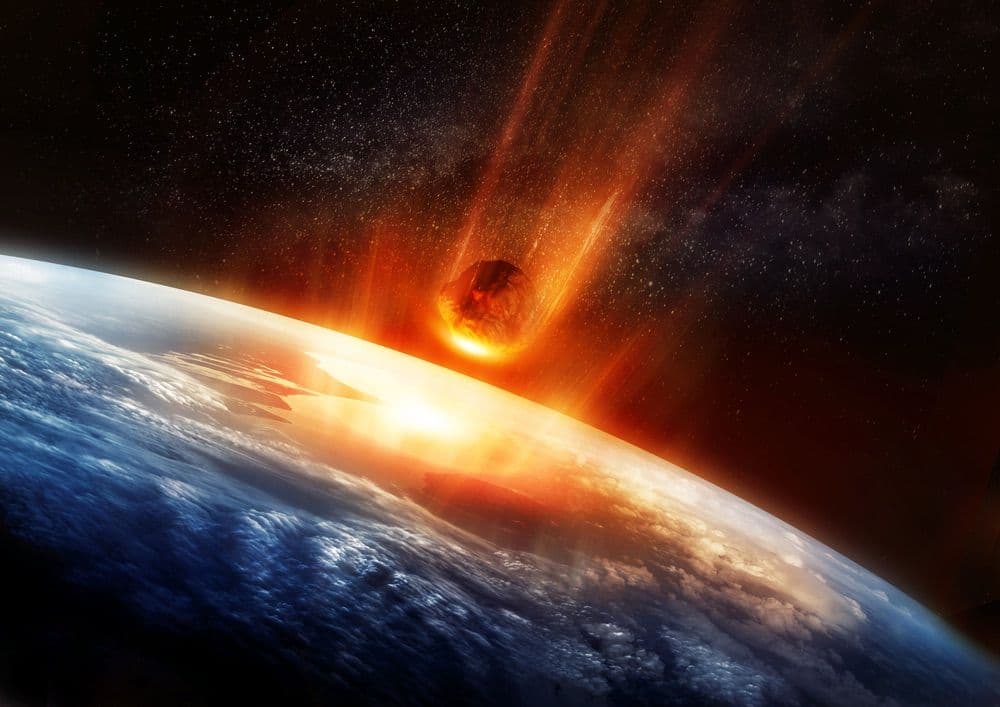
NASA's Center for Near-Earth Object Studies (CNEOS) Sentry system tracks all known potential impacts, revealing no credible near-Earth objects (NEOs) on trajectories to strike Earth in 2026 with 100 kiloton TNT-equivalent energy or greater—only two tiny asteroids under 20 meters diameter each carry negligible probabilities below 0.004%, rated Torino Scale 0. Historical bolide data shows such airbursts, capable of regional damage like the 2013 Chelyabinsk event (~500 kt), occur roughly once every 2–5 years globally, but intensified surveys by NASA and ESA have ruled out tracked threats, driving the 93% market-implied "No" probability. Trader consensus reflects this skin-in-the-game assessment of low baseline risk, though an undetected small meteoroid (5–15 meters) evading telescopes remains a realistic, albeit slim, scenario to challenge it, with ongoing radar and optical monitoring providing frequent updates.
Résumé expérimental généré par IA à partir des données Polymarket · Mis à jour100kt de météorites en 2026 ?
100kt de météorites en 2026 ?
Oui
Oui
The object must be classified as a natural meteoroid; events involving artificial objects or reentry vehicles do not qualify.
The primary resolution source will be the NASA JPL Fireball and Bolide Data repository: https://cneos.jpl.nasa.gov/fireballs/. The relevant field for determining impact energy is the “Impact Energy (kt)” column. If this dataset has not been updated to include all relevant dates by February 28, 2027, or if the NASA JPL Fireball and Bolide Data repository becomes permanently unavailable, this market may resolve based on a consensus of credible sources including the European Space Agency (ESA), the International Asteroid Warning Network (IAWN), the U.S. Department of Defense, or credible reporting of a scientific consensus, such as a NASA press release.
Marché ouvert : Jan 2, 2026, 2:23 PM ET
Resolver
0x65070BE91...The object must be classified as a natural meteoroid; events involving artificial objects or reentry vehicles do not qualify.
The primary resolution source will be the NASA JPL Fireball and Bolide Data repository: https://cneos.jpl.nasa.gov/fireballs/. The relevant field for determining impact energy is the “Impact Energy (kt)” column. If this dataset has not been updated to include all relevant dates by February 28, 2027, or if the NASA JPL Fireball and Bolide Data repository becomes permanently unavailable, this market may resolve based on a consensus of credible sources including the European Space Agency (ESA), the International Asteroid Warning Network (IAWN), the U.S. Department of Defense, or credible reporting of a scientific consensus, such as a NASA press release.
Resolver
0x65070BE91...NASA's Center for Near-Earth Object Studies (CNEOS) Sentry system tracks all known potential impacts, revealing no credible near-Earth objects (NEOs) on trajectories to strike Earth in 2026 with 100 kiloton TNT-equivalent energy or greater—only two tiny asteroids under 20 meters diameter each carry negligible probabilities below 0.004%, rated Torino Scale 0. Historical bolide data shows such airbursts, capable of regional damage like the 2013 Chelyabinsk event (~500 kt), occur roughly once every 2–5 years globally, but intensified surveys by NASA and ESA have ruled out tracked threats, driving the 93% market-implied "No" probability. Trader consensus reflects this skin-in-the-game assessment of low baseline risk, though an undetected small meteoroid (5–15 meters) evading telescopes remains a realistic, albeit slim, scenario to challenge it, with ongoing radar and optical monitoring providing frequent updates.
Résumé expérimental généré par IA à partir des données Polymarket · Mis à jour
Méfiez-vous des liens externes.
Méfiez-vous des liens externes.
Questions fréquentes