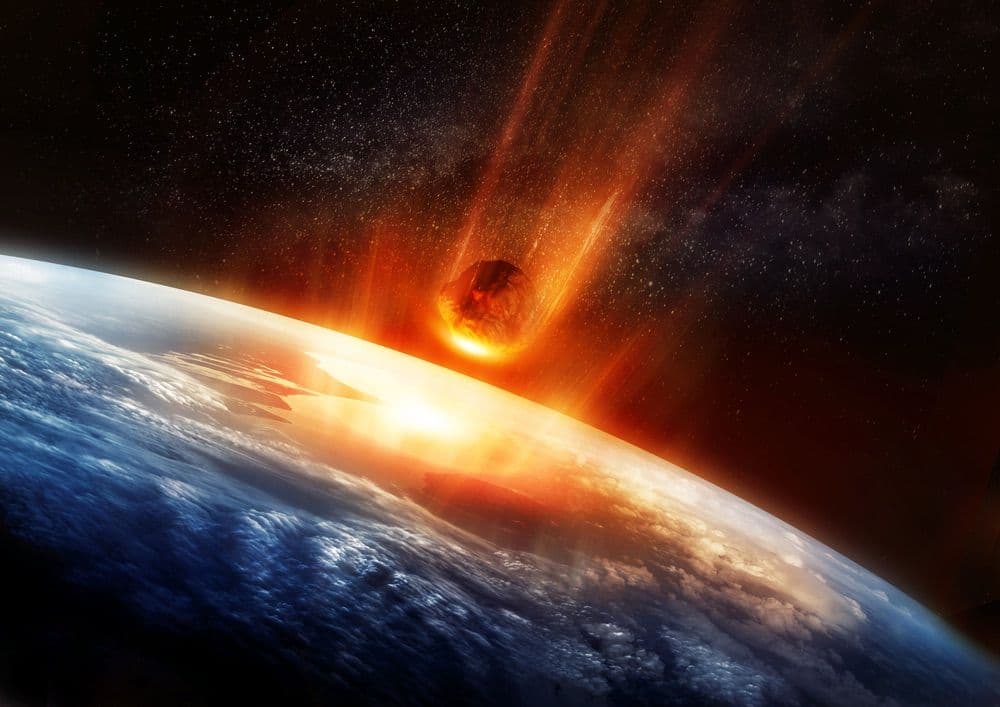
The Polymarket's 82.5% implied probability for "No" on a major meteor strike exceeding 10 kilotons in 2026 reflects NASA's Center for Near-Earth Object Studies (CNEOS) confirming zero tracked near-Earth objects (NEOs) on collision courses that year, per the latest Sentry impact monitoring table. Global detection networks like Pan-STARRS, ATLAS, and NEOWISE routinely spot objects over 20 meters—capable of 10kt+ airbursts—months or years ahead, drastically reducing undetected threats. Historical fireball data logs such events roughly once per decade, akin to Chelyabinsk in 2013, yielding an annual baseline risk below 20%. Absent recent orbital alerts or survey upticks, traders price in this statistical rarity, with no catalysts like NEO Surveyor data shifts expected to alter consensus before 2026.
Résumé expérimental généré par IA à partir des données Polymarket · Mis à jourCoup de météore majeur (10kt+) en 2026 ?
Coup de météore majeur (10kt+) en 2026 ?
Oui
$137,757 Vol.
$137,757 Vol.
Oui
$137,757 Vol.
$137,757 Vol.
The object must be classified as a natural meteoroid; events involving artificial objects or reentry vehicles do not qualify.
The primary resolution source will be the NASA JPL Fireball and Bolide Data repository: https://cneos.jpl.nasa.gov/fireballs/. The relevant field for determining impact energy is the “Impact Energy (kt)” column. If this dataset has not been updated to include all relevant dates by February 28, 2027, or if the NASA JPL Fireball and Bolide Data repository becomes permanently unavailable, this market may resolve based on a consensus of credible sources including the European Space Agency (ESA), the International Asteroid Warning Network (IAWN), the U.S. Department of Defense, or credible reporting of a scientific consensus, such as a NASA press release.
Marché ouvert : Dec 31, 2025, 1:18 PM ET
Resolver
0x65070BE91...The object must be classified as a natural meteoroid; events involving artificial objects or reentry vehicles do not qualify.
The primary resolution source will be the NASA JPL Fireball and Bolide Data repository: https://cneos.jpl.nasa.gov/fireballs/. The relevant field for determining impact energy is the “Impact Energy (kt)” column. If this dataset has not been updated to include all relevant dates by February 28, 2027, or if the NASA JPL Fireball and Bolide Data repository becomes permanently unavailable, this market may resolve based on a consensus of credible sources including the European Space Agency (ESA), the International Asteroid Warning Network (IAWN), the U.S. Department of Defense, or credible reporting of a scientific consensus, such as a NASA press release.
Resolver
0x65070BE91...The Polymarket's 82.5% implied probability for "No" on a major meteor strike exceeding 10 kilotons in 2026 reflects NASA's Center for Near-Earth Object Studies (CNEOS) confirming zero tracked near-Earth objects (NEOs) on collision courses that year, per the latest Sentry impact monitoring table. Global detection networks like Pan-STARRS, ATLAS, and NEOWISE routinely spot objects over 20 meters—capable of 10kt+ airbursts—months or years ahead, drastically reducing undetected threats. Historical fireball data logs such events roughly once per decade, akin to Chelyabinsk in 2013, yielding an annual baseline risk below 20%. Absent recent orbital alerts or survey upticks, traders price in this statistical rarity, with no catalysts like NEO Surveyor data shifts expected to alter consensus before 2026.
Résumé expérimental généré par IA à partir des données Polymarket · Mis à jour
Méfiez-vous des liens externes.
Méfiez-vous des liens externes.
Questions fréquentes