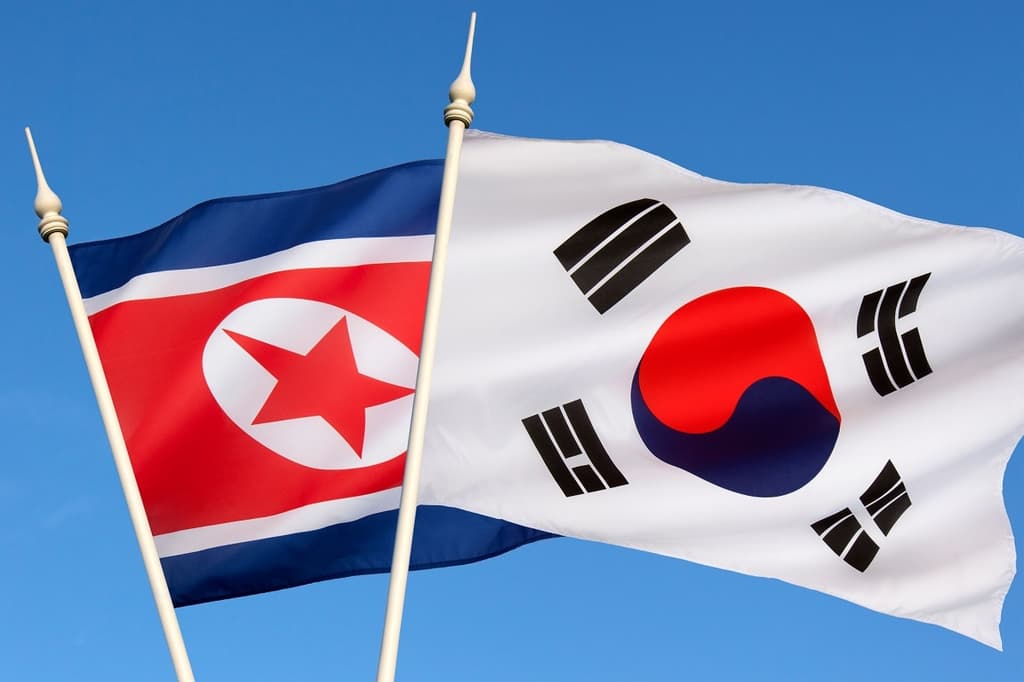
North Korean leader Kim Jong Un's March 23 parliamentary address, reinforcing the regime's "two hostile states" policy toward South Korea as its primary foreign enemy, has solidified trader consensus against direct talks by June 30, with "No" shares at 85.5%. Official statements from Pyongyang, highlighted in the Institute for the Study of War's March 25 update, explicitly reject future inter-Korean relations amid ongoing nuclear force expansion and recent diplomatic engagements with Russia and Belarus. While South Korea's President Lee Jae-myung pledged respect for the North's system earlier in March and is weighing softer stances like reduced UN human rights co-sponsorship, North Korea shows no de-escalation signals or scheduled summits, underscoring significant barriers to bilateral dialogue despite conditional openness to U.S. talks.
Résumé expérimental généré par IA à partir des données Polymarket · Mis à jourLa Corée du Nord et la Corée du Sud engageront-elles des pourparlers directs d'ici le 30 juin ?
La Corée du Nord et la Corée du Sud engageront-elles des pourparlers directs d'ici le 30 juin ?
Oui
Oui
The talks may be in-person, by phone, or virtual, and must be publicly acknowledged by either government or reported by credible media.
Routine military deconfliction, backchannel exchanges, or talks conducted entirely through another country or organization will not count.
The resolutions source will be a consensus of credible reporting.
Marché ouvert : Nov 5, 2025, 2:23 PM ET
Resolver
0x65070BE91...The talks may be in-person, by phone, or virtual, and must be publicly acknowledged by either government or reported by credible media.
Routine military deconfliction, backchannel exchanges, or talks conducted entirely through another country or organization will not count.
The resolutions source will be a consensus of credible reporting.
Resolver
0x65070BE91...North Korean leader Kim Jong Un's March 23 parliamentary address, reinforcing the regime's "two hostile states" policy toward South Korea as its primary foreign enemy, has solidified trader consensus against direct talks by June 30, with "No" shares at 85.5%. Official statements from Pyongyang, highlighted in the Institute for the Study of War's March 25 update, explicitly reject future inter-Korean relations amid ongoing nuclear force expansion and recent diplomatic engagements with Russia and Belarus. While South Korea's President Lee Jae-myung pledged respect for the North's system earlier in March and is weighing softer stances like reduced UN human rights co-sponsorship, North Korea shows no de-escalation signals or scheduled summits, underscoring significant barriers to bilateral dialogue despite conditional openness to U.S. talks.
Résumé expérimental généré par IA à partir des données Polymarket · Mis à jour
Méfiez-vous des liens externes.
Méfiez-vous des liens externes.
Questions fréquentes