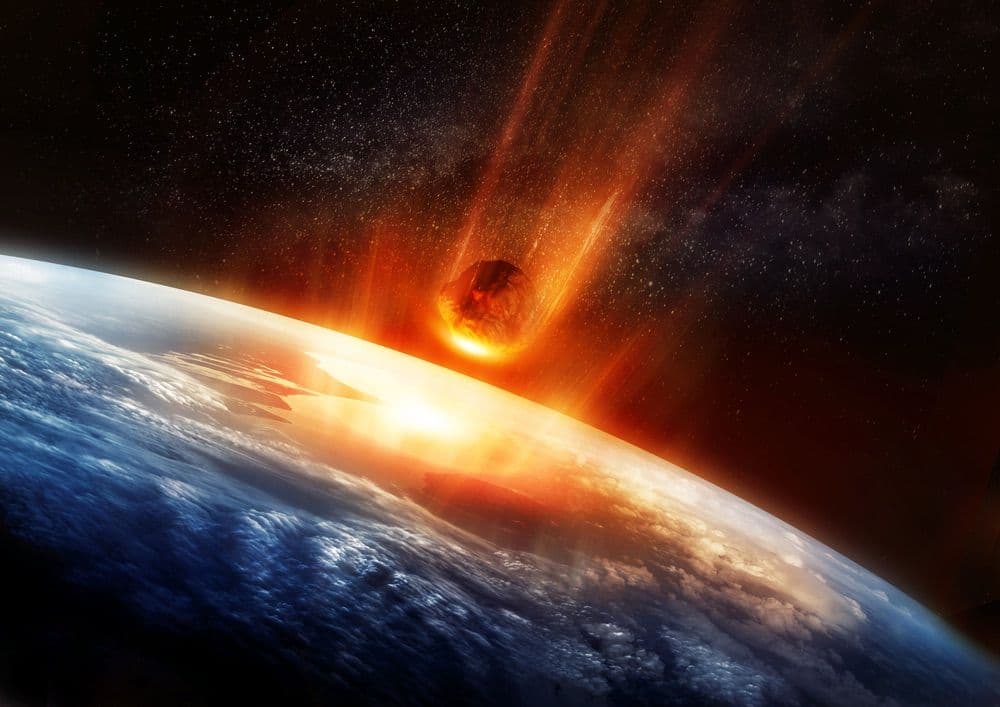
NASA's Center for Near-Earth Object Studies (CNEOS) Sentry system and ESA's risk list detect no credible threats of a 1-megaton meteor strike in 2026, with the highest-risk cataloged objects—such as (2013 TP4) and (2023 BZ)—under 20 meters in diameter, carrying impact probabilities below 0.004% and far less energy than 1 megaton TNT equivalent. CNEOS fireball data confirms no such events in 2026 to date, the largest at just 0.37 kilotons. This comprehensive monitoring, tracking nearly all potentially hazardous objects larger than 140 meters and most smaller ones weeks ahead, underpins the 96.6% market-implied probability for "No," aligning with a historical rate of roughly one 1-megaton airburst every few decades. Realistic shifts could arise from an undiscovered small bolide evading detection until entry, though probabilities remain negligible amid ongoing telescopic surveys.
Experimental AI-generated summary referencing Polymarket data. This is not trading advice and plays no role in how this market resolves. · Updated1 megaton meteor strike in 2026?
1 megaton meteor strike in 2026?
$104,450 Vol.
$104,450 Vol.
$104,450 Vol.
$104,450 Vol.
The object must be classified as a natural meteoroid; events involving artificial objects or reentry vehicles do not qualify.
The primary resolution source will be the NASA JPL Fireball and Bolide Data repository: https://cneos.jpl.nasa.gov/fireballs/. The relevant field for determining impact energy is the “Impact Energy (kt)” column. If this dataset has not been updated to include all relevant dates by February 28, 2027, or if the NASA JPL Fireball and Bolide Data repository becomes permanently unavailable, this market may resolve based on a consensus of credible sources including the European Space Agency (ESA), the International Asteroid Warning Network (IAWN), the U.S. Department of Defense, or credible reporting of a scientific consensus, such as a NASA press release.
Market Opened: Jan 2, 2026, 2:24 PM ET
Resolver
0x65070BE91...The object must be classified as a natural meteoroid; events involving artificial objects or reentry vehicles do not qualify.
The primary resolution source will be the NASA JPL Fireball and Bolide Data repository: https://cneos.jpl.nasa.gov/fireballs/. The relevant field for determining impact energy is the “Impact Energy (kt)” column. If this dataset has not been updated to include all relevant dates by February 28, 2027, or if the NASA JPL Fireball and Bolide Data repository becomes permanently unavailable, this market may resolve based on a consensus of credible sources including the European Space Agency (ESA), the International Asteroid Warning Network (IAWN), the U.S. Department of Defense, or credible reporting of a scientific consensus, such as a NASA press release.
Resolver
0x65070BE91...NASA's Center for Near-Earth Object Studies (CNEOS) Sentry system and ESA's risk list detect no credible threats of a 1-megaton meteor strike in 2026, with the highest-risk cataloged objects—such as (2013 TP4) and (2023 BZ)—under 20 meters in diameter, carrying impact probabilities below 0.004% and far less energy than 1 megaton TNT equivalent. CNEOS fireball data confirms no such events in 2026 to date, the largest at just 0.37 kilotons. This comprehensive monitoring, tracking nearly all potentially hazardous objects larger than 140 meters and most smaller ones weeks ahead, underpins the 96.6% market-implied probability for "No," aligning with a historical rate of roughly one 1-megaton airburst every few decades. Realistic shifts could arise from an undiscovered small bolide evading detection until entry, though probabilities remain negligible amid ongoing telescopic surveys.
Experimental AI-generated summary referencing Polymarket data. This is not trading advice and plays no role in how this market resolves. · Updated

Beware of external links.
Beware of external links.
Frequently Asked Questions