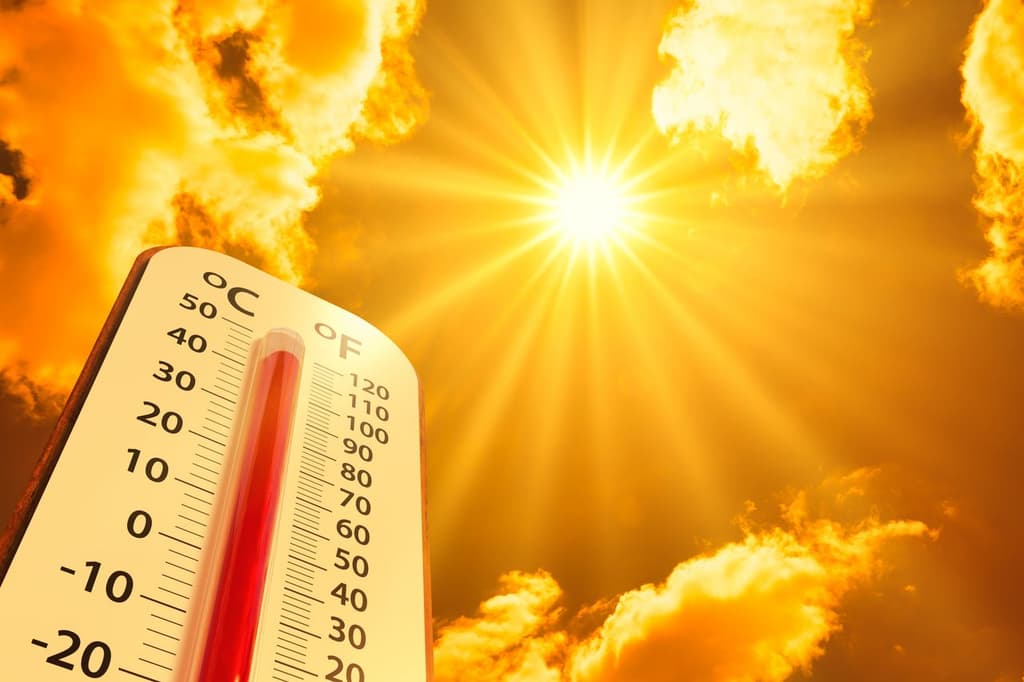
Trader consensus centers on a March 2026 global temperature anomaly of 1.20–1.29ºC above pre-industrial levels, driven primarily by forecasts of persistent La Niña conditions cooling interannual variability after 2024's record heat. Recent Copernicus data confirm 2024 as the hottest year on record at around 1.35ºC annually, but October-November cooling signals the El Niño-to-neutral transition, with NOAA and IRI models now assigning 70–85% odds to La Niña through early 2026. This tempers anomalies by 0.1–0.2ºC from trendline warming of ~0.02ºC/year, positioning lower bins as unlikely amid anthropogenic forcing while capping extremes above 1.29ºC. Upcoming December ENSO updates could refine these market-implied odds further.
Экспериментальная сводка, созданная ИИ на основе данных Polymarket · ОбновленоМарт 2026 Повышение температуры (ºC)
Март 2026 Повышение температуры (ºC)
1,20–1,24ºC 42%
1,25–1,29ºC 29.3%
1,15–1,19ºC 16%
>1,29ºC 8.1%
$167,116 Объем
$167,116 Объем
<1,10ºC
3%
1,10–1,14ºC
6%
1,15–1,19ºC
16%
1,20–1,24ºC
42%
1,25–1,29ºC
29%
>1,29ºC
8%
1,20–1,24ºC 42%
1,25–1,29ºC 29.3%
1,15–1,19ºC 16%
>1,29ºC 8.1%
$167,116 Объем
$167,116 Объем
<1,10ºC
3%
1,10–1,14ºC
6%
1,15–1,19ºC
16%
1,20–1,24ºC
42%
1,25–1,29ºC
29%
>1,29ºC
8%
An anomaly within a named bracket for March 2026 is necessary and sufficient to resolve this market immediately once the data becomes available, regardless of whether the figure for March 2026 is later revised.
The primary resolution source for this market will be the figure found in the table titled "GLOBAL Land-Ocean Temperature Index in 0.01 degrees Celsius" under the column "Mar" in the row "2026" (https://data.giss.nasa.gov/gistemp/tabledata_v4/GLB.Ts+dSST.txt).
If NASA’s “Global Temperature Index” is rendered permanently unavailable, other information from NASA may be used.
If no information for February 2026 is provided by NASA by May 1, 2026, 11:59 PM ET, this market will resolve to the lowest range bracket.
Открытие рынка: Feb 27, 2026, 6:18 PM ET
Resolver
0x69c47De9D...Resolver
0x69c47De9D...Trader consensus centers on a March 2026 global temperature anomaly of 1.20–1.29ºC above pre-industrial levels, driven primarily by forecasts of persistent La Niña conditions cooling interannual variability after 2024's record heat. Recent Copernicus data confirm 2024 as the hottest year on record at around 1.35ºC annually, but October-November cooling signals the El Niño-to-neutral transition, with NOAA and IRI models now assigning 70–85% odds to La Niña through early 2026. This tempers anomalies by 0.1–0.2ºC from trendline warming of ~0.02ºC/year, positioning lower bins as unlikely amid anthropogenic forcing while capping extremes above 1.29ºC. Upcoming December ENSO updates could refine these market-implied odds further.
Экспериментальная сводка, созданная ИИ на основе данных Polymarket · Обновлено
Не доверяй внешним ссылкам.
Часто задаваемые вопросы