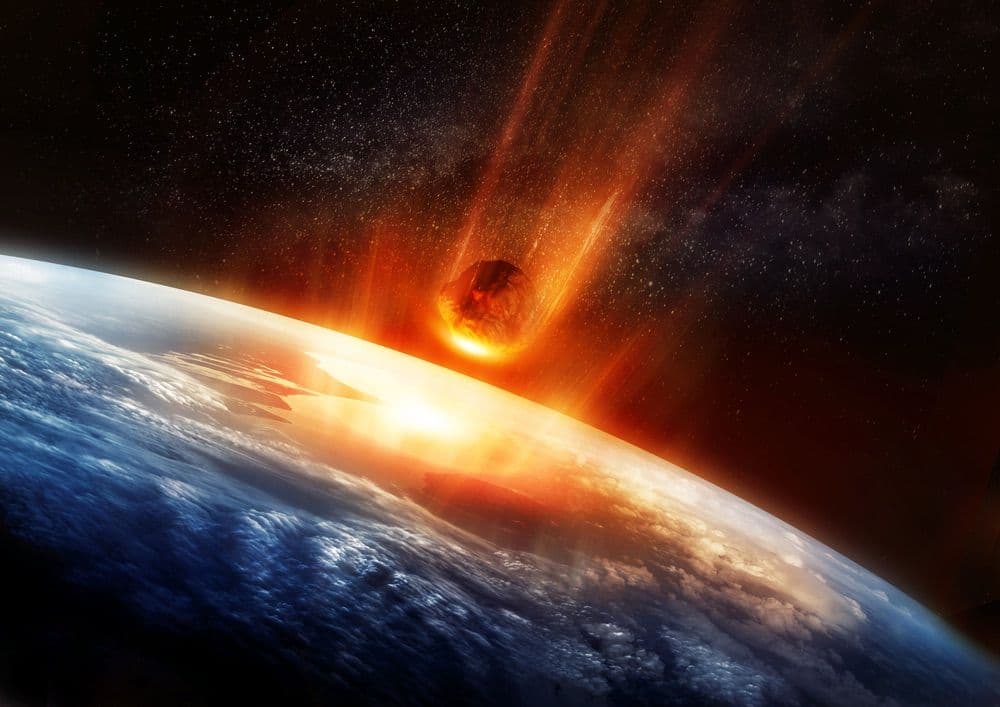
NASA's Center for Near-Earth Object Studies (CNEOS) and global planetary defense networks like ESA's NEO Coordination Centre confirm no known asteroids or comets on a collision course with Earth in 2026 capable of releasing 100 kilotons of TNT-equivalent energy, driving the market's 96% "No" consensus. Comprehensive surveys, including Pan-STARRS and ATLAS telescopes, catalog over 99% of kilometer-class threats and track smaller potentially hazardous objects down to about 140 meters, while historical fireball data from USGS and infrasound networks show 100kt+ airbursts occur roughly once every few decades globally. Baseline annual odds remain below 0.1%, with trader confidence bolstered by real-time orbital refinements. Realistic tail risks include an undetected 10-20 meter bolide—similar to Chelyabinsk's 500kt event—evading short-warning detection, though probability models peg this under 1% for the year.
Экспериментальная сводка, созданная ИИ на основе данных Polymarket · Обновлено100-тысячный метеоритный удар в 2026 году?
100-тысячный метеоритный удар в 2026 году?
Да
Да
The object must be classified as a natural meteoroid; events involving artificial objects or reentry vehicles do not qualify.
The primary resolution source will be the NASA JPL Fireball and Bolide Data repository: https://cneos.jpl.nasa.gov/fireballs/. The relevant field for determining impact energy is the “Impact Energy (kt)” column. If this dataset has not been updated to include all relevant dates by February 28, 2027, or if the NASA JPL Fireball and Bolide Data repository becomes permanently unavailable, this market may resolve based on a consensus of credible sources including the European Space Agency (ESA), the International Asteroid Warning Network (IAWN), the U.S. Department of Defense, or credible reporting of a scientific consensus, such as a NASA press release.
Открытие рынка: Jan 2, 2026, 2:23 PM ET
Resolver
0x65070BE91...The object must be classified as a natural meteoroid; events involving artificial objects or reentry vehicles do not qualify.
The primary resolution source will be the NASA JPL Fireball and Bolide Data repository: https://cneos.jpl.nasa.gov/fireballs/. The relevant field for determining impact energy is the “Impact Energy (kt)” column. If this dataset has not been updated to include all relevant dates by February 28, 2027, or if the NASA JPL Fireball and Bolide Data repository becomes permanently unavailable, this market may resolve based on a consensus of credible sources including the European Space Agency (ESA), the International Asteroid Warning Network (IAWN), the U.S. Department of Defense, or credible reporting of a scientific consensus, such as a NASA press release.
Resolver
0x65070BE91...NASA's Center for Near-Earth Object Studies (CNEOS) and global planetary defense networks like ESA's NEO Coordination Centre confirm no known asteroids or comets on a collision course with Earth in 2026 capable of releasing 100 kilotons of TNT-equivalent energy, driving the market's 96% "No" consensus. Comprehensive surveys, including Pan-STARRS and ATLAS telescopes, catalog over 99% of kilometer-class threats and track smaller potentially hazardous objects down to about 140 meters, while historical fireball data from USGS and infrasound networks show 100kt+ airbursts occur roughly once every few decades globally. Baseline annual odds remain below 0.1%, with trader confidence bolstered by real-time orbital refinements. Realistic tail risks include an undetected 10-20 meter bolide—similar to Chelyabinsk's 500kt event—evading short-warning detection, though probability models peg this under 1% for the year.
Экспериментальная сводка, созданная ИИ на основе данных Polymarket · Обновлено
Не доверяй внешним ссылкам.
Не доверяй внешним ссылкам.
Часто задаваемые вопросы