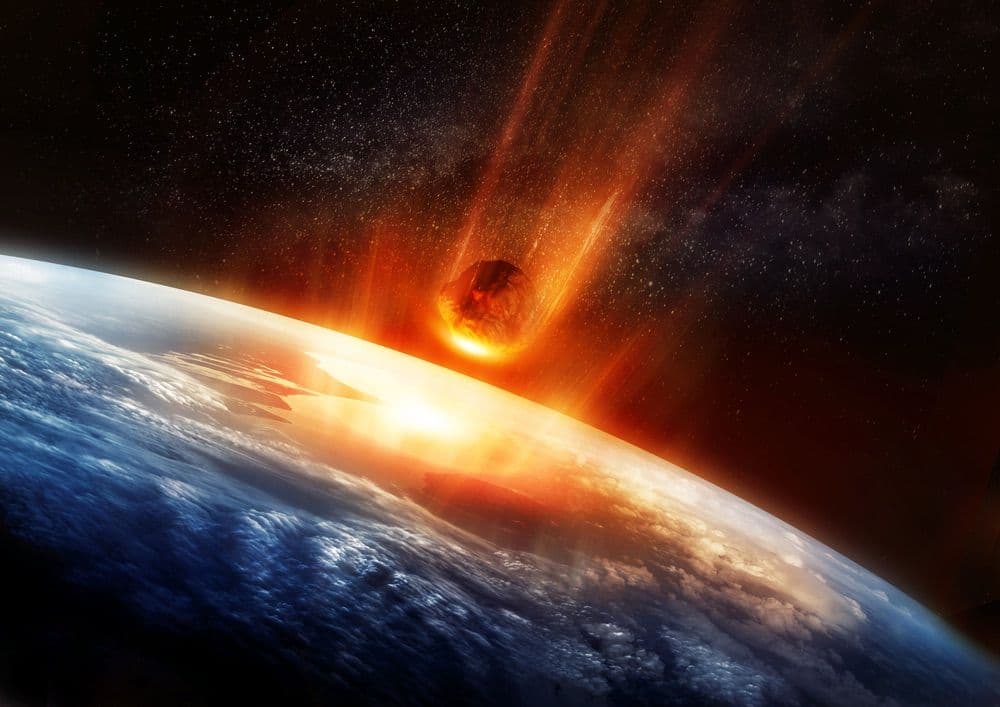
NASA's Center for Near-Earth Object Studies (CNEOS) and the ESA's NEO Coordination Centre track over 30,000 near-Earth objects, with their Sentry and Risk List systems confirming zero potential impacts in 2026 capable of 1 megaton TNT-equivalent energy, equivalent to a ~30-meter stony meteoroid airburst. This exhaustive monitoring, covering 99% of kilometer-scale threats and most mid-sized objects, underpins the 97.8% "No" consensus, as background impact rates for such events occur roughly once per century based on fireball sensor data from USGS and infrasound networks. Realistic tail risks remain minimal—a newly discovered undetected impactor—but upcoming NEO Surveyor telescope data in 2028 will further refine odds, with no model projecting elevated 2026 hazards.
Экспериментальная сводка, созданная ИИ на основе данных Polymarket · Обновлено1 мегатонный удар метеорита в 2026 году?
1 мегатонный удар метеорита в 2026 году?
Да
$92,179 Объем
$92,179 Объем
Да
$92,179 Объем
$92,179 Объем
The object must be classified as a natural meteoroid; events involving artificial objects or reentry vehicles do not qualify.
The primary resolution source will be the NASA JPL Fireball and Bolide Data repository: https://cneos.jpl.nasa.gov/fireballs/. The relevant field for determining impact energy is the “Impact Energy (kt)” column. If this dataset has not been updated to include all relevant dates by February 28, 2027, or if the NASA JPL Fireball and Bolide Data repository becomes permanently unavailable, this market may resolve based on a consensus of credible sources including the European Space Agency (ESA), the International Asteroid Warning Network (IAWN), the U.S. Department of Defense, or credible reporting of a scientific consensus, such as a NASA press release.
Открытие рынка: Jan 2, 2026, 2:24 PM ET
Resolver
0x65070BE91...The object must be classified as a natural meteoroid; events involving artificial objects or reentry vehicles do not qualify.
The primary resolution source will be the NASA JPL Fireball and Bolide Data repository: https://cneos.jpl.nasa.gov/fireballs/. The relevant field for determining impact energy is the “Impact Energy (kt)” column. If this dataset has not been updated to include all relevant dates by February 28, 2027, or if the NASA JPL Fireball and Bolide Data repository becomes permanently unavailable, this market may resolve based on a consensus of credible sources including the European Space Agency (ESA), the International Asteroid Warning Network (IAWN), the U.S. Department of Defense, or credible reporting of a scientific consensus, such as a NASA press release.
Resolver
0x65070BE91...NASA's Center for Near-Earth Object Studies (CNEOS) and the ESA's NEO Coordination Centre track over 30,000 near-Earth objects, with their Sentry and Risk List systems confirming zero potential impacts in 2026 capable of 1 megaton TNT-equivalent energy, equivalent to a ~30-meter stony meteoroid airburst. This exhaustive monitoring, covering 99% of kilometer-scale threats and most mid-sized objects, underpins the 97.8% "No" consensus, as background impact rates for such events occur roughly once per century based on fireball sensor data from USGS and infrasound networks. Realistic tail risks remain minimal—a newly discovered undetected impactor—but upcoming NEO Surveyor telescope data in 2028 will further refine odds, with no model projecting elevated 2026 hazards.
Экспериментальная сводка, созданная ИИ на основе данных Polymarket · Обновлено
Не доверяй внешним ссылкам.
Не доверяй внешним ссылкам.
Часто задаваемые вопросы