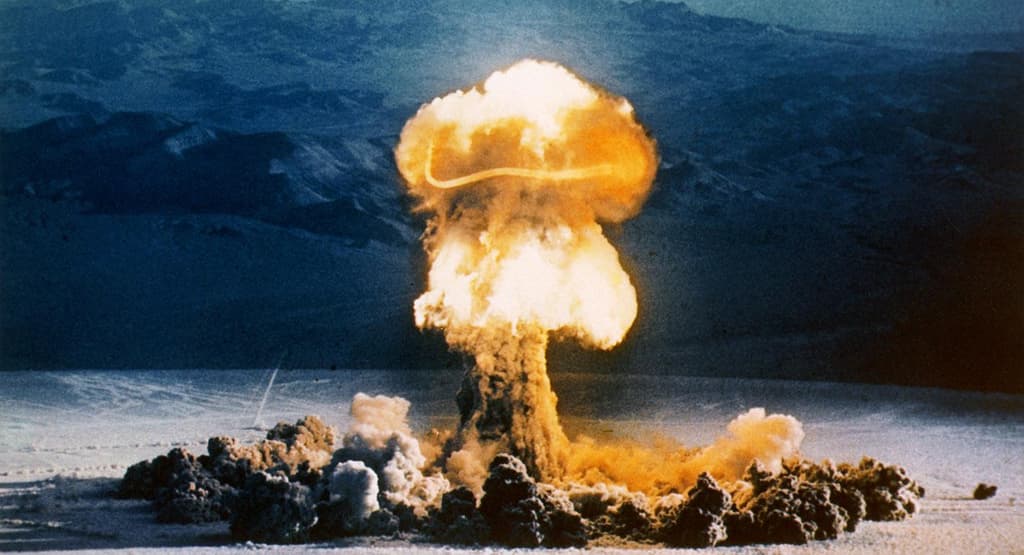
This market will resolve to "Yes" if Russia conducts a nuclear test by the listed date (ET). Otherwise, this market will resolve to "No".
A nuclear test is defined as the intentional non-combat detonation of a device by Russia that produces a nuclear chain reaction (fission or fusion), regardless of yield.
Accidents, radiological dispersal devices (bombs that spread radioactive material using conventional explosives such as "dirty bombs"), or actions by third parties will not count toward this market's resolution.
Tests not explicitly claimed by Russia may still qualify if a clear consensus of credible reporting attributes the nuclear detonation to Russia. For example, an unclaimed nuclear test analogous to the 1979 "Vela Incident" would count if credible reporting attributes it to Russia.
The resolution source for this market will be a broad consensus of credible reporting.Russia's announcement of nuclear-capable missile test launches at the Kura range in Kamchatka, running May 6-10 and coinciding with the May 9 Victory Day parade, has heightened tensions but does not constitute a nuclear explosive test, marking the first such activity there since October 2024. This follows the February 2026 expiration of the New START treaty and a late-April warning from the CTBTO executive secretary urging Moscow and Washington against resuming tests, amid Russia's 2023 CTBT ratification withdrawal and 2025 order for test resumption proposals. No full-scale nuclear detonation has occurred since 1990, upheld by a de facto global moratorium monitored by the CTBTO's International Monitoring System; trader consensus reflects low near-term probability due to diplomatic repercussions and technical barriers, with potential shifts from Ukraine escalation or U.S. policy changes.
This market will resolve to "Yes" if Russia conducts a nuclear test by the listed date (ET). Otherwise, this market will resolve to "No".
A nuclear test is defined as the intentional non-combat detonation of a device by Russia that produces a nuclear chain reaction (fission or fusion), regardless of yield.
Accidents, radiological dispersal devices (bombs that spread radioactive material using conventional explosives such as "dirty bombs"), or actions by third parties will not count toward this market's resolution.
Tests not explicitly claimed by Russia may still qualify if a clear consensus of credible reporting attributes the nuclear detonation to Russia. For example, an unclaimed nuclear test analogous to the 1979 "Vela Incident" would count if credible reporting attributes it to Russia.
The resolution source for this market will be a broad consensus of credible reporting.
This market will resolve to "Yes" if Russia conducts a nuclear test by the listed date (ET). Otherwise, this market will resolve to "No".
A nuclear test is defined as the intentional non-combat detonation of a device by Russia that produces a nuclear chain reaction (fission or fusion), regardless of yield.
Accidents, radiological dispersal devices (bombs that spread radioactive material using conventional explosives such as "dirty bombs"), or actions by third parties will not count toward this market's resolution.
Tests not explicitly claimed by Russia may still qualify if a clear consensus of credible reporting attributes the nuclear detonation to Russia. For example, an unclaimed nuclear test analogous to the 1979 "Vela Incident" would count if credible reporting attributes it to Russia.
The resolution source for this market will be a broad consensus of credible reporting.
Russia's announcement of nuclear-capable missile test launches at the Kura range in Kamchatka, running May 6-10 and coinciding with the May 9 Victory Day parade, has heightened tensions but does not constitute a nuclear explosive test, marking the first such activity there since October 2024. This follows the February 2026 expiration of the New START treaty and a late-April warning from the CTBTO executive secretary urging Moscow and Washington against resuming tests, amid Russia's 2023 CTBT ratification withdrawal and 2025 order for test resumption proposals. No full-scale nuclear detonation has occurred since 1990, upheld by a de facto global moratorium monitored by the CTBTO's International Monitoring System; trader consensus reflects low near-term probability due to diplomatic repercussions and technical barriers, with potential shifts from Ukraine escalation or U.S. policy changes.
Polymarket analysis notes that, despite Yars drills and bomber patrols, there is “absent CTBTO seismic data” and “Kremlin restraint statements,” further depressing the
December 31, 2026 drops to 4%5%
Polymarket analysis notes that, despite Yars drills and bomber patrols, there is “absent CTBTO seismic data” and “Kremlin restraint statements,” further depressing the test‑probability outlook
May 1 2026
U.S. Congress receives the 2026 Annual Threat Assessment stating Russia has suffered “multiple failed tests of new systems,” reinforcing expectations of continued test moratorium
December 31, 2026 dips to 9%1%
U.S. Congress receives the 2026 Annual Threat Assessment stating Russia has suffered “multiple failed tests of new systems,” reinforcing expectations of continued test moratorium
May 1 2026
U.S. Congressional Research Service report reiterates Russia's nuclear arsenal modernization and treaty adherence post-New START expiration without nuclear test resumption
September 30, 2026 dips to 3%4%
The CRS report confirmed Russia's continued compliance with New START limits despite treaty expiration and absence of nuclear test resumption, further lowering market expectations for a test by September 2026.
May 1 2026
Congressional Research Service report reiterates that Russia’s “modernization” is hampered by failed tests and that the New START treaty has just expired – The report underscored
September 30, 2026 dips to 6%2%
Congressional Research Service report reiterates that Russia’s “modernization” is hampered by failed tests and that the New START treaty has just expired – The report underscored that, despite the treaty’s lapse, Russia publicly pledged to continue abiding by its limits, reinforcing trader sentiment that a test was unlikely before Sept 30.
May 1 2026
U.S. report to Congress confirms Russia's nuclear weapons modernization amid multiple failed tests and no nuclear test detonations; Russia's nuclear posture remains aggressive but non-testing
December 31, 2026 dips to 5%4%
This latest intelligence reinforced the market's view that Russia is unlikely to conduct a nuclear test by year-end.
Apr 30 2026
IAEA Director‑General Rafael Grossi warns that any nuclear test by Russia (or the U.S.) would spark a cascade of worldwide testing – The UN‑backed warning amplified concerns about
September 30, 2026 dips to 8%1%
IAEA Director‑General Rafael Grossi warns that any nuclear test by Russia (or the U.S.) would spark a cascade of worldwide testing – The UN‑backed warning amplified concerns about escalation, leading markets to further discount the probability of a Russian test in the near term.
Apr 30 2026
The Russian‑held Zaporizhzhia nuclear plant loses external power for an hour on the 40th anniversary of Chernobyl, raising safety concerns but providing no evidence of a test
December 31, 2026 dips to 10%2%
The Russian‑held Zaporizhzhia nuclear plant loses external power for an hour on the 40th anniversary of Chernobyl, raising safety concerns but providing no evidence of a test
Apr 30 2026
Russian Defense Ministry reports successful training completion of Yars missile system driver-mechanics arriving for service
Routine personnel training for nuclear-capable missile systems indicated ongoing readiness but no test, supporting low market probabilities.
Apr 27 2026
Russian forces launch massive missile and drone strikes against Ukraine, including attacks near the Zaporizhzhia nuclear plant
Escalation in conventional strikes near nuclear sites raised concerns but no nuclear test occurred, maintaining low test probability.
Apr 26 2026
40th anniversary of the Chernobyl disaster marked by renewed warnings about nuclear risks amid ongoing Russia-Ukraine conflict; no nuclear test reported by Russia
December 31, 2026 dips to 9%1%
The event highlighted nuclear dangers but no new Russian nuclear test activity, sustaining low market probability.
Apr 22 2026
U.S. Congressional Research Service report reiterates Russia's nuclear arsenal modernization amid failed tests but no confirmed nuclear detonations; Russia continues nuclear saber rattling without testing
December 31, 2026 dips to 10%2%
Continued official assessments confirmed no nuclear test, maintaining low market odds.
Apr 22 2026
Dutch intelligence warns Russia is modernizing nuclear weapons but highlights destabilizing effects and short warning times, with no indication of imminent nuclear tests
The Dutch MIVD report noted Russia's deployment of advanced nuclear-capable weapons and ongoing arms race dynamics but did not report any nuclear test activity, supporting market skepticism about near-term tests.
Apr 21 2026
Head of the Comprehensive Nuclear Test Ban Treaty Organization warns at the UN that any nuclear test by the U.S., Russia, or others would trigger a dangerous spiral of nuclear testing globally
The warning underscored international pressure against nuclear tests, reinforcing expectations of restraint.
Apr 21 2026
UN chief Rafael Grossi and CTBTO executive Robert Floyd warn that a Russian nuclear test would trigger a “spiral” of further tests, underscoring Kremlin restraint
Apr 21 2026
International Atomic Energy Agency head warns U.S. and Russia against resuming nuclear tests, emphasizing global risks
September 30, 2026 dips to 6%3%
IAEA Director General Rafael Grossi publicly cautioned that any nuclear test by Russia or the U.S. would trigger a cascade of global nuclear tests, reinforcing diplomatic pressure on Russia to maintain its testing moratorium.
Apr 18 2026
Russian Foreign Ministry publicly rejects any possibility of using nuclear weapons in Ukraine – The statement was interpreted as a broader signal of restraint on nuclear
September 30, 2026 dips to 6%3%
Russian Foreign Ministry publicly rejects any possibility of using nuclear weapons in Ukraine – The statement was interpreted as a broader signal of restraint on nuclear activities, contributing to the continued decline in the “Yes”
Apr 2 2026
Russia conducts Yars ICBM drills in Siberia, but no warhead‑test activity is reported
December 31, 2026 plunges to 12%38%
Russia conducts Yars ICBM drills in Siberia, but no warhead‑test activity is reported
Apr 2 2026
Russian Strategic Missile Forces conduct large-scale drills in Siberia involving Yars intercontinental ballistic missiles capable of carrying nuclear warheads
June 30, 2026 plunges to 2%48%
Russia held major nuclear missile drills with Yars ICBMs, demonstrating nuclear readiness and signaling deterrence without conducting nuclear tests, contributing to a sharp drop in test probability.
Apr 1 2026
U.S. intelligence community reports multiple failed Russian nuclear weapons tests and ongoing modernization efforts without new nuclear detonations
September 30, 2026 plunges to 9%42%
The U.S. 2026 Annual Threat Assessment highlighted Russia's modernization of nuclear capabilities amid multiple failed tests, suggesting technical challenges and reducing expectations of imminent nuclear testing.
Mar 31 2026
U.S. intelligence community reports multiple failed Russian nuclear weapons tests and ongoing modernization efforts, but no new nuclear test detonations; New START Treaty expires but Russia signals intent to abide by limits if the U.S. does so
December 31, 2026 plunges to 12%38%
This report highlighted Russia's nuclear modernization challenges without evidence of imminent testing, reducing market confidence in a near-term test.
Mar 15 2026
U.S. intelligence briefing flags “multiple failed tests” of new Russian nuclear systems – A March testimony cited in the 2026 Annual Threat Assessment warned that Russia’s recent
September 30, 2026 plunges to 9%42%
U.S. intelligence briefing flags “multiple failed tests” of new Russian nuclear systems – A March testimony cited in the 2026 Annual Threat Assessment warned that Russia’s recent attempts at modernizing its arsenal had repeatedly failed, prompting traders to slash the perceived likelihood of a test before the end‑September deadline.
This market will resolve to "Yes" if Russia conducts a nuclear test by the listed date (ET). Otherwise, this market will resolve to "No".
A nuclear test is defined as the intentional non-combat detonation of a device by Russia that produces a nuclear chain reaction (fission or fusion), regardless of yield.
Accidents, radiological dispersal devices (bombs that spread radioactive material using conventional explosives such as "dirty bombs"), or actions by third parties will not count toward this market's resolution.
Tests not explicitly claimed by Russia may still qualify if a clear consensus of credible reporting attributes the nuclear detonation to Russia. For example, an unclaimed nuclear test analogous to the 1979 "Vela Incident" would count if credible reporting attributes it to Russia.
The resolution source for this market will be a broad consensus of credible reporting.Russia's announcement of nuclear-capable missile test launches at the Kura range in Kamchatka, running May 6-10 and coinciding with the May 9 Victory Day parade, has heightened tensions but does not constitute a nuclear explosive test, marking the first such activity there since October 2024. This follows the February 2026 expiration of the New START treaty and a late-April warning from the CTBTO executive secretary urging Moscow and Washington against resuming tests, amid Russia's 2023 CTBT ratification withdrawal and 2025 order for test resumption proposals. No full-scale nuclear detonation has occurred since 1990, upheld by a de facto global moratorium monitored by the CTBTO's International Monitoring System; trader consensus reflects low near-term probability due to diplomatic repercussions and technical barriers, with potential shifts from Ukraine escalation or U.S. policy changes.
This market will resolve to "Yes" if Russia conducts a nuclear test by the listed date (ET). Otherwise, this market will resolve to "No".
A nuclear test is defined as the intentional non-combat detonation of a device by Russia that produces a nuclear chain reaction (fission or fusion), regardless of yield.
Accidents, radiological dispersal devices (bombs that spread radioactive material using conventional explosives such as "dirty bombs"), or actions by third parties will not count toward this market's resolution.
Tests not explicitly claimed by Russia may still qualify if a clear consensus of credible reporting attributes the nuclear detonation to Russia. For example, an unclaimed nuclear test analogous to the 1979 "Vela Incident" would count if credible reporting attributes it to Russia.
The resolution source for this market will be a broad consensus of credible reporting.
This market will resolve to "Yes" if Russia conducts a nuclear test by the listed date (ET). Otherwise, this market will resolve to "No".
A nuclear test is defined as the intentional non-combat detonation of a device by Russia that produces a nuclear chain reaction (fission or fusion), regardless of yield.
Accidents, radiological dispersal devices (bombs that spread radioactive material using conventional explosives such as "dirty bombs"), or actions by third parties will not count toward this market's resolution.
Tests not explicitly claimed by Russia may still qualify if a clear consensus of credible reporting attributes the nuclear detonation to Russia. For example, an unclaimed nuclear test analogous to the 1979 "Vela Incident" would count if credible reporting attributes it to Russia.
The resolution source for this market will be a broad consensus of credible reporting.
Russia's announcement of nuclear-capable missile test launches at the Kura range in Kamchatka, running May 6-10 and coinciding with the May 9 Victory Day parade, has heightened tensions but does not constitute a nuclear explosive test, marking the first such activity there since October 2024. This follows the February 2026 expiration of the New START treaty and a late-April warning from the CTBTO executive secretary urging Moscow and Washington against resuming tests, amid Russia's 2023 CTBT ratification withdrawal and 2025 order for test resumption proposals. No full-scale nuclear detonation has occurred since 1990, upheld by a de facto global moratorium monitored by the CTBTO's International Monitoring System; trader consensus reflects low near-term probability due to diplomatic repercussions and technical barriers, with potential shifts from Ukraine escalation or U.S. policy changes.
Polymarket analysis notes that, despite Yars drills and bomber patrols, there is “absent CTBTO seismic data” and “Kremlin restraint statements,” further depressing the
December 31, 2026 drops to 4%5%
Polymarket analysis notes that, despite Yars drills and bomber patrols, there is “absent CTBTO seismic data” and “Kremlin restraint statements,” further depressing the test‑probability outlook
May 1 2026
U.S. Congress receives the 2026 Annual Threat Assessment stating Russia has suffered “multiple failed tests of new systems,” reinforcing expectations of continued test moratorium
December 31, 2026 dips to 9%1%
U.S. Congress receives the 2026 Annual Threat Assessment stating Russia has suffered “multiple failed tests of new systems,” reinforcing expectations of continued test moratorium
May 1 2026
U.S. Congressional Research Service report reiterates Russia's nuclear arsenal modernization and treaty adherence post-New START expiration without nuclear test resumption
September 30, 2026 dips to 3%4%
The CRS report confirmed Russia's continued compliance with New START limits despite treaty expiration and absence of nuclear test resumption, further lowering market expectations for a test by September 2026.
May 1 2026
Congressional Research Service report reiterates that Russia’s “modernization” is hampered by failed tests and that the New START treaty has just expired – The report underscored
September 30, 2026 dips to 6%2%
Congressional Research Service report reiterates that Russia’s “modernization” is hampered by failed tests and that the New START treaty has just expired – The report underscored that, despite the treaty’s lapse, Russia publicly pledged to continue abiding by its limits, reinforcing trader sentiment that a test was unlikely before Sept 30.
May 1 2026
U.S. report to Congress confirms Russia's nuclear weapons modernization amid multiple failed tests and no nuclear test detonations; Russia's nuclear posture remains aggressive but non-testing
December 31, 2026 dips to 5%4%
This latest intelligence reinforced the market's view that Russia is unlikely to conduct a nuclear test by year-end.
Apr 30 2026
IAEA Director‑General Rafael Grossi warns that any nuclear test by Russia (or the U.S.) would spark a cascade of worldwide testing – The UN‑backed warning amplified concerns about
September 30, 2026 dips to 8%1%
IAEA Director‑General Rafael Grossi warns that any nuclear test by Russia (or the U.S.) would spark a cascade of worldwide testing – The UN‑backed warning amplified concerns about escalation, leading markets to further discount the probability of a Russian test in the near term.
Apr 30 2026
The Russian‑held Zaporizhzhia nuclear plant loses external power for an hour on the 40th anniversary of Chernobyl, raising safety concerns but providing no evidence of a test
December 31, 2026 dips to 10%2%
The Russian‑held Zaporizhzhia nuclear plant loses external power for an hour on the 40th anniversary of Chernobyl, raising safety concerns but providing no evidence of a test
Apr 30 2026
Russian Defense Ministry reports successful training completion of Yars missile system driver-mechanics arriving for service
Routine personnel training for nuclear-capable missile systems indicated ongoing readiness but no test, supporting low market probabilities.
Apr 27 2026
Russian forces launch massive missile and drone strikes against Ukraine, including attacks near the Zaporizhzhia nuclear plant
Escalation in conventional strikes near nuclear sites raised concerns but no nuclear test occurred, maintaining low test probability.
Apr 26 2026
40th anniversary of the Chernobyl disaster marked by renewed warnings about nuclear risks amid ongoing Russia-Ukraine conflict; no nuclear test reported by Russia
December 31, 2026 dips to 9%1%
The event highlighted nuclear dangers but no new Russian nuclear test activity, sustaining low market probability.
Apr 22 2026
U.S. Congressional Research Service report reiterates Russia's nuclear arsenal modernization amid failed tests but no confirmed nuclear detonations; Russia continues nuclear saber rattling without testing
December 31, 2026 dips to 10%2%
Continued official assessments confirmed no nuclear test, maintaining low market odds.
Apr 22 2026
Dutch intelligence warns Russia is modernizing nuclear weapons but highlights destabilizing effects and short warning times, with no indication of imminent nuclear tests
The Dutch MIVD report noted Russia's deployment of advanced nuclear-capable weapons and ongoing arms race dynamics but did not report any nuclear test activity, supporting market skepticism about near-term tests.
Apr 21 2026
Head of the Comprehensive Nuclear Test Ban Treaty Organization warns at the UN that any nuclear test by the U.S., Russia, or others would trigger a dangerous spiral of nuclear testing globally
The warning underscored international pressure against nuclear tests, reinforcing expectations of restraint.
Apr 21 2026
UN chief Rafael Grossi and CTBTO executive Robert Floyd warn that a Russian nuclear test would trigger a “spiral” of further tests, underscoring Kremlin restraint
Apr 21 2026
International Atomic Energy Agency head warns U.S. and Russia against resuming nuclear tests, emphasizing global risks
September 30, 2026 dips to 6%3%
IAEA Director General Rafael Grossi publicly cautioned that any nuclear test by Russia or the U.S. would trigger a cascade of global nuclear tests, reinforcing diplomatic pressure on Russia to maintain its testing moratorium.
Apr 18 2026
Russian Foreign Ministry publicly rejects any possibility of using nuclear weapons in Ukraine – The statement was interpreted as a broader signal of restraint on nuclear
September 30, 2026 dips to 6%3%
Russian Foreign Ministry publicly rejects any possibility of using nuclear weapons in Ukraine – The statement was interpreted as a broader signal of restraint on nuclear activities, contributing to the continued decline in the “Yes”
Apr 2 2026
Russia conducts Yars ICBM drills in Siberia, but no warhead‑test activity is reported
December 31, 2026 plunges to 12%38%
Russia conducts Yars ICBM drills in Siberia, but no warhead‑test activity is reported
Apr 2 2026
Russian Strategic Missile Forces conduct large-scale drills in Siberia involving Yars intercontinental ballistic missiles capable of carrying nuclear warheads
June 30, 2026 plunges to 2%48%
Russia held major nuclear missile drills with Yars ICBMs, demonstrating nuclear readiness and signaling deterrence without conducting nuclear tests, contributing to a sharp drop in test probability.
Apr 1 2026
U.S. intelligence community reports multiple failed Russian nuclear weapons tests and ongoing modernization efforts without new nuclear detonations
September 30, 2026 plunges to 9%42%
The U.S. 2026 Annual Threat Assessment highlighted Russia's modernization of nuclear capabilities amid multiple failed tests, suggesting technical challenges and reducing expectations of imminent nuclear testing.
Mar 31 2026
U.S. intelligence community reports multiple failed Russian nuclear weapons tests and ongoing modernization efforts, but no new nuclear test detonations; New START Treaty expires but Russia signals intent to abide by limits if the U.S. does so
December 31, 2026 plunges to 12%38%
This report highlighted Russia's nuclear modernization challenges without evidence of imminent testing, reducing market confidence in a near-term test.
Mar 15 2026
U.S. intelligence briefing flags “multiple failed tests” of new Russian nuclear systems – A March testimony cited in the 2026 Annual Threat Assessment warned that Russia’s recent
September 30, 2026 plunges to 9%42%
U.S. intelligence briefing flags “multiple failed tests” of new Russian nuclear systems – A March testimony cited in the 2026 Annual Threat Assessment warned that Russia’s recent attempts at modernizing its arsenal had repeatedly failed, prompting traders to slash the perceived likelihood of a test before the end‑September deadline.
警惕外部链接哦。
警惕外部链接哦。
常见问题