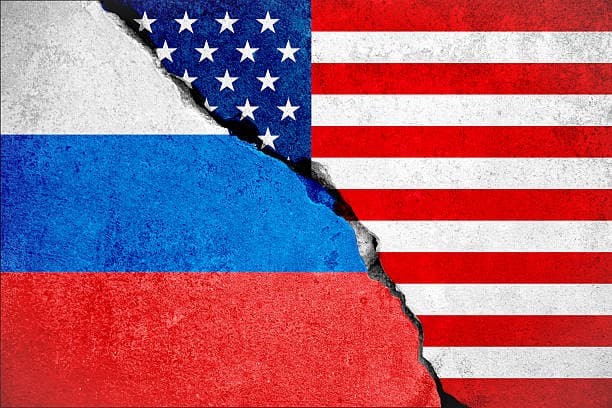
Russia's contested claim to full control of Ukraine's Luhansk region on April 1, rejected by Kyiv, highlights ongoing battlefield gains in the proxy conflict but no direct US military involvement with Russian forces. Massive Russian drone and missile barrages—nearly 1,000 munitions—targeted Ukraine on March 23-24, prompting heightened US intelligence concerns over unintended escalation to NATO-Russia confrontation. Diplomatic frictions persist, including trans-Atlantic disputes over temporary US sanctions relief on Russian oil, yet both Washington and Moscow emphasize restraint amid Trump's NATO skepticism. Key risks include deeper US arms to Ukraine or Russian gray-zone actions near NATO borders; upcoming NATO meetings could calibrate alliance responses without triggering direct clash.
Resumo experimental gerado por IA com dados do Polymarket · AtualizadoConfronto militar EUA x Rússia por...?
Confronto militar EUA x Rússia por...?
$584,598 Vol.
30 de junho de 2026
3%
31 de dezembro de 2026
9%
$584,598 Vol.
30 de junho de 2026
3%
31 de dezembro de 2026
9%
A "military encounter" is defined as any incident involving the use of force such as missile strikes, artillery fire, exchange of gunfire, or other forms of direct military engagement between U.S. and Russian military forces. Non-violent actions, such as airspace violations, firing of warning shots (such as the June, 2021 Black Sea Confrontations between Russian forces and HMS Defender), or cyberattacks will not qualify.
Intentional physical collisions, including aerial interceptions and naval ramming without the direct use of weaponry, such as the 2023 Black Sea incident—where a Russian Su-27 damaged a U.S. MQ-9 Reaper drone's propeller, leading to its crash— will not qualify regardless of damage.
Military contractors will qualify only if confirmed to be operating under the direct command or coordination of the respective state’s armed forces (e.g. the Battle of Khasham would not qualify).
The resolution source for this market will be a consensus of credible reporting.
Mercado Aberto: Oct 27, 2025, 1:28 PM ET
Resolver
0x65070BE91...A "military encounter" is defined as any incident involving the use of force such as missile strikes, artillery fire, exchange of gunfire, or other forms of direct military engagement between U.S. and Russian military forces. Non-violent actions, such as airspace violations, firing of warning shots (such as the June, 2021 Black Sea Confrontations between Russian forces and HMS Defender), or cyberattacks will not qualify.
Intentional physical collisions, including aerial interceptions and naval ramming without the direct use of weaponry, such as the 2023 Black Sea incident—where a Russian Su-27 damaged a U.S. MQ-9 Reaper drone's propeller, leading to its crash— will not qualify regardless of damage.
Military contractors will qualify only if confirmed to be operating under the direct command or coordination of the respective state’s armed forces (e.g. the Battle of Khasham would not qualify).
The resolution source for this market will be a consensus of credible reporting.
Resolver
0x65070BE91...Russia's contested claim to full control of Ukraine's Luhansk region on April 1, rejected by Kyiv, highlights ongoing battlefield gains in the proxy conflict but no direct US military involvement with Russian forces. Massive Russian drone and missile barrages—nearly 1,000 munitions—targeted Ukraine on March 23-24, prompting heightened US intelligence concerns over unintended escalation to NATO-Russia confrontation. Diplomatic frictions persist, including trans-Atlantic disputes over temporary US sanctions relief on Russian oil, yet both Washington and Moscow emphasize restraint amid Trump's NATO skepticism. Key risks include deeper US arms to Ukraine or Russian gray-zone actions near NATO borders; upcoming NATO meetings could calibrate alliance responses without triggering direct clash.
Resumo experimental gerado por IA com dados do Polymarket · Atualizado
Cuidado com os links externos.
Cuidado com os links externos.
Frequently Asked Questions