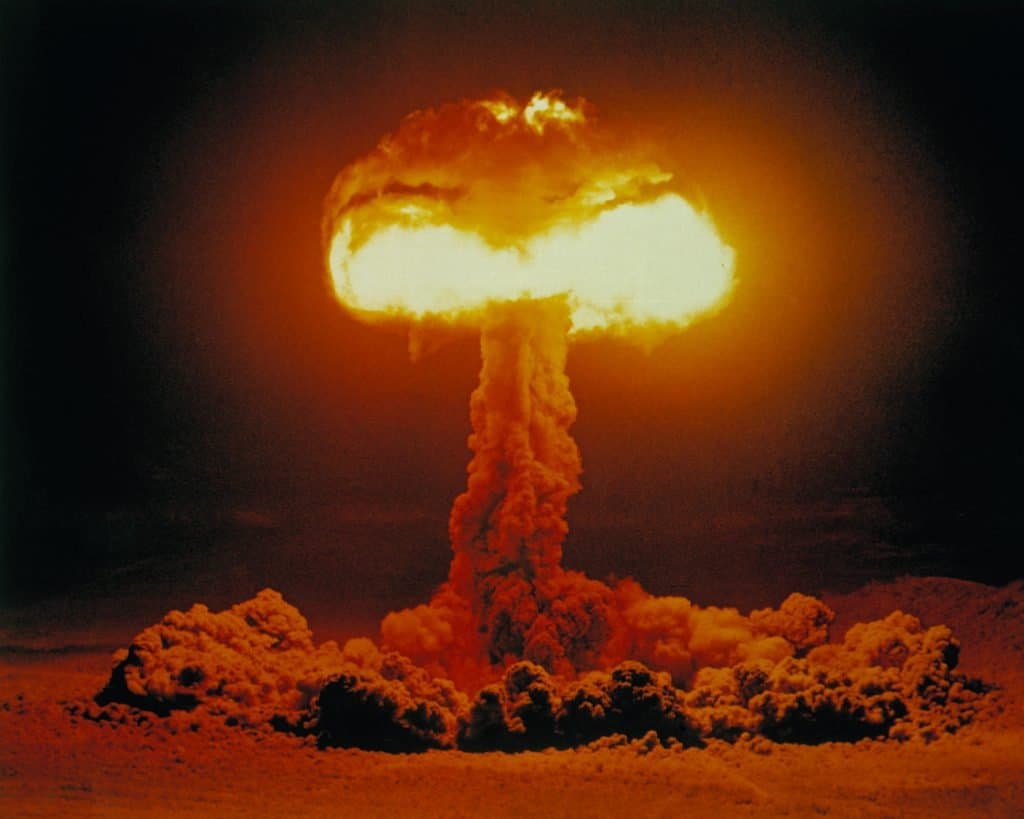
The U.S. has observed a voluntary nuclear testing moratorium since its last underground explosion in 1992, relying on stockpile stewardship programs to certify warhead reliability. President Trump's October 2025 social media directive to resume testing "on an equal basis" with adversaries—citing alleged Chinese covert tests and Russia's New START expiry in February 2026—prompted ongoing assessments, as confirmed in Undersecretary of State Thomas DiNanno's March 24 Senate testimony, where he declined to rule out full-scale underground tests at the Nevada National Security Site. No decision or test has materialized amid congressional pushback on funding and nonproliferation concerns at the upcoming NPT review conference; historical readiness timelines suggest 24-36 months for preparation.
Resumo experimental gerado por IA com dados do Polymarket · AtualizadoTeste nuclear dos EUA por...?
Teste nuclear dos EUA por...?
$610,984 Vol.
30 de junho de 2026
2%
September 30, 2026
11%
December 31, 2026
17%
$610,984 Vol.
30 de junho de 2026
2%
September 30, 2026
11%
December 31, 2026
17%
A nuclear test is defined as the intentional non-combat detonation of a device by the US that produces a nuclear chain reaction (fission or fusion), regardless of yield.
Accidents, radiological dispersal devices (bombs that spread radioactive material using conventional explosives such as "dirty bombs"), or actions by third parties will not count toward this market's resolution.
Tests not explicitly claimed by US may still qualify if a clear consensus of credible reporting attributes the nuclear detonation to US. For example, an unclaimed nuclear test analogous to the 1979 "Vela Incident" would count if credible reporting attributes it to the US.
The resolution source for this market will be a broad consensus of credible reporting.
Mercado Aberto: Mar 31, 2026, 3:32 PM ET
Resolver
0x65070BE91...A nuclear test is defined as the intentional non-combat detonation of a device by the US that produces a nuclear chain reaction (fission or fusion), regardless of yield.
Accidents, radiological dispersal devices (bombs that spread radioactive material using conventional explosives such as "dirty bombs"), or actions by third parties will not count toward this market's resolution.
Tests not explicitly claimed by US may still qualify if a clear consensus of credible reporting attributes the nuclear detonation to US. For example, an unclaimed nuclear test analogous to the 1979 "Vela Incident" would count if credible reporting attributes it to the US.
The resolution source for this market will be a broad consensus of credible reporting.
Resolver
0x65070BE91...The U.S. has observed a voluntary nuclear testing moratorium since its last underground explosion in 1992, relying on stockpile stewardship programs to certify warhead reliability. President Trump's October 2025 social media directive to resume testing "on an equal basis" with adversaries—citing alleged Chinese covert tests and Russia's New START expiry in February 2026—prompted ongoing assessments, as confirmed in Undersecretary of State Thomas DiNanno's March 24 Senate testimony, where he declined to rule out full-scale underground tests at the Nevada National Security Site. No decision or test has materialized amid congressional pushback on funding and nonproliferation concerns at the upcoming NPT review conference; historical readiness timelines suggest 24-36 months for preparation.
Resumo experimental gerado por IA com dados do Polymarket · Atualizado
Cuidado com os links externos.
Cuidado com os links externos.
Frequently Asked Questions