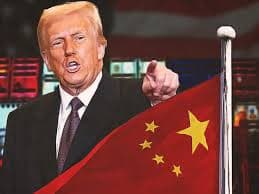
President-elect Donald Trump has shown no public intent or statements signaling a plan to declare a national emergency over election interference after his decisive 2024 victory and state certifications, driving trader consensus to price "No" at 68%. Recent developments center on cabinet nominations—like Pete Hegseth for Defense and Scott Bessent for Treasury—and transition priorities such as border security executive orders, tariffs on Mexico and China, and Department of Government Efficiency initiatives, sidelining election-related actions. With inauguration on January 20, 2025, any declaration would invoke the National Emergencies Act requiring congressional notice, but the lack of ongoing crisis or legal impetus post-election reduces expectations amid focus on confirmation hearings and policy rollouts.
Polymarketデータを参照したAI生成の実験的な要約 · 更新日はい
$131,821 Vol.
$131,821 Vol.
はい
$131,821 Vol.
$131,821 Vol.
A qualifying declaration must include formal language stating that a national emergency exists and must be issued under the National Emergencies Act (50 U.S.C. § 1621 et seq.). The declaration must explicitly reference interference in U.S. elections, election processes, election systems, voting procedures, ballots, or voting machines as the basis for the emergency. Statements, speeches, social media posts, draft orders, executive orders that do not formally declare a national emergency under the National Emergencies Act, or other actions that merely reference election interference without declaring a national emergency will not qualify.
Renewals or extensions of previously existing national emergencies will not qualify unless the text is materially modified to explicitly relate to election interference.
The primary resolution source will be the Federal Register and official White House publications, however a consensus of credible reporting may also be used.
マーケット開始日: Feb 26, 2026, 4:29 PM ET
Resolver
0x65070BE91...A qualifying declaration must include formal language stating that a national emergency exists and must be issued under the National Emergencies Act (50 U.S.C. § 1621 et seq.). The declaration must explicitly reference interference in U.S. elections, election processes, election systems, voting procedures, ballots, or voting machines as the basis for the emergency. Statements, speeches, social media posts, draft orders, executive orders that do not formally declare a national emergency under the National Emergencies Act, or other actions that merely reference election interference without declaring a national emergency will not qualify.
Renewals or extensions of previously existing national emergencies will not qualify unless the text is materially modified to explicitly relate to election interference.
The primary resolution source will be the Federal Register and official White House publications, however a consensus of credible reporting may also be used.
Resolver
0x65070BE91...President-elect Donald Trump has shown no public intent or statements signaling a plan to declare a national emergency over election interference after his decisive 2024 victory and state certifications, driving trader consensus to price "No" at 68%. Recent developments center on cabinet nominations—like Pete Hegseth for Defense and Scott Bessent for Treasury—and transition priorities such as border security executive orders, tariffs on Mexico and China, and Department of Government Efficiency initiatives, sidelining election-related actions. With inauguration on January 20, 2025, any declaration would invoke the National Emergencies Act requiring congressional notice, but the lack of ongoing crisis or legal impetus post-election reduces expectations amid focus on confirmation hearings and policy rollouts.
Polymarketデータを参照したAI生成の実験的な要約 · 更新日
外部リンクに注意してください。
外部リンクに注意してください。
よくある質問