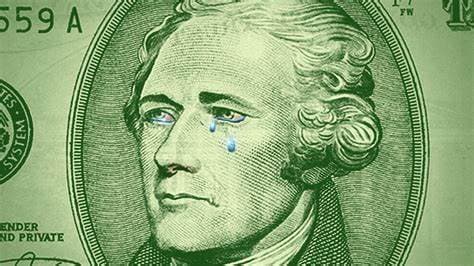
The strong trader consensus against a US debt default by 2027 stems from repeated congressional action to raise or suspend the debt ceiling through bipartisan negotiations, as seen in prior extensions tied to appropriations bills and continuing resolutions. Lawmakers across parties have consistently prioritized avoiding any breach that could disrupt Treasury payments, trigger credit rating pressure, or raise borrowing costs, with extraordinary measures available as short-term buffers. Historical patterns show defaults avoided even amid divided government and fiscal standoffs. Still, scenarios such as an extended legislative impasse during a future debt-limit deadline, major economic shock altering revenue projections, or sudden shifts in entitlement spending commitments could introduce new volatility before the 2027 horizon.
Experimentelle KI-generierte Zusammenfassung mit Polymarket-Daten. Dies ist keine Handelsberatung und spielt keine Rolle bei der Auflösung dieses Marktes. · AktualisiertUS-Schuldenausfälle bis 2027?
Ja
$14,964 Vol.
$14,964 Vol.
Ja
$14,964 Vol.
$14,964 Vol.
If Standard & Poor’s, Moody’s, or Fitch publicly classify any U.S. sovereign debt as being in default during the qualifying period this will qualify for a “Yes” resolution.
The resolution source will be official information from the U.S. Department of the Treasury, Standard & Poor’s, Moody’s, and Fitch.
Markt eröffnet: Nov 5, 2025, 2:49 PM ET
Resolver
0x65070BE91...If Standard & Poor’s, Moody’s, or Fitch publicly classify any U.S. sovereign debt as being in default during the qualifying period this will qualify for a “Yes” resolution.
The resolution source will be official information from the U.S. Department of the Treasury, Standard & Poor’s, Moody’s, and Fitch.
Resolver
0x65070BE91...The strong trader consensus against a US debt default by 2027 stems from repeated congressional action to raise or suspend the debt ceiling through bipartisan negotiations, as seen in prior extensions tied to appropriations bills and continuing resolutions. Lawmakers across parties have consistently prioritized avoiding any breach that could disrupt Treasury payments, trigger credit rating pressure, or raise borrowing costs, with extraordinary measures available as short-term buffers. Historical patterns show defaults avoided even amid divided government and fiscal standoffs. Still, scenarios such as an extended legislative impasse during a future debt-limit deadline, major economic shock altering revenue projections, or sudden shifts in entitlement spending commitments could introduce new volatility before the 2027 horizon.
Experimentelle KI-generierte Zusammenfassung mit Polymarket-Daten. Dies ist keine Handelsberatung und spielt keine Rolle bei der Auflösung dieses Marktes. · Aktualisiert
Vorsicht bei externen Links.
Häufig gestellte Fragen