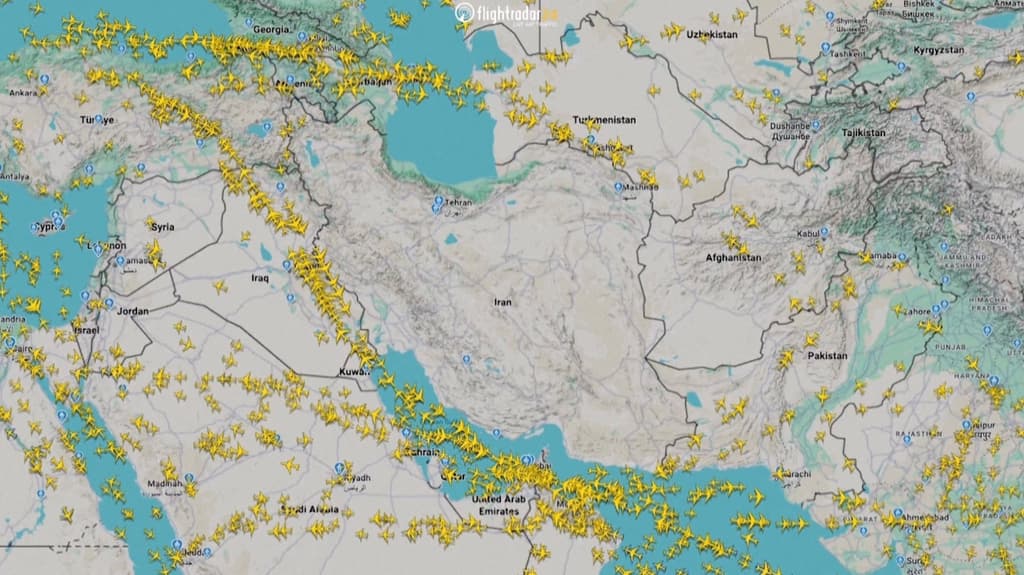
This market will resolve to “Yes” if Iran initiates a major closure of its airspace, that is not solely due to weather conditions, by the listed date, 11:59 PM ET. Otherwise, this market will resolve to “No”.
A “major closure” is defined as a broad closure, cancellation, or suspension of commercial flights transiting, arriving in, and departing from Iranian airspace or a major Iranian Airspace region. A qualifying closure must apply generally to flights across Iran or a major Iranian airspace region. Limited cancellations, delays, or other partial closures will not qualify. Limited exceptions to a broad closure, however, will not disqualify such a closure from counting (e.g. exceptions for certain flights pre-approved by the Iranian Civil Aviation Authority may be permitted).
Any non-weather complete suspension of commercial arrivals and departures affecting at least two of the following airports will qualify: Imam Khomeini International Airport (IKA), Mehrabad Airport (THR), Mashhad International Airport (MHD), Shiraz International Airport (SYZ), or Isfahan International Airport (IFN).
Qualifying previous examples include the January 2026 total closure of Iranian airspace except to international flights with express governmental permission (https://www.reuters.com/world/middle-east/iran-shuts-airspace-most-flights-flightradar24-says-2026-01-14/) and the April 2024 closure of Iran’s western airspace (https://www.reuters.com/world/middle-east/iranian-airports-cancel-flights-until-monday-morning-2024-04-14/). Non-qualifying examples include the January 27, 2026 partial closure of Iranian airspace around the Strait of Hormuz (https://www.aa.com.tr/en/middle-east/iran-issues-airspace-notice-for-military-drills-near-strait-of-hormuz/3812508) and the January 25 - April 25, 2026 VFR (Visual Flight Rules) flights suspension which did not broadly close commercial aviation in a qualifying region (https://www.intellinews.com/iran-suspends-general-aviation-and-vfr-flights-in-new-airspace-directive-421997/).
Warnings, No-Fly-Zones, or other flight restrictions imposed by airlines or countries other than Iran will not be sufficient for a “Yes” resolution.
Airspace closures which occur solely due to weather conditions will not qualify.
The primary resolution sources for this market will be official information from Iranian aviation authorities and a consensus of credible reporting.This market will resolve to “Yes” if Iran initiates a major closure of its airspace, that is not solely due to weather conditions, by the listed date, 11:59 PM ET. Otherwise, this market will resolve to “No”.
A “major closure” is defined as a broad closure, cancellation, or suspension of commercial flights transiting, arriving in, and departing from Iranian airspace or a major Iranian Airspace region. A qualifying closure must apply generally to flights across Iran or a major Iranian airspace region. Limited cancellations, delays, or other partial closures will not qualify. Limited exceptions to a broad closure, however, will not disqualify such a closure from counting (e.g. exceptions for certain flights pre-approved by the Iranian Civil Aviation Authority may be permitted).
Any non-weather complete suspension of commercial arrivals and departures affecting at least two of the following airports will qualify: Imam Khomeini International Airport (IKA), Mehrabad Airport (THR), Mashhad International Airport (MHD), Shiraz International Airport (SYZ), or Isfahan International Airport (IFN).
Qualifying previous examples include the January 2026 total closure of Iranian airspace except to international flights with express governmental permission (https://www.reuters.com/world/middle-east/iran-shuts-airspace-most-flights-flightradar24-says-2026-01-14/) and the April 2024 closure of Iran’s western airspace (https://www.reuters.com/world/middle-east/iranian-airports-cancel-flights-until-monday-morning-2024-04-14/). Non-qualifying examples include the January 27, 2026 partial closure of Iranian airspace around the Strait of Hormuz (https://www.aa.com.tr/en/middle-east/iran-issues-airspace-notice-for-military-drills-near-strait-of-hormuz/3812508) and the January 25 - April 25, 2026 VFR (Visual Flight Rules) flights suspension which did not broadly close commercial aviation in a qualifying region (https://www.intellinews.com/iran-suspends-general-aviation-and-vfr-flights-in-new-airspace-directive-421997/).
Warnings, No-Fly-Zones, or other flight restrictions imposed by airlines or countries other than Iran will not be sufficient for a “Yes” resolution.
Airspace closures which occur solely due to weather conditions will not qualify.
The primary resolution sources for this market will be official information from Iranian aviation authorities and a consensus of credible reporting.Recent US and Israeli military strikes on Iranian targets beginning February 28, 2026, followed by Iranian missile and drone retaliation, prompted broad closures across the Tehran Flight Information Region and neighboring airspace, leading airlines to reroute or suspend operations. Iranian authorities have since implemented phased partial reopenings from mid-April, restoring some commercial services at major hubs under heightened security protocols, though ongoing NOTAM advisories from multiple aviation authorities continue to caution against transit. Accusations by Iranian officials on May 5 regarding civilian casualties have increased escalation risks through diplomatic and military channels. Scheduled developments such as potential further strikes or de-escalation talks through the end of May could influence assessments of whether a qualifying full suspension of commercial traffic occurs before the resolution window, reflecting trader consensus on conflict dynamics and regional stability.
This market will resolve to “Yes” if Iran initiates a major closure of its airspace, that is not solely due to weather conditions, by the listed date, 11:59 PM ET. Otherwise, this market will resolve to “No”.
A “major closure” is defined as a broad closure, cancellation, or suspension of commercial flights transiting, arriving in, and departing from Iranian airspace or a major Iranian Airspace region. A qualifying closure must apply generally to flights across Iran or a major Iranian airspace region. Limited cancellations, delays, or other partial closures will not qualify. Limited exceptions to a broad closure, however, will not disqualify such a closure from counting (e.g. exceptions for certain flights pre-approved by the Iranian Civil Aviation Authority may be permitted).
Any non-weather complete suspension of commercial arrivals and departures affecting at least two of the following airports will qualify: Imam Khomeini International Airport (IKA), Mehrabad Airport (THR), Mashhad International Airport (MHD), Shiraz International Airport (SYZ), or Isfahan International Airport (IFN).
This market will resolve to “Yes” if Iran initiates a major closure of its airspace, that is not solely due to weather conditions, by the listed date, 11:59 PM ET. Otherwise, this market will resolve to “No”.
A “major closure” is defined as a broad closure, cancellation, or suspension of commercial flights transiting, arriving in, and departing from Iranian airspace or a major Iranian Airspace region. A qualifying closure must apply generally to flights across Iran or a major Iranian airspace region. Limited cancellations, delays, or other partial closures will not qualify. Limited exceptions to a broad closure, however, will not disqualify such a closure from counting (e.g. exceptions for certain flights pre-approved by the Iranian Civil Aviation Authority may be permitted).
Any non-weather complete suspension of commercial arrivals and departures affecting at least two of the following airports will qualify: Imam Khomeini International Airport (IKA), Mehrabad Airport (THR), Mashhad International Airport (MHD), Shiraz International Airport (SYZ), or Isfahan International Airport (IFN).
Qualifying previous examples include the January 2026 total closure of Iranian airspace except to international flights with express governmental permission (https://www.reuters.com/world/middle-east/iran-shuts-airspace-most-flights-flightradar24-says-2026-01-14/) and the April 2024 closure of Iran’s western airspace (https://www.reuters.com/world/middle-east/iranian-airports-cancel-flights-until-monday-morning-2024-04-14/). Non-qualifying examples include the January 27, 2026 partial closure of Iranian airspace around the Strait of Hormuz (https://www.aa.com.tr/en/middle-east/iran-issues-airspace-notice-for-military-drills-near-strait-of-hormuz/3812508) and the January 25 - April 25, 2026 VFR (Visual Flight Rules) flights suspension which did not broadly close commercial aviation in a qualifying region (https://www.intellinews.com/iran-suspends-general-aviation-and-vfr-flights-in-new-airspace-directive-421997/).
Warnings, No-Fly-Zones, or other flight restrictions imposed by airlines or countries other than Iran will not be sufficient for a “Yes” resolution.
Airspace closures which occur solely due to weather conditions will not qualify.
The primary resolution sources for this market will be official information from Iranian aviation authorities and a consensus of credible reporting.
Recent US and Israeli military strikes on Iranian targets beginning February 28, 2026, followed by Iranian missile and drone retaliation, prompted broad closures across the Tehran Flight Information Region and neighboring airspace, leading airlines to reroute or suspend operations. Iranian authorities have since implemented phased partial reopenings from mid-April, restoring some commercial services at major hubs under heightened security protocols, though ongoing NOTAM advisories from multiple aviation authorities continue to caution against transit. Accusations by Iranian officials on May 5 regarding civilian casualties have increased escalation risks through diplomatic and military channels. Scheduled developments such as potential further strikes or de-escalation talks through the end of May could influence assessments of whether a qualifying full suspension of commercial traffic occurs before the resolution window, reflecting trader consensus on conflict dynamics and regional stability.
Experimentelle KI-generierte Zusammenfassung mit Polymarket-Daten. Dies ist keine Handelsberatung und spielt keine Rolle bei der Auflösung dieses Marktes. · Aktualisiert
May 22 2026
Commercial flights resume at Tehran's Imam Khomeini International Airport
Commercial flights resumed at Tehran's Imam Khomeini International Airport after a period of closure, indicating a partial reopening of Iranian airspace. This partial reopening does not constitute a broad closure, so it does not qualify as a 'Yes' event under market criteria.
May 21 2026
Iran's top diplomat issues direct threat against US amid crackdown on protests
May 24 plunges to 21%18%
Iran's foreign minister issued a direct threat against the United States, warning of retaliation if attacked. This diplomatic escalation contributed to market volatility, with prices fluctuating from 3% to 28% over the May 20-21 period.
May 21 2026
Iran's top diplomat issues direct threat to US amid crackdown on protests
May 21 plunges to 4%15%
Iran's foreign minister issued a direct threat against the U.S., warning of retaliation if attacked. This heightened tensions and briefly increased the market price.
May 19 2026
Trump administration confirms El Paso airspace closure due to cartel drone threat
The Trump administration confirmed the FAA closure of El Paso airspace was due to Mexican cartel drones breaching the airspace, with the Pentagon using anti-drone laser technology to disable them. This was a U.S. airspace closure, not Iranian, and did not affect the Iran market.
May 16 2026
Iran resumes commercial flights at Tehran’s international airport amid ceasefire
May 31 drops to 30%11%
Iran resumed commercial flights from Imam Khomeini International Airport for the first time since the war began, signaling a de-escalation and lowering market expectations for a major airspace closure by the end of May.
May 14 2026
Iran's Civil Aviation Organization confirms flights back in operation
May 21 drops to 39%7%
Iran's Civil Aviation Organization confirmed on Thursday morning that flights were back in operation over the country, leading to a price drop from 46% to 39% on May 21, 2026.
May 13 2026
Iran briefly closes airspace to most flights amid protests, then reopens
June 30 plunges to 47%29%
Iran issued a NOTAM temporarily closing its airspace to most flights except international civil arrivals and departures with prior permission amid nationwide protests. The closure was short-lived and flights resumed shortly after, reducing the likelihood of a major prolonged closure.
May 13 2026
Iran issues notice temporarily closing airspace to some flights amid protests
May 18 dips to 10%4%
Iran issued a NOTAM temporarily closing its airspace to all flights except international civil arrivals and departures with prior permission, amid nationwide protests and heightened tensions. This partial closure was significant but did not qualify as a major closure affecting multiple key airports broadly.
May 10 2026
Iran bans small private aircraft flights amid regional tensions
May 15 jumps to 14%5%
Iran issued a notice banning small private aircraft from flying in the country, with exceptions for the oil industry and emergency medical flights. This indicated heightened security concerns but did not constitute a major airspace closure affecting commercial flights.
May 9 2026
Iran resumes commercial flights at Tehran’s international airport after war hiatus
May 15 plunges to 4%28%
On May 9, 2026, Iranian state media reported the resumption of commercial flights at Imam Khomeini International Airport in Tehran for the first time since the war with the United States and Israel began. This reopening indicated that Iran's airspace was not broadly closed and commercial aviation was operational, reducing the likelihood of a major airspace closure by the May 15 deadline.
May 7 2026
Iran reopens airspace and resumes commercial flights after temporary closure
May 31 jumps to 33%5%
Following the temporary closure during protests, Iran's Civil Aviation Organization confirmed flights resumed over the country, reducing the likelihood of a major airspace closure and causing market prices for "Yes" to decline.
May 6 2026
Iran's Civil Aviation Organization confirms reopening of airspace after brief closure
May 18 dips to 12%2%
Following a brief closure of Iranian airspace to most flights amid protests and U.S. tensions, Iran's Civil Aviation Organization confirmed that flights resumed over the country by May 6, 2026. This reopening reduced the likelihood of a major airspace closure in the near term, impacting market prices for May 18 and May 21 outcomes.
May 2 2026
Iran briefly closes airspace amid protests and unrest
May 31 rises to 40%4%
Iran issued a notice temporarily closing its airspace to most flights except those with prior permission, amid widespread protests and a crackdown. This raised market expectations for a major closure, reflected in a temporary price increase for the "Yes" outcome.
May 2 2026
Iran Civil Aviation confirms flights back in operation after brief NOTAM
Iran's Civil Aviation Organization confirmed on May 2 that flights were back in operation over the country, following the initial NOTAM that had been extended through 10:30 p.m. ET. This reopening caused the market price to drop to 0% on May 22.
May 1 2026
Iran briefly issued NOTAM closing airspace to most flights
May 27 jumps to 46%7%
Iran issued a notice temporarily closing its airspace to all flights except international civil arrivals and departures with prior permission from Iran's aviation authorities. This triggered a small price increase from 39% to 46% on May 14, 2026, before the market settled.
May 1 2026
Iran issues NOTAM closing airspace to most flights amid protests
Iran issued a notice to pilots banning small private aircraft from flying, with exceptions for oil industry and medical flights, as protests over 2,000+ deaths intensified. This partial closure did not meet the 'major closure' threshold requiring suspension of at least two major airports.
May 1 2026
No major airspace closure reported in Iran amid ongoing tensions
May 21 plunges to 2%17%
Despite ongoing regional tensions and previous temporary airspace restrictions in earlier months, no official Iranian aviation authority announcements or credible reports indicated a broad closure of Iranian airspace affecting commercial flights in May 2026. This lack of closure contributed to low market prices for near-term closure outcomes.
May 1 2026
Commercial flights resume at Tehran's Imam Khomeini International Airport
May 21 plunges to 4%34%
Commercial flights resumed at Tehran's main airport after a two-month war with the U.S. and Israel, ending the major airspace closure period. This significantly reduced the likelihood of a Yes resolution.
This market will resolve to “Yes” if Iran initiates a major closure of its airspace, that is not solely due to weather conditions, by the listed date, 11:59 PM ET. Otherwise, this market will resolve to “No”.
A “major closure” is defined as a broad closure, cancellation, or suspension of commercial flights transiting, arriving in, and departing from Iranian airspace or a major Iranian Airspace region. A qualifying closure must apply generally to flights across Iran or a major Iranian airspace region. Limited cancellations, delays, or other partial closures will not qualify. Limited exceptions to a broad closure, however, will not disqualify such a closure from counting (e.g. exceptions for certain flights pre-approved by the Iranian Civil Aviation Authority may be permitted).
Any non-weather complete suspension of commercial arrivals and departures affecting at least two of the following airports will qualify: Imam Khomeini International Airport (IKA), Mehrabad Airport (THR), Mashhad International Airport (MHD), Shiraz International Airport (SYZ), or Isfahan International Airport (IFN).
Qualifying previous examples include the January 2026 total closure of Iranian airspace except to international flights with express governmental permission (https://www.reuters.com/world/middle-east/iran-shuts-airspace-most-flights-flightradar24-says-2026-01-14/) and the April 2024 closure of Iran’s western airspace (https://www.reuters.com/world/middle-east/iranian-airports-cancel-flights-until-monday-morning-2024-04-14/). Non-qualifying examples include the January 27, 2026 partial closure of Iranian airspace around the Strait of Hormuz (https://www.aa.com.tr/en/middle-east/iran-issues-airspace-notice-for-military-drills-near-strait-of-hormuz/3812508) and the January 25 - April 25, 2026 VFR (Visual Flight Rules) flights suspension which did not broadly close commercial aviation in a qualifying region (https://www.intellinews.com/iran-suspends-general-aviation-and-vfr-flights-in-new-airspace-directive-421997/).
Warnings, No-Fly-Zones, or other flight restrictions imposed by airlines or countries other than Iran will not be sufficient for a “Yes” resolution.
Airspace closures which occur solely due to weather conditions will not qualify.
The primary resolution sources for this market will be official information from Iranian aviation authorities and a consensus of credible reporting.This market will resolve to “Yes” if Iran initiates a major closure of its airspace, that is not solely due to weather conditions, by the listed date, 11:59 PM ET. Otherwise, this market will resolve to “No”.
A “major closure” is defined as a broad closure, cancellation, or suspension of commercial flights transiting, arriving in, and departing from Iranian airspace or a major Iranian Airspace region. A qualifying closure must apply generally to flights across Iran or a major Iranian airspace region. Limited cancellations, delays, or other partial closures will not qualify. Limited exceptions to a broad closure, however, will not disqualify such a closure from counting (e.g. exceptions for certain flights pre-approved by the Iranian Civil Aviation Authority may be permitted).
Any non-weather complete suspension of commercial arrivals and departures affecting at least two of the following airports will qualify: Imam Khomeini International Airport (IKA), Mehrabad Airport (THR), Mashhad International Airport (MHD), Shiraz International Airport (SYZ), or Isfahan International Airport (IFN).
Qualifying previous examples include the January 2026 total closure of Iranian airspace except to international flights with express governmental permission (https://www.reuters.com/world/middle-east/iran-shuts-airspace-most-flights-flightradar24-says-2026-01-14/) and the April 2024 closure of Iran’s western airspace (https://www.reuters.com/world/middle-east/iranian-airports-cancel-flights-until-monday-morning-2024-04-14/). Non-qualifying examples include the January 27, 2026 partial closure of Iranian airspace around the Strait of Hormuz (https://www.aa.com.tr/en/middle-east/iran-issues-airspace-notice-for-military-drills-near-strait-of-hormuz/3812508) and the January 25 - April 25, 2026 VFR (Visual Flight Rules) flights suspension which did not broadly close commercial aviation in a qualifying region (https://www.intellinews.com/iran-suspends-general-aviation-and-vfr-flights-in-new-airspace-directive-421997/).
Warnings, No-Fly-Zones, or other flight restrictions imposed by airlines or countries other than Iran will not be sufficient for a “Yes” resolution.
Airspace closures which occur solely due to weather conditions will not qualify.
The primary resolution sources for this market will be official information from Iranian aviation authorities and a consensus of credible reporting.Recent US and Israeli military strikes on Iranian targets beginning February 28, 2026, followed by Iranian missile and drone retaliation, prompted broad closures across the Tehran Flight Information Region and neighboring airspace, leading airlines to reroute or suspend operations. Iranian authorities have since implemented phased partial reopenings from mid-April, restoring some commercial services at major hubs under heightened security protocols, though ongoing NOTAM advisories from multiple aviation authorities continue to caution against transit. Accusations by Iranian officials on May 5 regarding civilian casualties have increased escalation risks through diplomatic and military channels. Scheduled developments such as potential further strikes or de-escalation talks through the end of May could influence assessments of whether a qualifying full suspension of commercial traffic occurs before the resolution window, reflecting trader consensus on conflict dynamics and regional stability.
This market will resolve to “Yes” if Iran initiates a major closure of its airspace, that is not solely due to weather conditions, by the listed date, 11:59 PM ET. Otherwise, this market will resolve to “No”.
A “major closure” is defined as a broad closure, cancellation, or suspension of commercial flights transiting, arriving in, and departing from Iranian airspace or a major Iranian Airspace region. A qualifying closure must apply generally to flights across Iran or a major Iranian airspace region. Limited cancellations, delays, or other partial closures will not qualify. Limited exceptions to a broad closure, however, will not disqualify such a closure from counting (e.g. exceptions for certain flights pre-approved by the Iranian Civil Aviation Authority may be permitted).
Any non-weather complete suspension of commercial arrivals and departures affecting at least two of the following airports will qualify: Imam Khomeini International Airport (IKA), Mehrabad Airport (THR), Mashhad International Airport (MHD), Shiraz International Airport (SYZ), or Isfahan International Airport (IFN).
This market will resolve to “Yes” if Iran initiates a major closure of its airspace, that is not solely due to weather conditions, by the listed date, 11:59 PM ET. Otherwise, this market will resolve to “No”.
A “major closure” is defined as a broad closure, cancellation, or suspension of commercial flights transiting, arriving in, and departing from Iranian airspace or a major Iranian Airspace region. A qualifying closure must apply generally to flights across Iran or a major Iranian airspace region. Limited cancellations, delays, or other partial closures will not qualify. Limited exceptions to a broad closure, however, will not disqualify such a closure from counting (e.g. exceptions for certain flights pre-approved by the Iranian Civil Aviation Authority may be permitted).
Any non-weather complete suspension of commercial arrivals and departures affecting at least two of the following airports will qualify: Imam Khomeini International Airport (IKA), Mehrabad Airport (THR), Mashhad International Airport (MHD), Shiraz International Airport (SYZ), or Isfahan International Airport (IFN).
Qualifying previous examples include the January 2026 total closure of Iranian airspace except to international flights with express governmental permission (https://www.reuters.com/world/middle-east/iran-shuts-airspace-most-flights-flightradar24-says-2026-01-14/) and the April 2024 closure of Iran’s western airspace (https://www.reuters.com/world/middle-east/iranian-airports-cancel-flights-until-monday-morning-2024-04-14/). Non-qualifying examples include the January 27, 2026 partial closure of Iranian airspace around the Strait of Hormuz (https://www.aa.com.tr/en/middle-east/iran-issues-airspace-notice-for-military-drills-near-strait-of-hormuz/3812508) and the January 25 - April 25, 2026 VFR (Visual Flight Rules) flights suspension which did not broadly close commercial aviation in a qualifying region (https://www.intellinews.com/iran-suspends-general-aviation-and-vfr-flights-in-new-airspace-directive-421997/).
Warnings, No-Fly-Zones, or other flight restrictions imposed by airlines or countries other than Iran will not be sufficient for a “Yes” resolution.
Airspace closures which occur solely due to weather conditions will not qualify.
The primary resolution sources for this market will be official information from Iranian aviation authorities and a consensus of credible reporting.
Recent US and Israeli military strikes on Iranian targets beginning February 28, 2026, followed by Iranian missile and drone retaliation, prompted broad closures across the Tehran Flight Information Region and neighboring airspace, leading airlines to reroute or suspend operations. Iranian authorities have since implemented phased partial reopenings from mid-April, restoring some commercial services at major hubs under heightened security protocols, though ongoing NOTAM advisories from multiple aviation authorities continue to caution against transit. Accusations by Iranian officials on May 5 regarding civilian casualties have increased escalation risks through diplomatic and military channels. Scheduled developments such as potential further strikes or de-escalation talks through the end of May could influence assessments of whether a qualifying full suspension of commercial traffic occurs before the resolution window, reflecting trader consensus on conflict dynamics and regional stability.
Experimentelle KI-generierte Zusammenfassung mit Polymarket-Daten. Dies ist keine Handelsberatung und spielt keine Rolle bei der Auflösung dieses Marktes. · Aktualisiert
May 22 2026
Commercial flights resume at Tehran's Imam Khomeini International Airport
Commercial flights resumed at Tehran's Imam Khomeini International Airport after a period of closure, indicating a partial reopening of Iranian airspace. This partial reopening does not constitute a broad closure, so it does not qualify as a 'Yes' event under market criteria.
May 21 2026
Iran's top diplomat issues direct threat against US amid crackdown on protests
May 24 plunges to 21%18%
Iran's foreign minister issued a direct threat against the United States, warning of retaliation if attacked. This diplomatic escalation contributed to market volatility, with prices fluctuating from 3% to 28% over the May 20-21 period.
May 21 2026
Iran's top diplomat issues direct threat to US amid crackdown on protests
May 21 plunges to 4%15%
Iran's foreign minister issued a direct threat against the U.S., warning of retaliation if attacked. This heightened tensions and briefly increased the market price.
May 19 2026
Trump administration confirms El Paso airspace closure due to cartel drone threat
The Trump administration confirmed the FAA closure of El Paso airspace was due to Mexican cartel drones breaching the airspace, with the Pentagon using anti-drone laser technology to disable them. This was a U.S. airspace closure, not Iranian, and did not affect the Iran market.
May 16 2026
Iran resumes commercial flights at Tehran’s international airport amid ceasefire
May 31 drops to 30%11%
Iran resumed commercial flights from Imam Khomeini International Airport for the first time since the war began, signaling a de-escalation and lowering market expectations for a major airspace closure by the end of May.
May 14 2026
Iran's Civil Aviation Organization confirms flights back in operation
May 21 drops to 39%7%
Iran's Civil Aviation Organization confirmed on Thursday morning that flights were back in operation over the country, leading to a price drop from 46% to 39% on May 21, 2026.
May 13 2026
Iran briefly closes airspace to most flights amid protests, then reopens
June 30 plunges to 47%29%
Iran issued a NOTAM temporarily closing its airspace to most flights except international civil arrivals and departures with prior permission amid nationwide protests. The closure was short-lived and flights resumed shortly after, reducing the likelihood of a major prolonged closure.
May 13 2026
Iran issues notice temporarily closing airspace to some flights amid protests
May 18 dips to 10%4%
Iran issued a NOTAM temporarily closing its airspace to all flights except international civil arrivals and departures with prior permission, amid nationwide protests and heightened tensions. This partial closure was significant but did not qualify as a major closure affecting multiple key airports broadly.
May 10 2026
Iran bans small private aircraft flights amid regional tensions
May 15 jumps to 14%5%
Iran issued a notice banning small private aircraft from flying in the country, with exceptions for the oil industry and emergency medical flights. This indicated heightened security concerns but did not constitute a major airspace closure affecting commercial flights.
May 9 2026
Iran resumes commercial flights at Tehran’s international airport after war hiatus
May 15 plunges to 4%28%
On May 9, 2026, Iranian state media reported the resumption of commercial flights at Imam Khomeini International Airport in Tehran for the first time since the war with the United States and Israel began. This reopening indicated that Iran's airspace was not broadly closed and commercial aviation was operational, reducing the likelihood of a major airspace closure by the May 15 deadline.
May 7 2026
Iran reopens airspace and resumes commercial flights after temporary closure
May 31 jumps to 33%5%
Following the temporary closure during protests, Iran's Civil Aviation Organization confirmed flights resumed over the country, reducing the likelihood of a major airspace closure and causing market prices for "Yes" to decline.
May 6 2026
Iran's Civil Aviation Organization confirms reopening of airspace after brief closure
May 18 dips to 12%2%
Following a brief closure of Iranian airspace to most flights amid protests and U.S. tensions, Iran's Civil Aviation Organization confirmed that flights resumed over the country by May 6, 2026. This reopening reduced the likelihood of a major airspace closure in the near term, impacting market prices for May 18 and May 21 outcomes.
May 2 2026
Iran briefly closes airspace amid protests and unrest
May 31 rises to 40%4%
Iran issued a notice temporarily closing its airspace to most flights except those with prior permission, amid widespread protests and a crackdown. This raised market expectations for a major closure, reflected in a temporary price increase for the "Yes" outcome.
May 2 2026
Iran Civil Aviation confirms flights back in operation after brief NOTAM
Iran's Civil Aviation Organization confirmed on May 2 that flights were back in operation over the country, following the initial NOTAM that had been extended through 10:30 p.m. ET. This reopening caused the market price to drop to 0% on May 22.
May 1 2026
Iran briefly issued NOTAM closing airspace to most flights
May 27 jumps to 46%7%
Iran issued a notice temporarily closing its airspace to all flights except international civil arrivals and departures with prior permission from Iran's aviation authorities. This triggered a small price increase from 39% to 46% on May 14, 2026, before the market settled.
May 1 2026
Iran issues NOTAM closing airspace to most flights amid protests
Iran issued a notice to pilots banning small private aircraft from flying, with exceptions for oil industry and medical flights, as protests over 2,000+ deaths intensified. This partial closure did not meet the 'major closure' threshold requiring suspension of at least two major airports.
May 1 2026
No major airspace closure reported in Iran amid ongoing tensions
May 21 plunges to 2%17%
Despite ongoing regional tensions and previous temporary airspace restrictions in earlier months, no official Iranian aviation authority announcements or credible reports indicated a broad closure of Iranian airspace affecting commercial flights in May 2026. This lack of closure contributed to low market prices for near-term closure outcomes.
May 1 2026
Commercial flights resume at Tehran's Imam Khomeini International Airport
May 21 plunges to 4%34%
Commercial flights resumed at Tehran's main airport after a two-month war with the U.S. and Israel, ending the major airspace closure period. This significantly reduced the likelihood of a Yes resolution.
Vorsicht bei externen Links.
Häufig gestellte Fragen
„Iran schließt seinen Luftraum bis...?" ist ein Prognosemarkt auf Polymarket mit 11 möglichen Ergebnissen, bei dem Händler Anteile auf Basis ihrer Einschätzung kaufen und verkaufen. Das aktuell führende Ergebnis ist „30. Juni" mit 44%, gefolgt von „15. Juni" mit 34%. Die Preise spiegeln Echtzeit-Wahrscheinlichkeiten der Community wider. Ein Anteilspreis von 44¢ bedeutet, dass der Markt diesem Ergebnis eine Wahrscheinlichkeit von 44% zuweist. Diese Quoten ändern sich laufend, wenn Händler auf neue Entwicklungen reagieren. Anteile am richtigen Ergebnis können bei Marktauflösung für jeweils $1 eingelöst werden.
Stand heute hat „Iran schließt seinen Luftraum bis...?" ein Gesamthandelsvolumen von $26.1 million generiert, seit der Markt am May 1, 2026 gestartet wurde. Dieses Aktivitätsniveau spiegelt starkes Engagement der Polymarket-Community wider und stellt sicher, dass die aktuellen Quoten von einem breiten Pool an Marktteilnehmern geprägt werden. Sie können Live-Preisbewegungen verfolgen und direkt auf dieser Seite auf jedes Ergebnis handeln.
Um auf „Iran schließt seinen Luftraum bis...?" zu handeln, durchsuchen Sie die 11 verfügbaren Ergebnisse auf dieser Seite. Jedes Ergebnis zeigt einen aktuellen Preis, der die implizierte Wahrscheinlichkeit des Marktes darstellt. Um eine Position einzunehmen, wählen Sie das Ergebnis, das Sie für am wahrscheinlichsten halten, wählen Sie „Ja" um dafür oder „Nein" um dagegen zu handeln, geben Sie Ihren Betrag ein und klicken Sie auf „Handeln". Liegt Ihr gewähltes Ergebnis bei Marktauflösung richtig, zahlen Ihre „Ja"-Anteile jeweils $1 aus. Liegt es falsch, zahlen sie $0. Sie können Ihre Anteile auch jederzeit vor der Auflösung verkaufen.
Der aktuelle Favorit für „Iran schließt seinen Luftraum bis...?" ist „30. Juni" mit 44%, was bedeutet, dass der Markt diesem Ergebnis eine Wahrscheinlichkeit von 44% zuweist. Das nächstliegende Ergebnis ist „15. Juni" mit 34%. Diese Quoten werden in Echtzeit aktualisiert, wenn Händler Anteile kaufen und verkaufen. Schauen Sie regelmäßig vorbei oder speichern Sie diese Seite als Lesezeichen.
Die Auflösungsregeln für „Iran schließt seinen Luftraum bis...?" definieren genau, was passieren muss, damit jedes Ergebnis als Gewinner erklärt wird – einschließlich der offiziellen Datenquellen zur Bestimmung des Ergebnisses. Sie können die vollständigen Auflösungskriterien im Abschnitt „Regeln" auf dieser Seite über den Kommentaren einsehen. Wir empfehlen, die Regeln vor dem Handeln sorgfältig zu lesen, da sie die genauen Bedingungen, Sonderfälle und Quellen festlegen.
Ja. Sie müssen nicht handeln, um informiert zu bleiben. Diese Seite dient als Live-Tracker für „Iran schließt seinen Luftraum bis...?". Die Ergebniswahrscheinlichkeiten werden in Echtzeit aktualisiert, wenn neue Handelsgeschäfte eingehen. Sie können diese Seite als Lesezeichen speichern und den Kommentarbereich lesen, um zu sehen, was andere Händler sagen. Sie können auch die Zeitfilter im Diagramm nutzen, um zu sehen, wie sich die Quoten im Laufe der Zeit verändert haben.
Polymarket-Quoten werden von echten Händlern festgelegt, die echtes Geld hinter ihre Überzeugungen setzen, was tendenziell genaue Vorhersagen hervorbringt. Mit $26.1 million Handelsvolumen bei “Iran schließt seinen Luftraum bis...?” aggregieren diese Preise das kollektive Wissen und die Überzeugung Tausender Teilnehmer — oft genauer als Umfragen, Expertenprognosen und traditionelle Erhebungen. Prognosemärkte wie Polymarket haben eine starke Erfolgsbilanz bei der Genauigkeit, besonders wenn Ereignisse sich ihrem Auflösungsdatum nähern. Beispielsweise hat Polymarket einen Einmonats-Genauigkeitswert von 94%. Für die neuesten Statistiken zur Vorhersagegenauigkeit von Polymarket besuchen Sie die Genauigkeitsseite auf Polymarket.
Um Ihren ersten Handel auf „Iran schließt seinen Luftraum bis...?" zu platzieren, erstellen Sie ein kostenloses Polymarket-Konto und laden Sie es mit Krypto, Kredit- oder Debitkarte oder Banküberweisung auf. Sobald Ihr Konto aufgeladen ist, kehren Sie zu dieser Seite zurück, wählen Sie das Ergebnis, auf das Sie handeln möchten, geben Sie Ihren Betrag ein und klicken Sie auf „Handeln". Wenn Sie neu bei Prognosemärkten sind, klicken Sie auf den Link „So funktioniert es" oben auf jeder Polymarket-Seite für eine Schritt-für-Schritt-Anleitung.
Auf Polymarket repräsentiert der Preis jedes Ergebnisses die implizierte Wahrscheinlichkeit des Marktes. Ein Preis von 44¢ für „30. Juni" im Markt „Iran schließt seinen Luftraum bis...?" bedeutet, dass Händler kollektiv eine Wahrscheinlichkeit von etwa 44% sehen, dass „30. Juni" das korrekte Ergebnis sein wird. Wenn Sie „Ja"-Anteile bei 44¢ kaufen und das Ergebnis korrekt ist, erhalten Sie $1,00 pro Anteil – ein Gewinn von 56¢ pro Anteil. Ist es falsch, sind diese Anteile $0 wert.
Der Markt „Iran schließt seinen Luftraum bis...?" ist geplant, um am oder um den May 31, 2026 aufgelöst zu werden. Das bedeutet, dass der Handel offen bleibt und die Quoten sich weiter verschieben, bis dieses Datum erreicht ist. Der genaue Auflösungszeitpunkt hängt davon ab, wann das offizielle Ergebnis verfügbar ist, wie im Abschnitt „Regeln" beschrieben.
Der Markt „Iran schließt seinen Luftraum bis...?" hat eine aktive Community mit 1,039 Kommentaren, in der Händler ihre Analysen teilen, Ergebnisse diskutieren und aktuelle Entwicklungen besprechen. Scrollen Sie zum Kommentarbereich unten, um zu lesen, was andere Teilnehmer denken. Sie können auch nach „Top-Haltern" filtern oder den Tab „Aktivität" für einen Echtzeit-Feed von Handelsgeschäften prüfen.
Polymarket ist der größte Prognosemarkt der Welt, auf dem Sie informiert bleiben und von Ihrem Wissen über reale Ereignisse profitieren können. Händler kaufen und verkaufen Anteile an Ergebnissen zu Themen von Politik und Wahlen bis hin zu Krypto, Finanzen, Sport, Technologie und Kultur, einschließlich Märkten wie „Iran schließt seinen Luftraum bis...?". Preise spiegeln Echtzeit-Wahrscheinlichkeiten wider, die durch finanzielle Überzeugung gestützt werden — oft schneller und genauer als Umfragen, Experten oder traditionelle Erhebungen.
Vorsicht bei externen Links.
Häufig gestellte Fragen