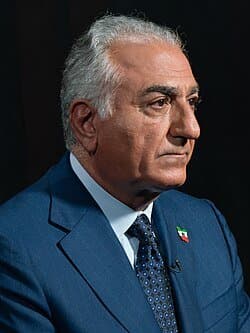
Trader consensus heavily favors "No" at 85.3% for Reza Pahlavi leading Iran in 2026, reflecting the Islamic Republic's entrenched control under Supreme Leader Khamenei and the Revolutionary Guards Corps (IRGC), with no viable path for the exiled son's return despite his advocacy for secular democracy. Recent escalations, including Iran's October 1 missile barrage on Israel and Israel's retaliatory strikes on October 26 targeting Iranian military sites, have bolstered regime cohesion by rallying nationalist support amid external threats, rather than sparking internal collapse. Ongoing economic sanctions and suppressed protests since the 2022 Mahsa Amini unrest highlight persistent dissent but insufficient momentum for regime change, as Pahlavi lacks a domestic military or political base. No scheduled elections or transitions loom by 2026 to enable his leadership.
Experimentelle KI-generierte Zusammenfassung mit Polymarket-Daten · AktualisiertWird Reza Pahlavi 2026 den Iran anführen?
Wird Reza Pahlavi 2026 den Iran anführen?
Ja
$823,072 Vol.
$823,072 Vol.
Ja
$823,072 Vol.
$823,072 Vol.
Reza Pahlavi will be considered to hold power if he exercises primary governing authority over the Iranian state during the specified timeframe, including effective control over the armed forces, national institutions, and core executive decision-making, regardless of formal title, constitutional designation, or international recognition.
Formal appointment, recognition by the United Nations, or recognition by foreign governments is not required.
Indicators of de facto authority may include control over the armed forces and security services; control over executive ministries and state administrative institutions; enforcement of national laws; issuance of binding national directives; and effective control over the capital and core state infrastructure.
Symbolic status, foreign recognition without domestic control, exile leadership without effective authority inside Iran, nomination without effective authority, or ceremonial or transitional status without governing control will not qualify.
If Iran experiences a period in which no individual exercises effective governing control, this will not alone qualify for a “Yes” resolution unless Reza Pahlavi subsequently meets the criteria above within the specified timeframe.
The primary resolution source for this market will be a consensus of credible reporting.
Markt eröffnet: Feb 28, 2026, 10:36 PM ET
Resolver
0x65070BE91...Reza Pahlavi will be considered to hold power if he exercises primary governing authority over the Iranian state during the specified timeframe, including effective control over the armed forces, national institutions, and core executive decision-making, regardless of formal title, constitutional designation, or international recognition.
Formal appointment, recognition by the United Nations, or recognition by foreign governments is not required.
Indicators of de facto authority may include control over the armed forces and security services; control over executive ministries and state administrative institutions; enforcement of national laws; issuance of binding national directives; and effective control over the capital and core state infrastructure.
Symbolic status, foreign recognition without domestic control, exile leadership without effective authority inside Iran, nomination without effective authority, or ceremonial or transitional status without governing control will not qualify.
If Iran experiences a period in which no individual exercises effective governing control, this will not alone qualify for a “Yes” resolution unless Reza Pahlavi subsequently meets the criteria above within the specified timeframe.
The primary resolution source for this market will be a consensus of credible reporting.
Resolver
0x65070BE91...Trader consensus heavily favors "No" at 85.3% for Reza Pahlavi leading Iran in 2026, reflecting the Islamic Republic's entrenched control under Supreme Leader Khamenei and the Revolutionary Guards Corps (IRGC), with no viable path for the exiled son's return despite his advocacy for secular democracy. Recent escalations, including Iran's October 1 missile barrage on Israel and Israel's retaliatory strikes on October 26 targeting Iranian military sites, have bolstered regime cohesion by rallying nationalist support amid external threats, rather than sparking internal collapse. Ongoing economic sanctions and suppressed protests since the 2022 Mahsa Amini unrest highlight persistent dissent but insufficient momentum for regime change, as Pahlavi lacks a domestic military or political base. No scheduled elections or transitions loom by 2026 to enable his leadership.
Experimentelle KI-generierte Zusammenfassung mit Polymarket-Daten · Aktualisiert
Vorsicht bei externen Links.
Vorsicht bei externen Links.
Häufig gestellte Fragen