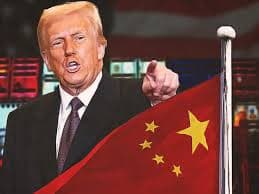
Despite a draft executive order circulated by Trump allies in February 2026 alleging foreign election interference—such as from China—to justify federal oversight of voting methods like mail ballots ahead of the November midterms, President Trump publicly stated he had "never heard" of it, cooling momentum. No declaration has followed in the ensuing weeks, with legal experts highlighting constitutional limits on federal intrusion into state-run elections. Trader consensus at 81.5% "No" reflects this inaction, ongoing congressional debates over bills like the SAVE Act, and risks of political backlash or court challenges, while the existing Executive Order 13848 remains active for foreign threats without necessitating a new emergency. Upcoming midterm primaries could prompt shifts, but barriers persist.
Experimentelle KI-generierte Zusammenfassung mit Polymarket-Daten. Dies ist keine Handelsberatung und spielt keine Rolle bei der Auflösung dieses Marktes. · AktualisiertJa
$140,876 Vol.
$140,876 Vol.
Ja
$140,876 Vol.
$140,876 Vol.
A qualifying declaration must include formal language stating that a national emergency exists and must be issued under the National Emergencies Act (50 U.S.C. § 1621 et seq.). The declaration must explicitly reference interference in U.S. elections, election processes, election systems, voting procedures, ballots, or voting machines as the basis for the emergency. Statements, speeches, social media posts, draft orders, executive orders that do not formally declare a national emergency under the National Emergencies Act, or other actions that merely reference election interference without declaring a national emergency will not qualify.
Renewals or extensions of previously existing national emergencies will not qualify unless the text is materially modified to explicitly relate to election interference.
The primary resolution source will be the Federal Register and official White House publications, however a consensus of credible reporting may also be used.
Markt eröffnet: Feb 26, 2026, 4:29 PM ET
Resolver
0x65070BE91...A qualifying declaration must include formal language stating that a national emergency exists and must be issued under the National Emergencies Act (50 U.S.C. § 1621 et seq.). The declaration must explicitly reference interference in U.S. elections, election processes, election systems, voting procedures, ballots, or voting machines as the basis for the emergency. Statements, speeches, social media posts, draft orders, executive orders that do not formally declare a national emergency under the National Emergencies Act, or other actions that merely reference election interference without declaring a national emergency will not qualify.
Renewals or extensions of previously existing national emergencies will not qualify unless the text is materially modified to explicitly relate to election interference.
The primary resolution source will be the Federal Register and official White House publications, however a consensus of credible reporting may also be used.
Resolver
0x65070BE91...Despite a draft executive order circulated by Trump allies in February 2026 alleging foreign election interference—such as from China—to justify federal oversight of voting methods like mail ballots ahead of the November midterms, President Trump publicly stated he had "never heard" of it, cooling momentum. No declaration has followed in the ensuing weeks, with legal experts highlighting constitutional limits on federal intrusion into state-run elections. Trader consensus at 81.5% "No" reflects this inaction, ongoing congressional debates over bills like the SAVE Act, and risks of political backlash or court challenges, while the existing Executive Order 13848 remains active for foreign threats without necessitating a new emergency. Upcoming midterm primaries could prompt shifts, but barriers persist.
Experimentelle KI-generierte Zusammenfassung mit Polymarket-Daten. Dies ist keine Handelsberatung und spielt keine Rolle bei der Auflösung dieses Marktes. · Aktualisiert
Vorsicht bei externen Links.
Vorsicht bei externen Links.
Häufig gestellte Fragen