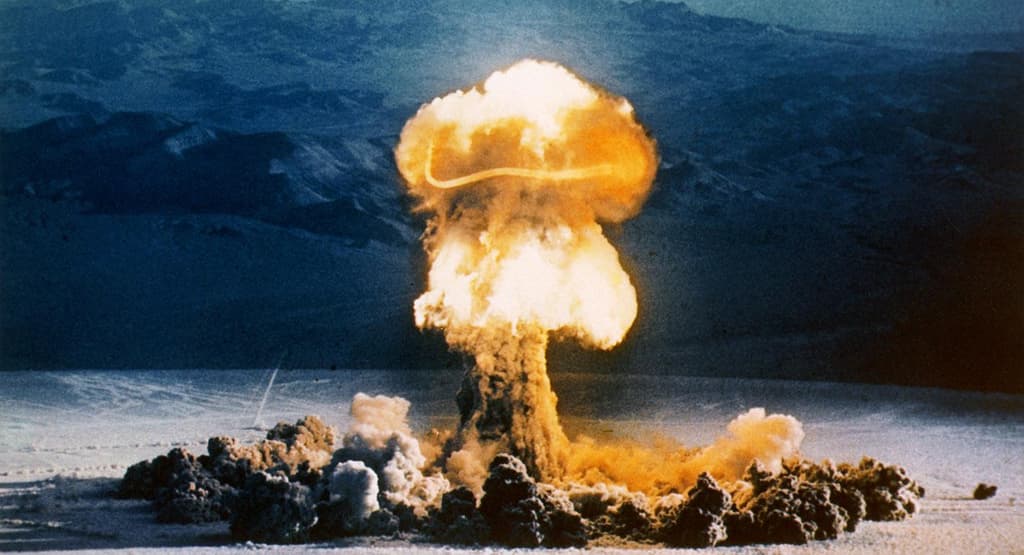
Russia's adherence to its voluntary moratorium on nuclear testing since 1990, reaffirmed by Foreign Minister Sergey Lavrov on March 13 amid heightened global tensions, anchors trader consensus at low implied probabilities—2% for a test by June 30, 2026, rising modestly to 12% by year-end. The New START treaty's February expiry has fueled rhetoric on strategic stability, yet no official announcements or verifiable detonations have emerged, with recent Siberian nuclear missile drills on April 2 limited to conventional exercises. Significant barriers include Comprehensive Nuclear-Test-Ban Treaty norms, international backlash risks, and lack of strategic imperative despite Ukraine conflict escalation signals. Late-breaking diplomatic shifts or conflict intensification could alter odds before December resolution.
Résumé expérimental généré par IA à partir des données Polymarket · Mis à jour$1,326,770 Vol.
30 juin 2026
2%
September 30, 2026
9%
31 décembre 2026
12%
$1,326,770 Vol.
30 juin 2026
2%
September 30, 2026
9%
31 décembre 2026
12%
A nuclear test is defined as the intentional non-combat detonation of a device by Russia that produces a nuclear chain reaction (fission or fusion), regardless of yield.
Accidents, radiological dispersal devices (bombs that spread radioactive material using conventional explosives such as "dirty bombs"), or actions by third parties will not count toward this market's resolution.
Tests not explicitly claimed by Russia may still qualify if a clear consensus of credible reporting attributes the nuclear detonation to Russia. For example, an unclaimed nuclear test analogous to the 1979 "Vela Incident" would count if credible reporting attributes it to Russia.
The resolution source for this market will be a broad consensus of credible reporting.
Marché ouvert : Mar 31, 2026, 3:33 PM ET
Resolver
0x65070BE91...A nuclear test is defined as the intentional non-combat detonation of a device by Russia that produces a nuclear chain reaction (fission or fusion), regardless of yield.
Accidents, radiological dispersal devices (bombs that spread radioactive material using conventional explosives such as "dirty bombs"), or actions by third parties will not count toward this market's resolution.
Tests not explicitly claimed by Russia may still qualify if a clear consensus of credible reporting attributes the nuclear detonation to Russia. For example, an unclaimed nuclear test analogous to the 1979 "Vela Incident" would count if credible reporting attributes it to Russia.
The resolution source for this market will be a broad consensus of credible reporting.
Resolver
0x65070BE91...Russia's adherence to its voluntary moratorium on nuclear testing since 1990, reaffirmed by Foreign Minister Sergey Lavrov on March 13 amid heightened global tensions, anchors trader consensus at low implied probabilities—2% for a test by June 30, 2026, rising modestly to 12% by year-end. The New START treaty's February expiry has fueled rhetoric on strategic stability, yet no official announcements or verifiable detonations have emerged, with recent Siberian nuclear missile drills on April 2 limited to conventional exercises. Significant barriers include Comprehensive Nuclear-Test-Ban Treaty norms, international backlash risks, and lack of strategic imperative despite Ukraine conflict escalation signals. Late-breaking diplomatic shifts or conflict intensification could alter odds before December resolution.
Résumé expérimental généré par IA à partir des données Polymarket · Mis à jour
Méfiez-vous des liens externes.
Questions fréquentes