This market will resolve to “Yes” if Iran initiates a major closure of its airspace, that is not solely due to weather conditions, by the listed date, 11:59 PM ET. Otherwise, this market will resolve to “No”.
A “major closure” is defined as a broad closure, cancellation, or suspension of commercial flights transiting, arriving in, and departing from Iranian airspace or a major Iranian Airspace region. A qualifying closure must apply generally to flights across Iran or a major Iranian airspace region. Limited cancellations, delays, or other partial closures will not qualify. Limited exceptions to a broad closure, however, will not disqualify such a closure from counting (e.g. exceptions for certain flights pre-approved by the Iranian Civil Aviation Authority may be permitted).
Any non-weather complete suspension of commercial arrivals and departures affecting at least two of the following airports will qualify: Imam Khomeini International Airport (IKA), Mehrabad Airport (THR), Mashhad International Airport (MHD), Shiraz International Airport (SYZ), or Isfahan International Airport (IFN).
Qualifying previous examples include the January 2026 total closure of Iranian airspace except to international flights with express governmental permission (https://www.reuters.com/world/middle-east/iran-shuts-airspace-most-flights-flightradar24-says-2026-01-14/) and the April 2024 closure of Iran’s western airspace (https://www.reuters.com/world/middle-east/iranian-airports-cancel-flights-until-monday-morning-2024-04-14/). Non-qualifying examples include the January 27, 2026 partial closure of Iranian airspace around the Strait of Hormuz (https://www.aa.com.tr/en/middle-east/iran-issues-airspace-notice-for-military-drills-near-strait-of-hormuz/3812508) and the January 25 - April 25, 2026 VFR (Visual Flight Rules) flights suspension which did not broadly close commercial aviation in a qualifying region (https://www.intellinews.com/iran-suspends-general-aviation-and-vfr-flights-in-new-airspace-directive-421997/).
Warnings, No-Fly-Zones, or other flight restrictions imposed by airlines or countries other than Iran will not be sufficient for a “Yes” resolution.
Airspace closures which occur solely due to weather conditions will not qualify.
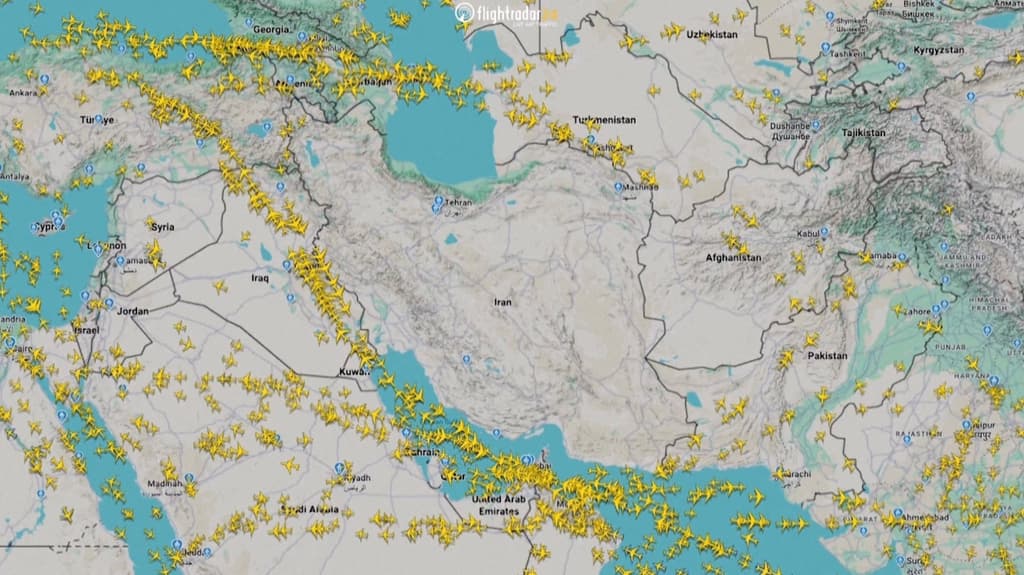
The primary resolution sources for this market will be official information from Iranian aviation authorities and a consensus of credible reporting.Following US-Israeli strikes on Iranian military targets starting February 28, 2026, Tehran imposed a nationwide airspace closure lasting over 50 days, suspending most commercial flights until partial reopenings mid-April amid a Pakistan-mediated ceasefire extension on April 8. Domestic operations resumed April 22 at Imam Khomeini International Airport, with limited international transits permitted, though late April full suspensions over Tehran and May 1 IRGC intercepts of UAVs underscore fragility. Historical patterns show Iran enacts broad closures—qualifying if impacting at least two major airports like IKA or THR—within hours of perceived threats, but ongoing US-Iran diplomacy and UAE's full airspace resumption signal de-escalation. Traders monitor for airstrikes, ceasefire violations, or IRGC warnings that could trigger renewed shutdowns before May 31.
This market will resolve to “Yes” if Iran initiates a major closure of its airspace, that is not solely due to weather conditions, by the listed date, 11:59 PM ET. Otherwise, this market will resolve to “No”.
A “major closure” is defined as a broad closure, cancellation, or suspension of commercial flights transiting, arriving in, and departing from Iranian airspace or a major Iranian Airspace region. A qualifying closure must apply generally to flights across Iran or a major Iranian airspace region. Limited cancellations, delays, or other partial closures will not qualify. Limited exceptions to a broad closure, however, will not disqualify such a closure from counting (e.g. exceptions for certain flights pre-approved by the Iranian Civil Aviation Authority may be permitted).
Any non-weather complete suspension of commercial arrivals and departures affecting at least two of the following airports will qualify: Imam Khomeini International Airport (IKA), Mehrabad Airport (THR), Mashhad International Airport (MHD), Shiraz International Airport (SYZ), or Isfahan International Airport (IFN).
This market will resolve to “Yes” if Iran initiates a major closure of its airspace, that is not solely due to weather conditions, by the listed date, 11:59 PM ET. Otherwise, this market will resolve to “No”.
A “major closure” is defined as a broad closure, cancellation, or suspension of commercial flights transiting, arriving in, and departing from Iranian airspace or a major Iranian Airspace region. A qualifying closure must apply generally to flights across Iran or a major Iranian airspace region. Limited cancellations, delays, or other partial closures will not qualify. Limited exceptions to a broad closure, however, will not disqualify such a closure from counting (e.g. exceptions for certain flights pre-approved by the Iranian Civil Aviation Authority may be permitted).
Any non-weather complete suspension of commercial arrivals and departures affecting at least two of the following airports will qualify: Imam Khomeini International Airport (IKA), Mehrabad Airport (THR), Mashhad International Airport (MHD), Shiraz International Airport (SYZ), or Isfahan International Airport (IFN).
Qualifying previous examples include the January 2026 total closure of Iranian airspace except to international flights with express governmental permission (https://www.reuters.com/world/middle-east/iran-shuts-airspace-most-flights-flightradar24-says-2026-01-14/) and the April 2024 closure of Iran’s western airspace (https://www.reuters.com/world/middle-east/iranian-airports-cancel-flights-until-monday-morning-2024-04-14/). Non-qualifying examples include the January 27, 2026 partial closure of Iranian airspace around the Strait of Hormuz (https://www.aa.com.tr/en/middle-east/iran-issues-airspace-notice-for-military-drills-near-strait-of-hormuz/3812508) and the January 25 - April 25, 2026 VFR (Visual Flight Rules) flights suspension which did not broadly close commercial aviation in a qualifying region (https://www.intellinews.com/iran-suspends-general-aviation-and-vfr-flights-in-new-airspace-directive-421997/).
Warnings, No-Fly-Zones, or other flight restrictions imposed by airlines or countries other than Iran will not be sufficient for a “Yes” resolution.
Airspace closures which occur solely due to weather conditions will not qualify.
The primary resolution sources for this market will be official information from Iranian aviation authorities and a consensus of credible reporting.
Following US-Israeli strikes on Iranian military targets starting February 28, 2026, Tehran imposed a nationwide airspace closure lasting over 50 days, suspending most commercial flights until partial reopenings mid-April amid a Pakistan-mediated ceasefire extension on April 8. Domestic operations resumed April 22 at Imam Khomeini International Airport, with limited international transits permitted, though late April full suspensions over Tehran and May 1 IRGC intercepts of UAVs underscore fragility. Historical patterns show Iran enacts broad closures—qualifying if impacting at least two major airports like IKA or THR—within hours of perceived threats, but ongoing US-Iran diplomacy and UAE's full airspace resumption signal de-escalation. Traders monitor for airstrikes, ceasefire violations, or IRGC warnings that could trigger renewed shutdowns before May 31.
Résumé expérimental généré par IA à partir des données Polymarket. Ceci n'est pas un conseil de trading et ne joue aucun rôle dans la résolution de ce marché. · Mis à jour
May 4 2026
Value‑the‑Markets’ market‑overview showed the “Yes” probability slipping to 35.5 % for May 31 after a series of diplomatic signals that the cease‑fire was holding, reinforcing the
Value‑the‑Markets’ market‑overview showed the “Yes” probability slipping to 35.5 % for May 31 after a series of diplomatic signals that the cease‑fire was holding, reinforcing the downward trend seen earlier in the week
May 3 2026
Temporary
May 8 jumps to 21%7%
Unconfirmed reports or market speculation about potential Iranian airspace restrictions caused a brief
May 3 2026
Cryptobriefing’s analysis of internal clerical divisions in Iran warned that hard‑line factions were pushing for escalation, nudging the “Yes”
May 31 drops to 37%10%
Cryptobriefing’s analysis of internal clerical divisions in Iran warned that hard‑line factions were pushing for escalation, nudging the “Yes”
May 3 2026
Al Jazeera reported that, despite the phased reopening, 20 Iranian aircraft had been destroyed and the civil aviation organization warned of “uncertainty on the ground,” prompting
May 31 rises to 40%3%
Al Jazeera reported that, despite the phased reopening, 20 Iranian aircraft had been destroyed and the civil aviation organization warned of “uncertainty on the ground,” prompting a brief rally in “Yes” odds
May 2 2026
UAE civil aviation authority lifted all flight‑restriction measures, fully reopening its own airspace after the regional cease‑fire, which analysts interpreted as reducing
May 31 jumps to 41%10%
UAE civil aviation authority lifted all flight‑restriction measures, fully reopening its own airspace after the regional cease‑fire, which analysts interpreted as reducing pressure on Iran to keep its skies closed
May 2 2026
Continued absence of closure announcements; market
May 8 drops to 14%8%
Lack of new restrictions or cancellations at major Iranian airports (IKA, THR, MHD, SYZ, IFN) confirmed by flight tracking and official sources, reducing closure probability.
May 2 2026
CryptoBriefing noted that the market’s “Yes” probability dropped after the UAE reopening, describing the impact as “moderate” and linking the
May 31 rises to 42%1%
CryptoBriefing noted that the market’s “Yes” probability dropped after the UAE reopening, describing the impact as “moderate” and linking the
May 2 2026
Reuters‑linked live‑blog on Middle‑East flight disruptions highlighted a surge in airline‑fuel‑
May 31 jumps to 47%5%
Reuters‑linked live‑blog on Middle‑East flight disruptions highlighted a surge in airline‑fuel‑
May 2 2026
Condé Nast Traveller reported that, as of 2 May, Iran’s airspace remained “partially open” but most international carriers were still rerouting, indicating the reopening was
May 31 plunges to 31%16%
Condé Nast Traveller reported that, as of 2 May, Iran’s airspace remained “partially open” but most international carriers were still rerouting, indicating the reopening was limited and uncertainty persisted
May 1 2026
Iran’s civil aviation authority announced the resumption of commercial flights at Imam Khomeini International Airport after a 58‑day suspension, signalling the start of a
May 31 jumps to 47%9%
Iran’s civil aviation authority announced the resumption of commercial flights at Imam Khomeini International Airport after a 58‑day suspension, signalling the start of a four‑phase air‑space reopening
This market will resolve to “Yes” if Iran initiates a major closure of its airspace, that is not solely due to weather conditions, by the listed date, 11:59 PM ET. Otherwise, this market will resolve to “No”.
A “major closure” is defined as a broad closure, cancellation, or suspension of commercial flights transiting, arriving in, and departing from Iranian airspace or a major Iranian Airspace region. A qualifying closure must apply generally to flights across Iran or a major Iranian airspace region. Limited cancellations, delays, or other partial closures will not qualify. Limited exceptions to a broad closure, however, will not disqualify such a closure from counting (e.g. exceptions for certain flights pre-approved by the Iranian Civil Aviation Authority may be permitted).
Any non-weather complete suspension of commercial arrivals and departures affecting at least two of the following airports will qualify: Imam Khomeini International Airport (IKA), Mehrabad Airport (THR), Mashhad International Airport (MHD), Shiraz International Airport (SYZ), or Isfahan International Airport (IFN).
Qualifying previous examples include the January 2026 total closure of Iranian airspace except to international flights with express governmental permission (https://www.reuters.com/world/middle-east/iran-shuts-airspace-most-flights-flightradar24-says-2026-01-14/) and the April 2024 closure of Iran’s western airspace (https://www.reuters.com/world/middle-east/iranian-airports-cancel-flights-until-monday-morning-2024-04-14/). Non-qualifying examples include the January 27, 2026 partial closure of Iranian airspace around the Strait of Hormuz (https://www.aa.com.tr/en/middle-east/iran-issues-airspace-notice-for-military-drills-near-strait-of-hormuz/3812508) and the January 25 - April 25, 2026 VFR (Visual Flight Rules) flights suspension which did not broadly close commercial aviation in a qualifying region (https://www.intellinews.com/iran-suspends-general-aviation-and-vfr-flights-in-new-airspace-directive-421997/).
Warnings, No-Fly-Zones, or other flight restrictions imposed by airlines or countries other than Iran will not be sufficient for a “Yes” resolution.
Airspace closures which occur solely due to weather conditions will not qualify.
The primary resolution sources for this market will be official information from Iranian aviation authorities and a consensus of credible reporting.Following US-Israeli strikes on Iranian military targets starting February 28, 2026, Tehran imposed a nationwide airspace closure lasting over 50 days, suspending most commercial flights until partial reopenings mid-April amid a Pakistan-mediated ceasefire extension on April 8. Domestic operations resumed April 22 at Imam Khomeini International Airport, with limited international transits permitted, though late April full suspensions over Tehran and May 1 IRGC intercepts of UAVs underscore fragility. Historical patterns show Iran enacts broad closures—qualifying if impacting at least two major airports like IKA or THR—within hours of perceived threats, but ongoing US-Iran diplomacy and UAE's full airspace resumption signal de-escalation. Traders monitor for airstrikes, ceasefire violations, or IRGC warnings that could trigger renewed shutdowns before May 31.
This market will resolve to “Yes” if Iran initiates a major closure of its airspace, that is not solely due to weather conditions, by the listed date, 11:59 PM ET. Otherwise, this market will resolve to “No”.
A “major closure” is defined as a broad closure, cancellation, or suspension of commercial flights transiting, arriving in, and departing from Iranian airspace or a major Iranian Airspace region. A qualifying closure must apply generally to flights across Iran or a major Iranian airspace region. Limited cancellations, delays, or other partial closures will not qualify. Limited exceptions to a broad closure, however, will not disqualify such a closure from counting (e.g. exceptions for certain flights pre-approved by the Iranian Civil Aviation Authority may be permitted).
Any non-weather complete suspension of commercial arrivals and departures affecting at least two of the following airports will qualify: Imam Khomeini International Airport (IKA), Mehrabad Airport (THR), Mashhad International Airport (MHD), Shiraz International Airport (SYZ), or Isfahan International Airport (IFN).
This market will resolve to “Yes” if Iran initiates a major closure of its airspace, that is not solely due to weather conditions, by the listed date, 11:59 PM ET. Otherwise, this market will resolve to “No”.
A “major closure” is defined as a broad closure, cancellation, or suspension of commercial flights transiting, arriving in, and departing from Iranian airspace or a major Iranian Airspace region. A qualifying closure must apply generally to flights across Iran or a major Iranian airspace region. Limited cancellations, delays, or other partial closures will not qualify. Limited exceptions to a broad closure, however, will not disqualify such a closure from counting (e.g. exceptions for certain flights pre-approved by the Iranian Civil Aviation Authority may be permitted).
Any non-weather complete suspension of commercial arrivals and departures affecting at least two of the following airports will qualify: Imam Khomeini International Airport (IKA), Mehrabad Airport (THR), Mashhad International Airport (MHD), Shiraz International Airport (SYZ), or Isfahan International Airport (IFN).
Qualifying previous examples include the January 2026 total closure of Iranian airspace except to international flights with express governmental permission (https://www.reuters.com/world/middle-east/iran-shuts-airspace-most-flights-flightradar24-says-2026-01-14/) and the April 2024 closure of Iran’s western airspace (https://www.reuters.com/world/middle-east/iranian-airports-cancel-flights-until-monday-morning-2024-04-14/). Non-qualifying examples include the January 27, 2026 partial closure of Iranian airspace around the Strait of Hormuz (https://www.aa.com.tr/en/middle-east/iran-issues-airspace-notice-for-military-drills-near-strait-of-hormuz/3812508) and the January 25 - April 25, 2026 VFR (Visual Flight Rules) flights suspension which did not broadly close commercial aviation in a qualifying region (https://www.intellinews.com/iran-suspends-general-aviation-and-vfr-flights-in-new-airspace-directive-421997/).
Warnings, No-Fly-Zones, or other flight restrictions imposed by airlines or countries other than Iran will not be sufficient for a “Yes” resolution.
Airspace closures which occur solely due to weather conditions will not qualify.
The primary resolution sources for this market will be official information from Iranian aviation authorities and a consensus of credible reporting.
Following US-Israeli strikes on Iranian military targets starting February 28, 2026, Tehran imposed a nationwide airspace closure lasting over 50 days, suspending most commercial flights until partial reopenings mid-April amid a Pakistan-mediated ceasefire extension on April 8. Domestic operations resumed April 22 at Imam Khomeini International Airport, with limited international transits permitted, though late April full suspensions over Tehran and May 1 IRGC intercepts of UAVs underscore fragility. Historical patterns show Iran enacts broad closures—qualifying if impacting at least two major airports like IKA or THR—within hours of perceived threats, but ongoing US-Iran diplomacy and UAE's full airspace resumption signal de-escalation. Traders monitor for airstrikes, ceasefire violations, or IRGC warnings that could trigger renewed shutdowns before May 31.
Résumé expérimental généré par IA à partir des données Polymarket. Ceci n'est pas un conseil de trading et ne joue aucun rôle dans la résolution de ce marché. · Mis à jour
May 4 2026
Value‑the‑Markets’ market‑overview showed the “Yes” probability slipping to 35.5 % for May 31 after a series of diplomatic signals that the cease‑fire was holding, reinforcing the
Value‑the‑Markets’ market‑overview showed the “Yes” probability slipping to 35.5 % for May 31 after a series of diplomatic signals that the cease‑fire was holding, reinforcing the downward trend seen earlier in the week
May 3 2026
Temporary
May 8 jumps to 21%7%
Unconfirmed reports or market speculation about potential Iranian airspace restrictions caused a brief
May 3 2026
Cryptobriefing’s analysis of internal clerical divisions in Iran warned that hard‑line factions were pushing for escalation, nudging the “Yes”
May 31 drops to 37%10%
Cryptobriefing’s analysis of internal clerical divisions in Iran warned that hard‑line factions were pushing for escalation, nudging the “Yes”
May 3 2026
Al Jazeera reported that, despite the phased reopening, 20 Iranian aircraft had been destroyed and the civil aviation organization warned of “uncertainty on the ground,” prompting
May 31 rises to 40%3%
Al Jazeera reported that, despite the phased reopening, 20 Iranian aircraft had been destroyed and the civil aviation organization warned of “uncertainty on the ground,” prompting a brief rally in “Yes” odds
May 2 2026
UAE civil aviation authority lifted all flight‑restriction measures, fully reopening its own airspace after the regional cease‑fire, which analysts interpreted as reducing
May 31 jumps to 41%10%
UAE civil aviation authority lifted all flight‑restriction measures, fully reopening its own airspace after the regional cease‑fire, which analysts interpreted as reducing pressure on Iran to keep its skies closed
May 2 2026
Continued absence of closure announcements; market
May 8 drops to 14%8%
Lack of new restrictions or cancellations at major Iranian airports (IKA, THR, MHD, SYZ, IFN) confirmed by flight tracking and official sources, reducing closure probability.
May 2 2026
CryptoBriefing noted that the market’s “Yes” probability dropped after the UAE reopening, describing the impact as “moderate” and linking the
May 31 rises to 42%1%
CryptoBriefing noted that the market’s “Yes” probability dropped after the UAE reopening, describing the impact as “moderate” and linking the
May 2 2026
Reuters‑linked live‑blog on Middle‑East flight disruptions highlighted a surge in airline‑fuel‑
May 31 jumps to 47%5%
Reuters‑linked live‑blog on Middle‑East flight disruptions highlighted a surge in airline‑fuel‑
May 2 2026
Condé Nast Traveller reported that, as of 2 May, Iran’s airspace remained “partially open” but most international carriers were still rerouting, indicating the reopening was
May 31 plunges to 31%16%
Condé Nast Traveller reported that, as of 2 May, Iran’s airspace remained “partially open” but most international carriers were still rerouting, indicating the reopening was limited and uncertainty persisted
May 1 2026
Iran’s civil aviation authority announced the resumption of commercial flights at Imam Khomeini International Airport after a 58‑day suspension, signalling the start of a
May 31 jumps to 47%9%
Iran’s civil aviation authority announced the resumption of commercial flights at Imam Khomeini International Airport after a 58‑day suspension, signalling the start of a four‑phase air‑space reopening
Méfiez-vous des liens externes.
Méfiez-vous des liens externes.
Questions fréquentes
« L'Iran ferme son espace aérien d'ici... ? » est un marché de prédiction sur Polymarket avec 2 résultats possibles où les traders achètent et vendent des parts selon ce qu'ils pensent qu'il se passera. Le résultat en tête actuel est « 31 mai » à 42%, suivi de « 8 mai » à 18%. Les prix reflètent des probabilités en temps réel de la communauté. Par exemple, une part cotée à 42¢ implique que le marché attribue collectivement une probabilité de 42% à ce résultat. Ces cotes changent en permanence. Les parts du résultat correct sont échangeables contre $1 chacune lors de la résolution du marché.
À ce jour, « L'Iran ferme son espace aérien d'ici... ? » a généré $953.5K en volume total de trading depuis le lancement du marché le May 1, 2026. Ce niveau d'activité reflète un fort engagement de la communauté Polymarket et garantit que les cotes actuelles sont alimentées par un large bassin de participants. Vous pouvez suivre les mouvements de prix en direct et trader sur n'importe quel résultat directement sur cette page.
Pour trader sur « L'Iran ferme son espace aérien d'ici... ? », parcourez les 2 résultats disponibles sur cette page. Chaque résultat affiche un prix actuel représentant la probabilité implicite du marché. Pour prendre position, sélectionnez le résultat que vous estimez le plus probable, choisissez « Oui » pour trader en sa faveur ou « Non » pour trader contre, entrez votre montant et cliquez sur « Trader ». Si votre résultat choisi est correct lors de la résolution, vos parts « Oui » rapportent $1 chacune. S'il est incorrect, elles rapportent $0. Vous pouvez également vendre vos parts avant la résolution.
Le favori actuel pour « L'Iran ferme son espace aérien d'ici... ? » est « 31 mai » à 42%, ce qui signifie que le marché attribue une probabilité de 42% à ce résultat. Le résultat le plus proche ensuite est « 8 mai » à 18%. Ces cotes sont mises à jour en temps réel à mesure que les traders achètent et vendent des parts. Revenez fréquemment ou ajoutez cette page à vos favoris.
Les règles de résolution de « L'Iran ferme son espace aérien d'ici... ? » définissent exactement ce qui doit se produire pour que chaque résultat soit déclaré gagnant, y compris les sources de données officielles utilisées pour déterminer le résultat. Vous pouvez consulter les critères de résolution complets dans la section « Règles » sur cette page au-dessus des commentaires. Nous recommandons de lire attentivement les règles avant de trader, car elles précisent les conditions exactes, les cas particuliers et les sources.
Oui. Vous n'avez pas besoin de trader pour rester informé. Cette page sert de suivi en direct pour « L'Iran ferme son espace aérien d'ici... ? ». Les probabilités des résultats sont mises à jour en temps réel à mesure que de nouvelles transactions arrivent. Vous pouvez ajouter cette page à vos favoris et consulter la section commentaires pour voir ce que disent les autres traders. Vous pouvez également utiliser les filtres de plage temporelle sur le graphique pour voir comment les cotes ont évolué au fil du temps.
Les cotes de Polymarket sont fixées par de vrais traders qui mettent de l'argent réel derrière leurs convictions, ce qui tend à produire des prédictions précises. Avec $953.5K échangés sur « L'Iran ferme son espace aérien d'ici... ? », ces prix agrègent les connaissances collectives et la conviction de milliers de participants — surpassant souvent les sondages, les prévisions d’experts et les enquêtes traditionnelles. Les marchés de prédiction comme Polymarket ont un solide historique de précision, surtout à mesure que les événements approchent de leur date de résolution. Par exemple, Polymarket a un score de précision sur un mois de 94%. Pour les dernières statistiques sur la précision des prédictions de Polymarket, visitez la page de précision sur Polymarket.
Pour placer votre première transaction sur « L'Iran ferme son espace aérien d'ici... ? », inscrivez-vous pour un compte Polymarket gratuit et approvisionnez-le en utilisant des cryptomonnaies, une carte de crédit ou débit, ou un virement bancaire. Une fois votre compte approvisionné, revenez sur cette page, sélectionnez le résultat sur lequel vous souhaitez trader, entrez votre montant et cliquez sur « Trader ». Si vous êtes nouveau dans les marchés de prédiction, cliquez sur le lien « Comment ça marche » en haut de n'importe quelle page Polymarket pour un guide étape par étape.
Sur Polymarket, le prix de chaque résultat représente la probabilité implicite du marché. Un prix de 42¢ pour « 31 mai » sur le marché « L'Iran ferme son espace aérien d'ici... ? » signifie que les traders estiment collectivement qu'il y a environ une probabilité de 42% que « 31 mai » sera le résultat correct. Si vous achetez des parts « Oui » à 42¢ et que le résultat est correct, vous recevez $1,00 par part — un gain de 58¢ par part. S'il est incorrect, ces parts valent $0.
Le marché « L'Iran ferme son espace aérien d'ici... ? » est prévu pour être résolu autour du May 31, 2026. Cela signifie que le trading restera ouvert et les cotes continueront d'évoluer jusqu'à cette date. Le moment exact de la résolution dépend de la disponibilité du résultat officiel, comme décrit dans la section « Règles ».
Le marché « L'Iran ferme son espace aérien d'ici... ? » a une communauté active de 53 commentaires où les traders partagent leurs analyses, débattent des résultats et discutent des derniers développements. Faites défiler jusqu'à la section commentaires ci-dessous pour lire ce que pensent les autres participants. Vous pouvez également filtrer par « Principaux détenteurs » ou consulter l'onglet « Activité » pour un flux en temps réel des transactions.
Polymarket est le plus grand marché de prédiction au monde, où vous pouvez rester informé et profiter de vos connaissances sur les événements du monde réel. Les traders achètent et vendent des parts sur des résultats allant de la politique et des élections aux cryptomonnaies, finances, sports, technologie et culture, y compris des marchés comme « L'Iran ferme son espace aérien d'ici... ? ». Les prix reflètent des probabilités en temps réel soutenues par une conviction financière, fournissant souvent des signaux plus rapides et plus précis que les sondages, les commentateurs ou les enquêtes traditionnelles.
Méfiez-vous des liens externes.
Méfiez-vous des liens externes.
Questions fréquentes