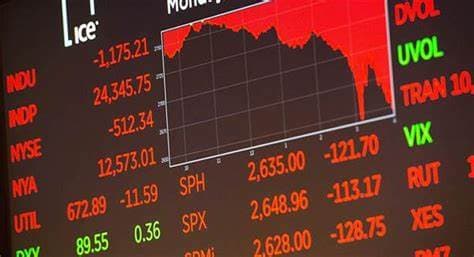
Trader consensus on Polymarket prices an 82.5% implied probability for no NYSE marketwide circuit breaker before 2027, driven by persistently subdued volatility amid stable equity markets. The CBOE Volatility Index (VIX) has traded in the mid-teens as of April 16, 2026—down from early-month peaks near 21—reflecting reduced fear following March's geopolitical tensions, with no single-day S&P 500 declines approaching the 7% Level 1 threshold this year. Year-to-date S&P 500 gains of roughly 3% underscore resilient breadth, bolstered by steady economic data like cooling inflation and solid corporate earnings. Absent major shocks, traders anticipate this low-volatility regime holds through year-end, though upcoming FOMC meetings and Q2 GDP releases could shift sentiment if downside risks materialize.
Experimental AI-generated summary referencing Polymarket data. This is not trading advice and plays no role in how this market resolves. · Updated$49,218 Vol.
$49,218 Vol.
$49,218 Vol.
$49,218 Vol.
A marketwide circuit breaker is defined as a trading halt that is initiated due to significant declines in the S&P 500 Index, specifically a Level 1, Level 2, or Level 3 halt as per NYSE rules.
The primary resolution source for this market will be official information from the NYSE, however a consensus of credible reporting will also be used.
Market Opened: Nov 7, 2025, 4:20 PM ET
Resolver
0x65070BE91...A marketwide circuit breaker is defined as a trading halt that is initiated due to significant declines in the S&P 500 Index, specifically a Level 1, Level 2, or Level 3 halt as per NYSE rules.
The primary resolution source for this market will be official information from the NYSE, however a consensus of credible reporting will also be used.
Resolver
0x65070BE91...Trader consensus on Polymarket prices an 82.5% implied probability for no NYSE marketwide circuit breaker before 2027, driven by persistently subdued volatility amid stable equity markets. The CBOE Volatility Index (VIX) has traded in the mid-teens as of April 16, 2026—down from early-month peaks near 21—reflecting reduced fear following March's geopolitical tensions, with no single-day S&P 500 declines approaching the 7% Level 1 threshold this year. Year-to-date S&P 500 gains of roughly 3% underscore resilient breadth, bolstered by steady economic data like cooling inflation and solid corporate earnings. Absent major shocks, traders anticipate this low-volatility regime holds through year-end, though upcoming FOMC meetings and Q2 GDP releases could shift sentiment if downside risks materialize.
Experimental AI-generated summary referencing Polymarket data. This is not trading advice and plays no role in how this market resolves. · Updated


Beware of external links.
Beware of external links.
Frequently Asked Questions