Market icon

Wird ein neues Land vor 2027 dem Abraham-Abkommen beitreten?

Market icon

Wird ein neues Land vor 2027 dem Abraham-Abkommen beitreten?

Jan 1

Jan 1

Jan 1

Jan 1

Ja

66% chance
Polymarket

$65,248 Vol.

Ja

66% chance
Polymarket

$65,248 Vol.

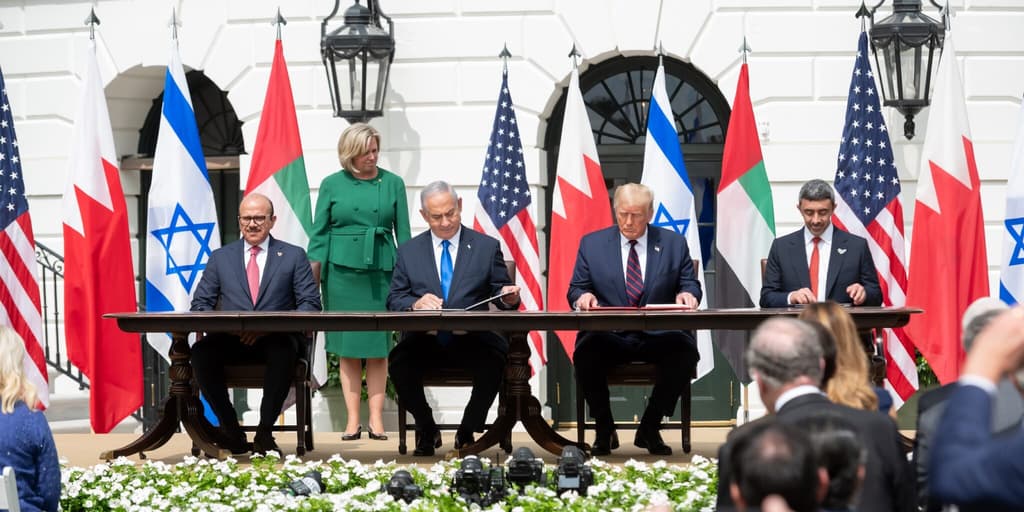
This market will resolve to "Yes" if any country not already a part of the Abraham Accords formally signs a normalization agreement with Israel under the framework of the Abraham Accords by December 31, 2026 11:59 PM ET. Otherwise, this market will resolve to "No". A formal signing refers to an official agreement between Israel and another country that is publicly acknowledged by both governments and clearly attributed to the Abraham Accords or their continuation. Countries already part of the Abraham Accords as of June 26, 2025—including the United Arab Emirates, Bahrain, Morocco, and Sudan—will not count. The resolution source will be official government statements, however a consensus for credible reporting may also be used.Trader consensus on a 66% implied probability for a new country joining the Abraham Accords before 2027 reflects renewed diplomatic momentum, particularly around Saudi Arabia, amid shifting regional dynamics. Recent developments include Israeli Prime Minister Netanyahu's October 2024 UN General Assembly speech highlighting expansion potential post-Gaza operations, coupled with reports of Saudi openness to normalization if Palestinian statehood progress is addressed. U.S. presidential candidate Donald Trump's pledges to broker a Saudi-Israel deal if re-elected have boosted optimism, given his role in the original 2020 accords with UAE and Bahrain. Escalating Iran-backed threats have aligned Gulf states closer to Israel, while Indonesia and others signal conditional interest. With the U.S. election on November 5 and a three-year window, traders see viable paths despite hurdles like Palestinian talks and congressional approvals.

Trader consensus on a 66% implied probability for a new country joining the Abraham Accords before 2027 reflects renewed diplomatic momentum, particularly around Saudi Arabia, amid shifting regional dynamics. Recent developments include Israeli Prime Minister Netanyahu's October 2024 UN General Assembly speech highlighting expansion potential post-Gaza operations, coupled with reports of Saudi openness to normalization if Palestinian statehood progress is addressed. U.S. presidential candidate Donald Trump's pledges to broker a Saudi-Israel deal if re-elected have boosted optimism, given his role in the original 2020 accords with UAE and Bahrain. Escalating Iran-backed threats have aligned Gulf states closer to Israel, while Indonesia and others signal conditional interest. With the U.S. election on November 5 and a three-year window, traders see viable paths despite hurdles like Palestinian talks and congressional approvals.

Experimentelle KI-generierte Zusammenfassung mit Polymarket-Daten · Aktualisiert
This market will resolve to "Yes" if any country not already a part of the Abraham Accords formally signs a normalization agreement with Israel under the framework of the Abraham Accords by December 31, 2026 11:59 PM ET. Otherwise, this market will resolve to "No". A formal signing refers to an official agreement between Israel and another country that is publicly acknowledged by both governments and clearly attributed to the Abraham Accords or their continuation. Countries already part of the Abraham Accords as of June 26, 2025—including the United Arab Emirates, Bahrain, Morocco, and Sudan—will not count. The resolution source will be official government statements, however a consensus for credible reporting may also be used.Trader consensus on a 66% implied probability for a new country joining the Abraham Accords before 2027 reflects renewed diplomatic momentum, particularly around Saudi Arabia, amid shifting regional dynamics. Recent developments include Israeli Prime Minister Netanyahu's October 2024 UN General Assembly speech highlighting expansion potential post-Gaza operations, coupled with reports of Saudi openness to normalization if Palestinian statehood progress is addressed. U.S. presidential candidate Donald Trump's pledges to broker a Saudi-Israel deal if re-elected have boosted optimism, given his role in the original 2020 accords with UAE and Bahrain. Escalating Iran-backed threats have aligned Gulf states closer to Israel, while Indonesia and others signal conditional interest. With the U.S. election on November 5 and a three-year window, traders see viable paths despite hurdles like Palestinian talks and congressional approvals.

Trader consensus on a 66% implied probability for a new country joining the Abraham Accords before 2027 reflects renewed diplomatic momentum, particularly around Saudi Arabia, amid shifting regional dynamics. Recent developments include Israeli Prime Minister Netanyahu's October 2024 UN General Assembly speech highlighting expansion potential post-Gaza operations, coupled with reports of Saudi openness to normalization if Palestinian statehood progress is addressed. U.S. presidential candidate Donald Trump's pledges to broker a Saudi-Israel deal if re-elected have boosted optimism, given his role in the original 2020 accords with UAE and Bahrain. Escalating Iran-backed threats have aligned Gulf states closer to Israel, while Indonesia and others signal conditional interest. With the U.S. election on November 5 and a three-year window, traders see viable paths despite hurdles like Palestinian talks and congressional approvals.

Experimentelle KI-generierte Zusammenfassung mit Polymarket-Daten · Aktualisiert

Vorsicht bei externen Links.

Häufig gestellte Fragen

„Wird ein neues Land vor 2027 dem Abraham-Abkommen beitreten?" ist ein Prognosemarkt auf Polymarket mit 2 möglichen Ergebnissen, bei dem Händler Anteile auf Basis ihrer Einschätzung kaufen und verkaufen. Das aktuell führende Ergebnis ist „Wird ein neues Land den Abraham-Abkommen vor 2027 beitreten?" mit 66%. Die Preise spiegeln Echtzeit-Wahrscheinlichkeiten der Community wider. Ein Anteilspreis von 66¢ bedeutet, dass der Markt diesem Ergebnis eine Wahrscheinlichkeit von 66% zuweist. Diese Quoten ändern sich laufend, wenn Händler auf neue Entwicklungen reagieren. Anteile am richtigen Ergebnis können bei Marktauflösung für jeweils $1 eingelöst werden.

Stand heute hat „Wird ein neues Land vor 2027 dem Abraham-Abkommen beitreten?" ein Gesamthandelsvolumen von $65.2K generiert, seit der Markt am Nov 5, 2025 gestartet wurde. Dieses Aktivitätsniveau spiegelt starkes Engagement der Polymarket-Community wider und stellt sicher, dass die aktuellen Quoten von einem breiten Pool an Marktteilnehmern geprägt werden. Sie können Live-Preisbewegungen verfolgen und direkt auf dieser Seite auf jedes Ergebnis handeln.

Um auf „Wird ein neues Land vor 2027 dem Abraham-Abkommen beitreten?" zu handeln, durchsuchen Sie die 2 verfügbaren Ergebnisse auf dieser Seite. Jedes Ergebnis zeigt einen aktuellen Preis, der die implizierte Wahrscheinlichkeit des Marktes darstellt. Um eine Position einzunehmen, wählen Sie das Ergebnis, das Sie für am wahrscheinlichsten halten, wählen Sie „Ja" um dafür oder „Nein" um dagegen zu handeln, geben Sie Ihren Betrag ein und klicken Sie auf „Handeln". Liegt Ihr gewähltes Ergebnis bei Marktauflösung richtig, zahlen Ihre „Ja"-Anteile jeweils $1 aus. Liegt es falsch, zahlen sie $0. Sie können Ihre Anteile auch jederzeit vor der Auflösung verkaufen.

Der aktuelle Favorit für „Wird ein neues Land vor 2027 dem Abraham-Abkommen beitreten?" ist „Wird ein neues Land den Abraham-Abkommen vor 2027 beitreten?" mit 66%, was bedeutet, dass der Markt diesem Ergebnis eine Wahrscheinlichkeit von 66% zuweist. Diese Quoten werden in Echtzeit aktualisiert, wenn Händler Anteile kaufen und verkaufen. Schauen Sie regelmäßig vorbei oder speichern Sie diese Seite als Lesezeichen.

Die Auflösungsregeln für „Wird ein neues Land vor 2027 dem Abraham-Abkommen beitreten?" definieren genau, was passieren muss, damit jedes Ergebnis als Gewinner erklärt wird – einschließlich der offiziellen Datenquellen zur Bestimmung des Ergebnisses. Sie können die vollständigen Auflösungskriterien im Abschnitt „Regeln" auf dieser Seite über den Kommentaren einsehen. Wir empfehlen, die Regeln vor dem Handeln sorgfältig zu lesen, da sie die genauen Bedingungen, Sonderfälle und Quellen festlegen.