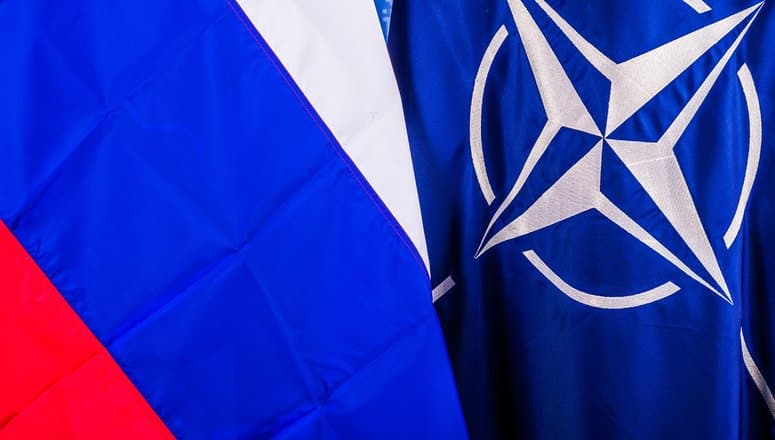
NATO Secretary General Mark Rutte's March 26 annual report launch emphasized Russia as the alliance's most significant threat, citing its ongoing war of aggression in Ukraine now entering its fifth year, yet no direct military clash between NATO forces and Russia has materialized despite proxy escalations like Ukrainian strikes on Russian ports and oil facilities. Lithuanian intelligence assessments earlier this month highlighted Russia's expansion of battle-hardened military units along NATO's eastern flank, including near Lithuania, as preparations for potential future confrontation if Western sanctions ease, while NATO maintains robust arms support to Kyiv without crossing red lines into direct involvement. Heightened hybrid warfare risks, including sabotage and cyberattacks, persist amid stalled ceasefire negotiations, with traders eyeing U.S. policy shifts and NATO summits for de-escalation signals.
Experimentelle KI-generierte Zusammenfassung mit Polymarket-Daten · AktualisiertNATO x Russland militärischer Zusammenstoß von...?
NATO x Russland militärischer Zusammenstoß von...?
$1,327,256 Vol.
31. März
1%
30. Juni
10%
31. Dezember
22%
$1,327,256 Vol.
31. März
1%
30. Juni
10%
31. Dezember
22%
A "military encounter" is defined as any incident involving the use of force such as missile strikes, artillery fire, exchange of gunfire, or other forms of direct military engagement between NATO and Russian military forces. Non-violent actions, such as airspace violations, firing of warning shots (such as the June, 2021 Black Sea Confrontations between Russian forces and HMS Defender), or cyberattacks will not qualify.
Interception of missiles or other one-way attack or loitering munitions (e.g. Shahed drones) which are targeting a 3rd party other than the listed countries or their respective forces will not alone qualify. Shooting down UAVs which are not munitions (e.g. MQ-9, Orlan 10, Orion, Bayraktar TB2, etc.) will qualify.
Intentional physical collisions, including aerial interceptions and naval ramming without the direct use of weaponry, such as the 2023 Black Sea incident—where a Russian Su-27 damaged a U.S. MQ-9 Reaper drone's propeller, leading to its crash— will not qualify regardless of damage.
Military contractors will qualify only if confirmed to be operating under the direct command or coordination of the respective state’s armed forces (e.g. the Battle of Khasham would not qualify).
The resolution source for this market will be a consensus of credible reporting.
Markt eröffnet: Oct 9, 2025, 3:54 PM ET
Resolver
0x65070BE91...A "military encounter" is defined as any incident involving the use of force such as missile strikes, artillery fire, exchange of gunfire, or other forms of direct military engagement between NATO and Russian military forces. Non-violent actions, such as airspace violations, firing of warning shots (such as the June, 2021 Black Sea Confrontations between Russian forces and HMS Defender), or cyberattacks will not qualify.
Interception of missiles or other one-way attack or loitering munitions (e.g. Shahed drones) which are targeting a 3rd party other than the listed countries or their respective forces will not alone qualify. Shooting down UAVs which are not munitions (e.g. MQ-9, Orlan 10, Orion, Bayraktar TB2, etc.) will qualify.
Intentional physical collisions, including aerial interceptions and naval ramming without the direct use of weaponry, such as the 2023 Black Sea incident—where a Russian Su-27 damaged a U.S. MQ-9 Reaper drone's propeller, leading to its crash— will not qualify regardless of damage.
Military contractors will qualify only if confirmed to be operating under the direct command or coordination of the respective state’s armed forces (e.g. the Battle of Khasham would not qualify).
The resolution source for this market will be a consensus of credible reporting.
Resolver
0x65070BE91...NATO Secretary General Mark Rutte's March 26 annual report launch emphasized Russia as the alliance's most significant threat, citing its ongoing war of aggression in Ukraine now entering its fifth year, yet no direct military clash between NATO forces and Russia has materialized despite proxy escalations like Ukrainian strikes on Russian ports and oil facilities. Lithuanian intelligence assessments earlier this month highlighted Russia's expansion of battle-hardened military units along NATO's eastern flank, including near Lithuania, as preparations for potential future confrontation if Western sanctions ease, while NATO maintains robust arms support to Kyiv without crossing red lines into direct involvement. Heightened hybrid warfare risks, including sabotage and cyberattacks, persist amid stalled ceasefire negotiations, with traders eyeing U.S. policy shifts and NATO summits for de-escalation signals.
Experimentelle KI-generierte Zusammenfassung mit Polymarket-Daten · Aktualisiert
Vorsicht bei externen Links.
Vorsicht bei externen Links.
Häufig gestellte Fragen