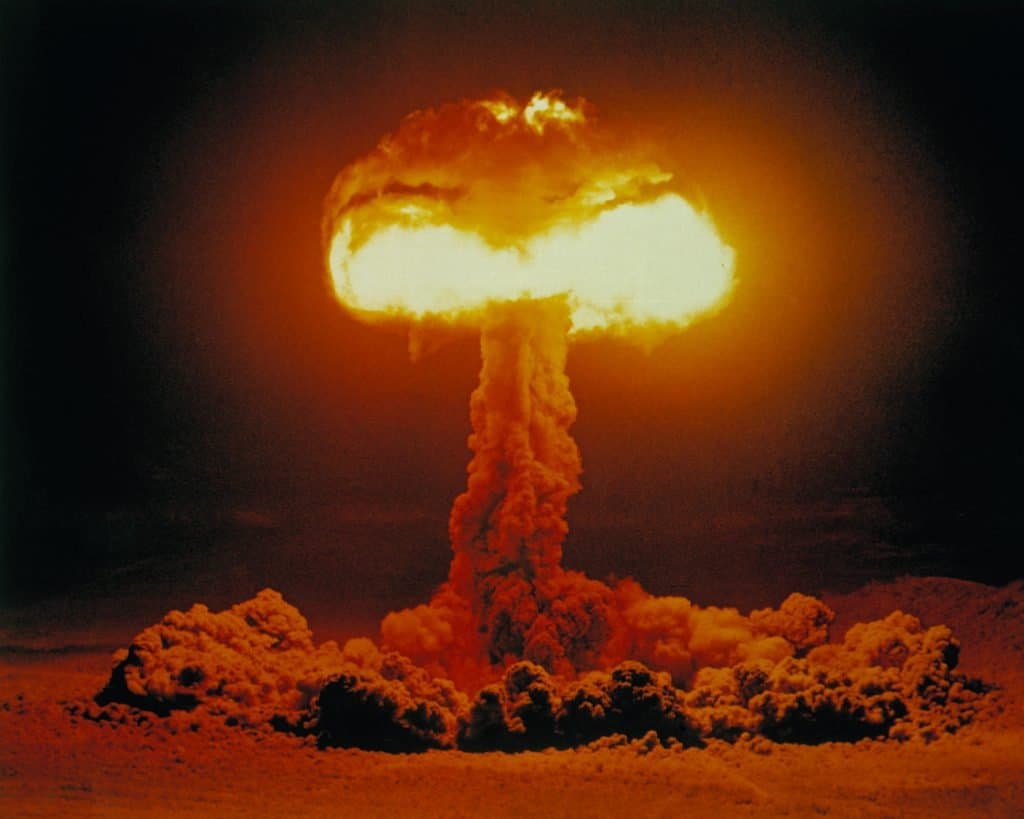
The U.S. has observed a voluntary moratorium on nuclear explosive testing since its last underground detonation in 1992 at the Nevada National Security Site, relying instead on the Stockpile Stewardship Program's supercomputer simulations to certify warhead reliability. Trader consensus prices a U.S. nuclear test by March 31, 2026, at under 1%, reflecting no imminent preparations despite Undersecretary of State Thomas DiNanno's March 24 Senate testimony that the Trump administration is assessing resumption methods following the president's October 2025 order—prompted by alleged covert low-yield tests by Russia and China. Significant technical, political, and diplomatic barriers persist, including FY2024 NDAA requirements for 12-month readiness and potential Comprehensive Test Ban Treaty fallout, with no scheduled tests or policy deadlines in the near term.
Experimentelle KI-generierte Zusammenfassung mit Polymarket-Daten · AktualisiertUS-Atomtest von...?
US-Atomtest von...?
$584,459 Vol.
31. März 2026
<1%
$584,459 Vol.
31. März 2026
<1%
A nuclear test is defined as the intentional non-combat detonation of a device by the US that produces a nuclear chain reaction (fission or fusion), regardless of yield.
Accidents, radiological dispersal devices (bombs that spread radioactive material using conventional explosives such as "dirty bombs"), or actions by third parties will not count toward this market's resolution.
Tests not explicitly claimed by US may still qualify if a clear consensus of credible reporting attributes the nuclear detonation to US. For example, an unclaimed nuclear test analogous to the 1979 "Vela Incident" would count if credible reporting attributes it to the US.
The resolution source for this market will be a broad consensus of credible reporting.
Markt eröffnet: Nov 5, 2025, 1:13 PM ET
Resolver
0x65070BE91...A nuclear test is defined as the intentional non-combat detonation of a device by the US that produces a nuclear chain reaction (fission or fusion), regardless of yield.
Accidents, radiological dispersal devices (bombs that spread radioactive material using conventional explosives such as "dirty bombs"), or actions by third parties will not count toward this market's resolution.
Tests not explicitly claimed by US may still qualify if a clear consensus of credible reporting attributes the nuclear detonation to US. For example, an unclaimed nuclear test analogous to the 1979 "Vela Incident" would count if credible reporting attributes it to the US.
The resolution source for this market will be a broad consensus of credible reporting.
Resolver
0x65070BE91...The U.S. has observed a voluntary moratorium on nuclear explosive testing since its last underground detonation in 1992 at the Nevada National Security Site, relying instead on the Stockpile Stewardship Program's supercomputer simulations to certify warhead reliability. Trader consensus prices a U.S. nuclear test by March 31, 2026, at under 1%, reflecting no imminent preparations despite Undersecretary of State Thomas DiNanno's March 24 Senate testimony that the Trump administration is assessing resumption methods following the president's October 2025 order—prompted by alleged covert low-yield tests by Russia and China. Significant technical, political, and diplomatic barriers persist, including FY2024 NDAA requirements for 12-month readiness and potential Comprehensive Test Ban Treaty fallout, with no scheduled tests or policy deadlines in the near term.
Experimentelle KI-generierte Zusammenfassung mit Polymarket-Daten · Aktualisiert
Vorsicht bei externen Links.
Häufig gestellte Fragen