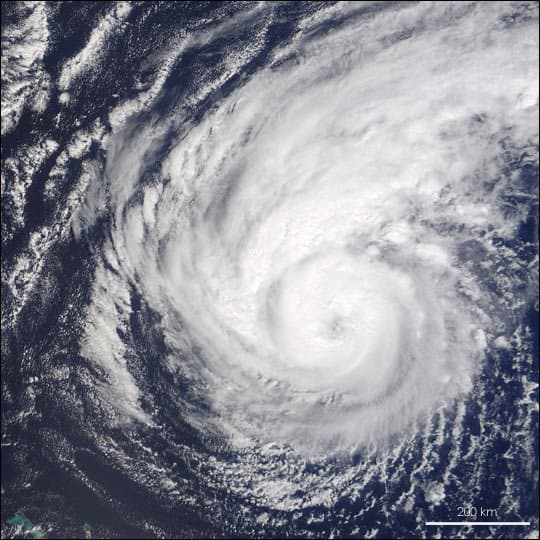
Trader consensus on Polymarket reflects a 91.5% implied probability for no U.S. hurricane landfall by May 31, driven by the National Hurricane Center's (NHC) latest Atlantic Tropical Weather Outlook showing no active tropical cyclones or significant disturbances as of early April 2026. Historical records from NOAA confirm zero hurricane landfalls—defined as sustained winds of 74 mph or higher on the Saffir-Simpson scale—in the continental U.S. before June 1 since 1851, with unfavorable conditions including cool sea surface temperatures, moderate wind shear, and a transitioning ENSO state from La Niña toward neutral or El Niño, which typically suppresses early-season activity. While rapid tropical wave development in the western Caribbean could theoretically challenge this, NHC model consensus shows low risk through late May, with daily outlooks providing key updates.
Resumo experimental gerado por IA com dados do Polymarket · AtualizadoUm furacão atingirá os EUA até 31 de maio?
Um furacão atingirá os EUA até 31 de maio?
Sim
$11,658 Vol.
$11,658 Vol.
Sim
$11,658 Vol.
$11,658 Vol.
This market may only resolve to "No" after May 31, 2026, 11:59 PM ET if the conditions for a "Yes" resolution have not been met.
For the purpose of this market, a hurricane landfall is said to occur when a hurricane's surface center intersects with the coastline, as described at https://www.nhc.noaa.gov/aboutgloss.shtml#LANDFALL , and the NHC officially reports that the storm has maximum sustained winds of 74 mph or higher at the time of landfall.
This market will resolve based on an initial advisory released by the NHC that a hurricane has made landfall within the conterminous United States within the market timeframe regardless of any later retraction or analysis that may contradict the initial announcement.
Mercado Aberto: Dec 4, 2025, 3:05 PM ET
Resolver
0x65070BE91...This market may only resolve to "No" after May 31, 2026, 11:59 PM ET if the conditions for a "Yes" resolution have not been met.
For the purpose of this market, a hurricane landfall is said to occur when a hurricane's surface center intersects with the coastline, as described at https://www.nhc.noaa.gov/aboutgloss.shtml#LANDFALL , and the NHC officially reports that the storm has maximum sustained winds of 74 mph or higher at the time of landfall.
This market will resolve based on an initial advisory released by the NHC that a hurricane has made landfall within the conterminous United States within the market timeframe regardless of any later retraction or analysis that may contradict the initial announcement.
Resolver
0x65070BE91...Trader consensus on Polymarket reflects a 91.5% implied probability for no U.S. hurricane landfall by May 31, driven by the National Hurricane Center's (NHC) latest Atlantic Tropical Weather Outlook showing no active tropical cyclones or significant disturbances as of early April 2026. Historical records from NOAA confirm zero hurricane landfalls—defined as sustained winds of 74 mph or higher on the Saffir-Simpson scale—in the continental U.S. before June 1 since 1851, with unfavorable conditions including cool sea surface temperatures, moderate wind shear, and a transitioning ENSO state from La Niña toward neutral or El Niño, which typically suppresses early-season activity. While rapid tropical wave development in the western Caribbean could theoretically challenge this, NHC model consensus shows low risk through late May, with daily outlooks providing key updates.
Resumo experimental gerado por IA com dados do Polymarket · Atualizado
Cuidado com os links externos.
Cuidado com os links externos.
Frequently Asked Questions