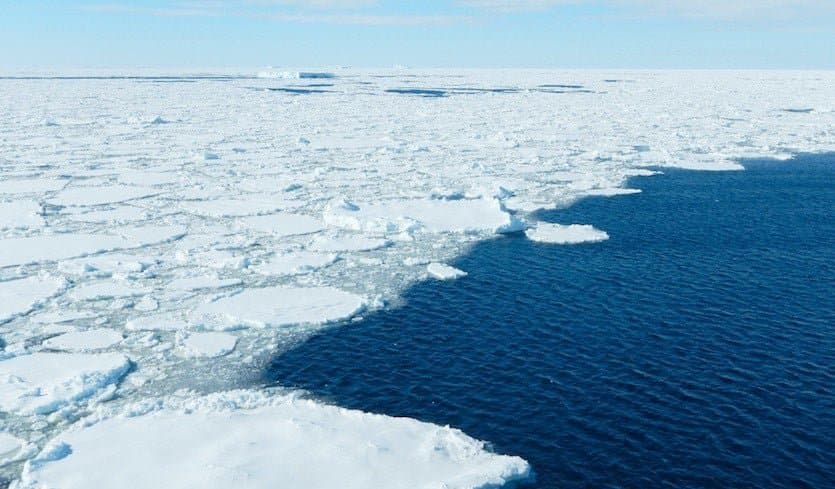
The National Snow and Ice Data Center (NSIDC) confirmed on March 26 that Arctic sea ice reached its winter maximum extent of 14.29 million square kilometers on March 15, 2026—falling squarely in the 14.2-14.4 million sq km bin and statistically tying the record low from 2025 in the 48-year satellite record. This positioning reflects trader consensus on authoritative satellite observations from NSIDC's Sea Ice Index, driven by persistent warm anomalies over the Arctic Ocean, reduced ice growth in the Barents and Bering Seas, and thinner ice volume per model analyses. While final data revisions are possible though rare post-confirmation, a significant upward adjustment would require anomalous late-season refreezing unsupported by current NOAA and Copernicus monitoring, solidifying the market-implied near-certainty.
Resumo experimental gerado por IA com dados do Polymarket · AtualizadoExtensão máxima do gelo marinho do Ártico neste inverno?
Extensão máxima do gelo marinho do Ártico neste inverno?
14,2-14,4 milhões km² 100.0%
<14 milhões km² <1%
14-14,2 milhões km² <1%
14,4-14,6 mi km² <1%
$46,087 Vol.
$46,087 Vol.
<14 milhões km²
Não
14-14,2 milhões km²
Não
14,2-14,4 milhões km²
Sim
14,4-14,6 mi km²
Não
14,6-14,8 milhões km²
Não
14,8-15 milhões km²
Não
15m+ km²
Não
14,2-14,4 milhões km² 100.0%
<14 milhões km² <1%
14-14,2 milhões km² <1%
14,4-14,6 mi km² <1%
$46,087 Vol.
$46,087 Vol.
<14 milhões km²
Não
14-14,2 milhões km²
Não
14,2-14,4 milhões km²
Sim
14,4-14,6 mi km²
Não
14,6-14,8 milhões km²
Não
14,8-15 milhões km²
Não
15m+ km²
Não
This market will remain open until data has been published for April 1, 2026, at which point it will resolve immediately. Any revisions to sea ice extent recorded after data is published for April 1, 2026 will not be considered.
The resolution source for this market measures Arctic sea ice extent to thousands of square kilometers (e.g. 14.255 million sq km). Thus, this is the level of precision that will be used when resolving the market.
The resolution source for this market will be information from the National Snow and Ice Data Center, specifically the maximum value recorded for any day between November 20, 2025 and April 1, 2026 in the “NH-Daily-Extent” tab of the “Sea Ice Index Daily Extent” data set, available at https://nsidc.org/sea-ice-today/sea-ice-tools. If this resolution source becomes unavailable, another resolution source will be chosen.
Mercado Aberto: Nov 20, 2025, 6:43 PM ET
Resolver
0x2F5e3684c...Resultado proposto: Não
Sem contestação
Resultado final: Não
This market will remain open until data has been published for April 1, 2026, at which point it will resolve immediately. Any revisions to sea ice extent recorded after data is published for April 1, 2026 will not be considered.
The resolution source for this market measures Arctic sea ice extent to thousands of square kilometers (e.g. 14.255 million sq km). Thus, this is the level of precision that will be used when resolving the market.
The resolution source for this market will be information from the National Snow and Ice Data Center, specifically the maximum value recorded for any day between November 20, 2025 and April 1, 2026 in the “NH-Daily-Extent” tab of the “Sea Ice Index Daily Extent” data set, available at https://nsidc.org/sea-ice-today/sea-ice-tools. If this resolution source becomes unavailable, another resolution source will be chosen.
Resolver
0x2F5e3684c...Resultado proposto: Não
Sem contestação
Resultado final: Não
The National Snow and Ice Data Center (NSIDC) confirmed on March 26 that Arctic sea ice reached its winter maximum extent of 14.29 million square kilometers on March 15, 2026—falling squarely in the 14.2-14.4 million sq km bin and statistically tying the record low from 2025 in the 48-year satellite record. This positioning reflects trader consensus on authoritative satellite observations from NSIDC's Sea Ice Index, driven by persistent warm anomalies over the Arctic Ocean, reduced ice growth in the Barents and Bering Seas, and thinner ice volume per model analyses. While final data revisions are possible though rare post-confirmation, a significant upward adjustment would require anomalous late-season refreezing unsupported by current NOAA and Copernicus monitoring, solidifying the market-implied near-certainty.
Resumo experimental gerado por IA com dados do Polymarket · Atualizado
Cuidado com os links externos.
Cuidado com os links externos.
Frequently Asked Questions