Market icon

¿Se unirá un nuevo país a los Acuerdos de Abraham antes del 31 de marzo?

Market icon

¿Se unirá un nuevo país a los Acuerdos de Abraham antes del 31 de marzo?

2% chance
Polymarket

$202,549 Vol.

2% chance
Polymarket

$202,549 Vol.

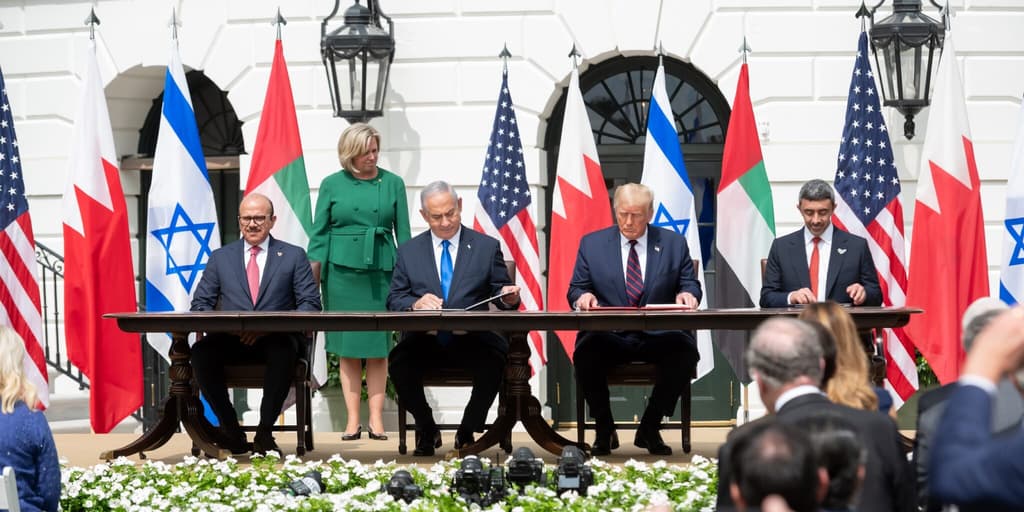
This market will resolve to "Yes" if any country not already apart of the Abraham Accords formally signs a normalization agreement with Israel under the framework of the Abraham Accords by March 31, 2026 11:59 PM ET. Otherwise, this market will resolve to "No". A formal signing refers to an official agreement between Israel and another country that is publicly acknowledged by both governments and clearly attributed to the Abraham Accords or their continuation. Countries already part of the Abraham Accords as of June 26, 2025—including the United Arab Emirates, Bahrain, Morocco, and Sudan—will not count. The resolution source will be official government statements, however a consensus for credible reporting may also be used.Trader consensus overwhelmingly prices "No" at 98.4% for a new country joining the Abraham Accords by March 31, driven by the absence of any verifiable diplomatic breakthroughs or official announcements in recent months amid protracted Israel-Hamas hostilities in Gaza and escalating tensions with Hezbollah and Iran-backed groups. Saudi Arabia, the leading prospective member, continues to link normalization to concrete progress on Palestinian statehood, a condition stalled by the conflict and lacking U.S. or Israeli concessions. Other candidates like Indonesia or Malaysia show no active engagement. Despite President-elect Trump's stated goal to expand the accords post-inauguration, the compressed timeline leaves scant room for treaty negotiations, summits, or ratifications. Only an unforeseen ceasefire or bilateral deal could alter this trajectory.

Trader consensus overwhelmingly prices "No" at 98.4% for a new country joining the Abraham Accords by March 31, driven by the absence of any verifiable diplomatic breakthroughs or official announcements in recent months amid protracted Israel-Hamas hostilities in Gaza and escalating tensions with Hezbollah and Iran-backed groups. Saudi Arabia, the leading prospective member, continues to link normalization to concrete progress on Palestinian statehood, a condition stalled by the conflict and lacking U.S. or Israeli concessions. Other candidates like Indonesia or Malaysia show no active engagement. Despite President-elect Trump's stated goal to expand the accords post-inauguration, the compressed timeline leaves scant room for treaty negotiations, summits, or ratifications. Only an unforeseen ceasefire or bilateral deal could alter this trajectory.

Resumen experimental generado por IA con datos de Polymarket · Actualizado
This market will resolve to "Yes" if any country not already apart of the Abraham Accords formally signs a normalization agreement with Israel under the framework of the Abraham Accords by March 31, 2026 11:59 PM ET. Otherwise, this market will resolve to "No". A formal signing refers to an official agreement between Israel and another country that is publicly acknowledged by both governments and clearly attributed to the Abraham Accords or their continuation. Countries already part of the Abraham Accords as of June 26, 2025—including the United Arab Emirates, Bahrain, Morocco, and Sudan—will not count. The resolution source will be official government statements, however a consensus for credible reporting may also be used.Trader consensus overwhelmingly prices "No" at 98.4% for a new country joining the Abraham Accords by March 31, driven by the absence of any verifiable diplomatic breakthroughs or official announcements in recent months amid protracted Israel-Hamas hostilities in Gaza and escalating tensions with Hezbollah and Iran-backed groups. Saudi Arabia, the leading prospective member, continues to link normalization to concrete progress on Palestinian statehood, a condition stalled by the conflict and lacking U.S. or Israeli concessions. Other candidates like Indonesia or Malaysia show no active engagement. Despite President-elect Trump's stated goal to expand the accords post-inauguration, the compressed timeline leaves scant room for treaty negotiations, summits, or ratifications. Only an unforeseen ceasefire or bilateral deal could alter this trajectory.

Trader consensus overwhelmingly prices "No" at 98.4% for a new country joining the Abraham Accords by March 31, driven by the absence of any verifiable diplomatic breakthroughs or official announcements in recent months amid protracted Israel-Hamas hostilities in Gaza and escalating tensions with Hezbollah and Iran-backed groups. Saudi Arabia, the leading prospective member, continues to link normalization to concrete progress on Palestinian statehood, a condition stalled by the conflict and lacking U.S. or Israeli concessions. Other candidates like Indonesia or Malaysia show no active engagement. Despite President-elect Trump's stated goal to expand the accords post-inauguration, the compressed timeline leaves scant room for treaty negotiations, summits, or ratifications. Only an unforeseen ceasefire or bilateral deal could alter this trajectory.

Resumen experimental generado por IA con datos de Polymarket · Actualizado

Cuidado con los enlaces externos.

Preguntas frecuentes

"¿Se unirá un nuevo país a los Acuerdos de Abraham antes del 31 de marzo?" es un mercado de predicción en Polymarket con 2 resultados posibles donde los operadores compran y venden acciones según lo que creen que sucederá. El resultado líder actual es "¿Se unirá un nuevo país a los Acuerdos de Abraham antes del 31 de marzo?" con 2%. Los precios reflejan probabilidades en tiempo real de la comunidad. Por ejemplo, una acción cotizada a 2¢ implica que el mercado colectivamente asigna una probabilidad de 2% a ese resultado. Estas probabilidades cambian continuamente a medida que los operadores reaccionan a nuevos desarrollos. Las acciones del resultado correcto son canjeables por $1 cada una tras la resolución del mercado.

A día de hoy, "¿Se unirá un nuevo país a los Acuerdos de Abraham antes del 31 de marzo?" ha generado $202.5K en volumen total de trading desde que el mercado se lanzó el Nov 5, 2025. Este nivel de actividad refleja un fuerte compromiso de la comunidad de Polymarket y ayuda a garantizar que las probabilidades actuales estén respaldadas por un amplio grupo de participantes del mercado. Puedes seguir los movimientos de precios en vivo y operar en cualquier resultado directamente en esta página.

Para operar en "¿Se unirá un nuevo país a los Acuerdos de Abraham antes del 31 de marzo?", explora los 2 resultados disponibles en esta página. Cada resultado muestra un precio actual que representa la probabilidad implícita del mercado. Para tomar una posición, selecciona el resultado que consideres más probable, elige "Sí" para operar a favor o "No" para operar en contra, introduce tu cantidad y haz clic en "Operar". Si tu resultado elegido es correcto cuando el mercado se resuelve, tus acciones de "Sí" pagan $1 cada una. Si es incorrecto, pagan $0. También puedes vender tus acciones en cualquier momento antes de la resolución.

Este es un mercado muy abierto. El líder actual para "¿Se unirá un nuevo país a los Acuerdos de Abraham antes del 31 de marzo?" es "¿Se unirá un nuevo país a los Acuerdos de Abraham antes del 31 de marzo?" con solo 2%. Sin ningún resultado con una mayoría clara, los operadores lo ven como altamente incierto, lo que puede presentar oportunidades de trading únicas. Estas probabilidades se actualizan en tiempo real, así que guarda esta página en marcadores.

Las reglas de resolución para "¿Se unirá un nuevo país a los Acuerdos de Abraham antes del 31 de marzo?" definen exactamente qué debe ocurrir para que cada resultado sea declarado ganador, incluyendo las fuentes de datos oficiales utilizadas para determinar el resultado. Puedes revisar los criterios de resolución completos en la sección "Reglas" en esta página sobre los comentarios. Recomendamos leer las reglas cuidadosamente antes de operar, ya que especifican las condiciones exactas, casos especiales y fuentes.