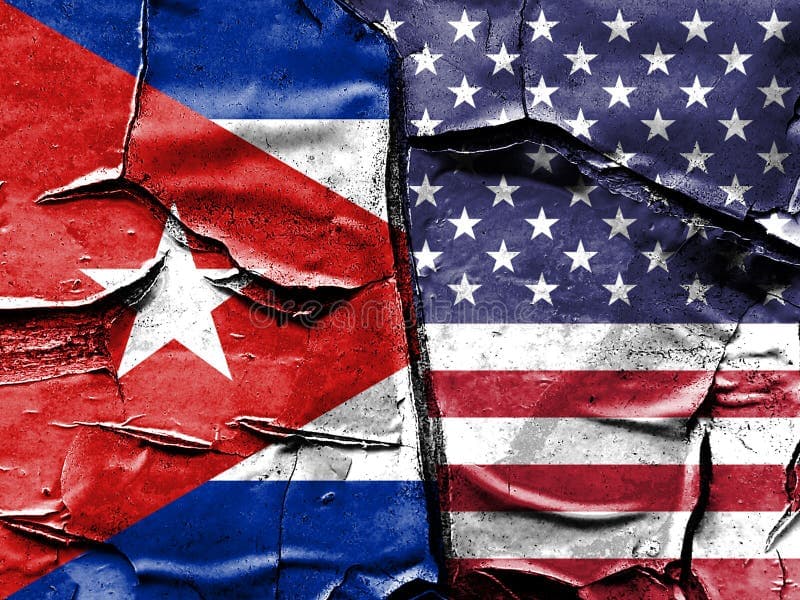
Trader consensus prices a U.S. invasion of Cuba in 2026 at low odds, with "No" shares at 77.5%, reflecting the absence of any official military planning, troop mobilizations, or hawkish rhetoric from the Pentagon, White House, or congressional leaders. U.S.-Cuba relations remain strained under longstanding economic sanctions and travel restrictions, intensified by Cuba's alliances with Venezuela and Russia, but Washington prioritizes diplomatic pressure and humanitarian aid over kinetic action, as seen in recent State Department condemnations of Cuban human rights abuses without escalation signals. Historical precedents like the 1961 Bay of Pigs failure underscore invasion risks, while U.S. focus stays on higher-priority theaters like Ukraine and the Middle East. The 2024 election outcome may tighten sanctions under a potential Trump administration, but no candidate has floated military intervention.
Experimentelle KI-generierte Zusammenfassung mit Polymarket-Daten · AktualisiertJa
$1,175,448 Vol.
$1,175,448 Vol.
Ja
$1,175,448 Vol.
$1,175,448 Vol.
For the purposes of this market, land de facto controlled by Cuba or the United States as market creation, will be considered the sovereign territory of that country.
The resolution source for this market will be a consensus of credible sources.
Markt eröffnet: Jan 4, 2026, 3:24 PM ET
Resolver
0x65070BE91...For the purposes of this market, land de facto controlled by Cuba or the United States as market creation, will be considered the sovereign territory of that country.
The resolution source for this market will be a consensus of credible sources.
Resolver
0x65070BE91...Trader consensus prices a U.S. invasion of Cuba in 2026 at low odds, with "No" shares at 77.5%, reflecting the absence of any official military planning, troop mobilizations, or hawkish rhetoric from the Pentagon, White House, or congressional leaders. U.S.-Cuba relations remain strained under longstanding economic sanctions and travel restrictions, intensified by Cuba's alliances with Venezuela and Russia, but Washington prioritizes diplomatic pressure and humanitarian aid over kinetic action, as seen in recent State Department condemnations of Cuban human rights abuses without escalation signals. Historical precedents like the 1961 Bay of Pigs failure underscore invasion risks, while U.S. focus stays on higher-priority theaters like Ukraine and the Middle East. The 2024 election outcome may tighten sanctions under a potential Trump administration, but no candidate has floated military intervention.
Experimentelle KI-generierte Zusammenfassung mit Polymarket-Daten · Aktualisiert
Vorsicht bei externen Links.
Vorsicht bei externen Links.
Häufig gestellte Fragen