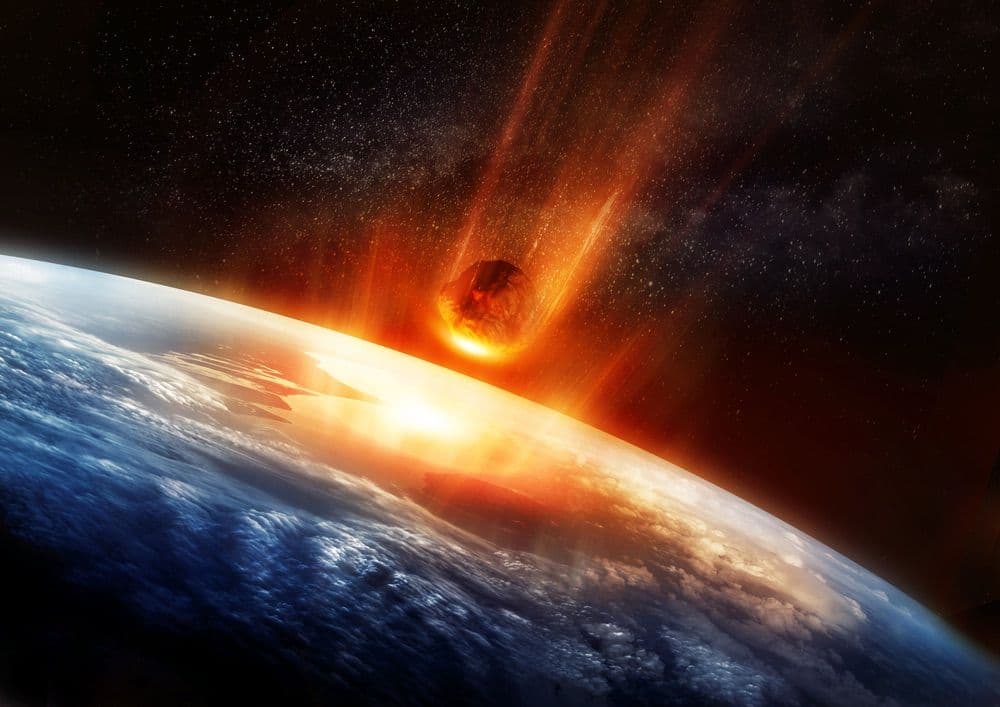
**No known near-Earth objects large enough to deliver a 1-megaton airburst or impact remain on collision trajectories for 2026, according to NASA’s Center for Near-Earth Object Studies (CNEOS) and ESA monitoring.** Catalogued NEOs show zero significant impact probability this year, while recent fireball reports (including events tracked by the American Meteor Society) have stayed well below the 1 MT threshold and align with the normal flux of meter-scale bodies. Objects capable of 1 MT release are typically tens of meters across; their average terrestrial impact interval spans several decades, consistent with current observational completeness for larger potential impactors. Continuous optical and radar surveys through year-end could still reveal a small, previously undetected fragment, though statistical models place that combined risk well below the market-implied threshold.
Experimentelle KI-generierte Zusammenfassung mit Polymarket-Daten. Dies ist keine Handelsberatung und spielt keine Rolle bei der Auflösung dieses Marktes. · Aktualisiert1 Megatonnen-Meteorschlag im Jahr 2026?
1 Megatonnen-Meteorschlag im Jahr 2026?
Ja
$115,546 Vol.
$115,546 Vol.
Ja
$115,546 Vol.
$115,546 Vol.
The object must be classified as a natural meteoroid; events involving artificial objects or reentry vehicles do not qualify.
The primary resolution source will be the NASA JPL Fireball and Bolide Data repository: https://cneos.jpl.nasa.gov/fireballs/. The relevant field for determining impact energy is the “Impact Energy (kt)” column. If this dataset has not been updated to include all relevant dates by February 28, 2027, or if the NASA JPL Fireball and Bolide Data repository becomes permanently unavailable, this market may resolve based on a consensus of credible sources including the European Space Agency (ESA), the International Asteroid Warning Network (IAWN), the U.S. Department of Defense, or credible reporting of a scientific consensus, such as a NASA press release.
Markt eröffnet: Jan 2, 2026, 2:24 PM ET
Resolver
0x65070BE91...The object must be classified as a natural meteoroid; events involving artificial objects or reentry vehicles do not qualify.
The primary resolution source will be the NASA JPL Fireball and Bolide Data repository: https://cneos.jpl.nasa.gov/fireballs/. The relevant field for determining impact energy is the “Impact Energy (kt)” column. If this dataset has not been updated to include all relevant dates by February 28, 2027, or if the NASA JPL Fireball and Bolide Data repository becomes permanently unavailable, this market may resolve based on a consensus of credible sources including the European Space Agency (ESA), the International Asteroid Warning Network (IAWN), the U.S. Department of Defense, or credible reporting of a scientific consensus, such as a NASA press release.
Resolver
0x65070BE91...**No known near-Earth objects large enough to deliver a 1-megaton airburst or impact remain on collision trajectories for 2026, according to NASA’s Center for Near-Earth Object Studies (CNEOS) and ESA monitoring.** Catalogued NEOs show zero significant impact probability this year, while recent fireball reports (including events tracked by the American Meteor Society) have stayed well below the 1 MT threshold and align with the normal flux of meter-scale bodies. Objects capable of 1 MT release are typically tens of meters across; their average terrestrial impact interval spans several decades, consistent with current observational completeness for larger potential impactors. Continuous optical and radar surveys through year-end could still reveal a small, previously undetected fragment, though statistical models place that combined risk well below the market-implied threshold.
Experimentelle KI-generierte Zusammenfassung mit Polymarket-Daten. Dies ist keine Handelsberatung und spielt keine Rolle bei der Auflösung dieses Marktes. · Aktualisiert
Vorsicht bei externen Links.
Vorsicht bei externen Links.
Häufig gestellte Fragen