Para operar en EE. UU., ve a polymarket.us

icon for ¿Prueba nuclear de EE. UU. realizada por...?

¿Prueba nuclear de EE. UU. realizada por...?

icon for ¿Prueba nuclear de EE. UU. realizada por...?

¿Prueba nuclear de EE. UU. realizada por...?

$795,287 Vol.

30 sep 2026
Polymarket

$795,287 Vol.

Polymarket

30 de septiembre de 2026

$57,555 Vol.

1%

31 de diciembre de 2026

$76,920 Vol.

5%

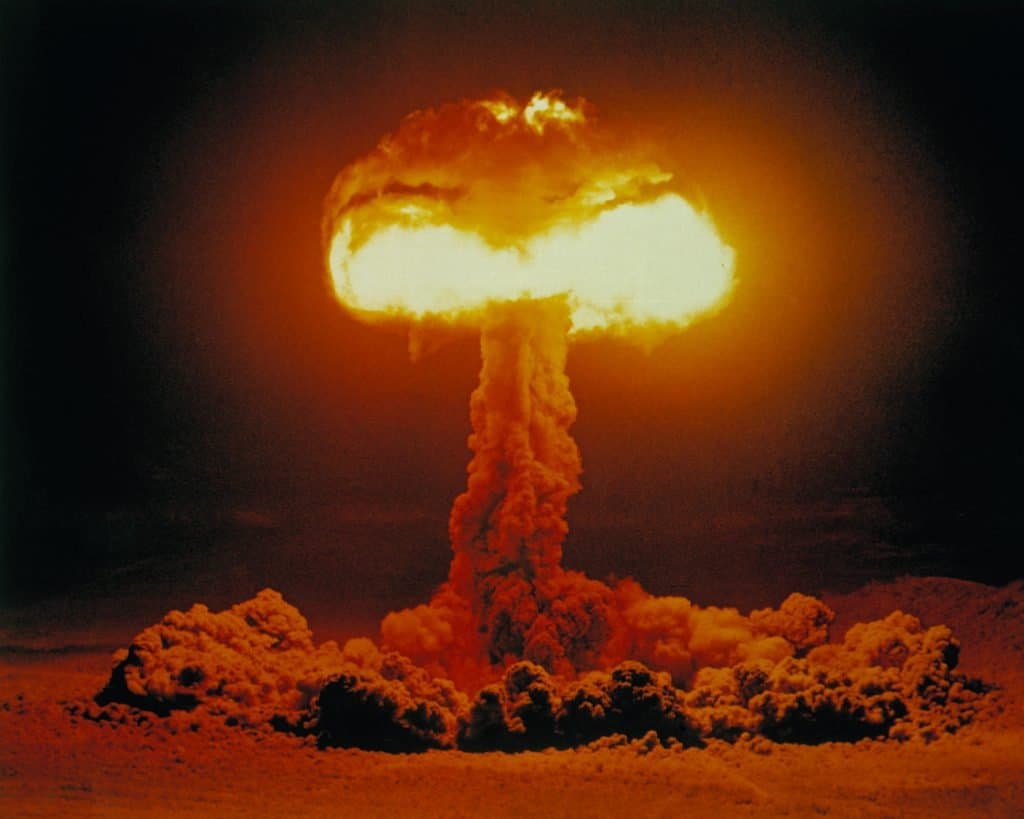
This market will resolve to "Yes" if the US conducts a nuclear test by the listed date (ET). Otherwise, this market will resolve to "No". A nuclear test is defined as the intentional non-combat detonation of a device by the US that produces a nuclear chain reaction (fission or fusion), regardless of yield. Accidents, radiological dispersal devices (bombs that spread radioactive material using conventional explosives such as "dirty bombs"), or actions by third parties will not count toward this market's resolution. Tests not explicitly claimed by US may still qualify if a clear consensus of credible reporting attributes the nuclear detonation to US. For example, an unclaimed nuclear test analogous to the 1979 "Vela Incident" would count if credible reporting attributes it to the US. The resolution source for this market will be a broad consensus of credible reporting.**U.S. nuclear test by...?** Trader consensus prices the chance of a U.S. nuclear explosive test by December 31, 2026 at roughly 5–8 percent across listed dates, reflecting the continued 1992 moratorium and repeated official clarifications that no full-yield detonations are planned. President Trump’s October 2025 social-media directive to resume testing “on an equal basis” with Russia and China prompted immediate walk-backs by Energy Secretary Chris Wright, who stated that near-term activities would involve only subcritical or non-explosive system tests at the Nevada National Security Site. Annual stockpile stewardship certifications continue to affirm reliability without explosive testing, while New START’s February 2026 expiration and congressional measures to codify the moratorium have reinforced caution. Preparations for any explosive test would require 24–36 months, and no such activities have been confirmed through September 2026.

This market will resolve to "Yes" if the US conducts a nuclear test by the listed date (ET). Otherwise, this market will resolve to "No".

A nuclear test is defined as the intentional non-combat detonation of a device by the US that produces a nuclear chain reaction (fission or fusion), regardless of yield.

Accidents, radiological dispersal devices (bombs that spread radioactive material using conventional explosives such as "dirty bombs"), or actions by third parties will not count toward this market's resolution.

Tests not explicitly claimed by US may still qualify if a clear consensus of credible reporting attributes the nuclear detonation to US. For example, an unclaimed nuclear test analogous to the 1979 "Vela Incident" would count if credible reporting attributes it to the US.

The resolution source for this market will be a broad consensus of credible reporting.
This market will resolve to "Yes" if the US conducts a nuclear test by the listed date (ET). Otherwise, this market will resolve to "No". A nuclear test is defined as the intentional non-combat detonation of a device by the US that produces a nuclear chain reaction (fission or fusion), regardless of yield. Accidents, radiological dispersal devices (bombs that spread radioactive material using conventional explosives such as "dirty bombs"), or actions by third parties will not count toward this market's resolution. Tests not explicitly claimed by US may still qualify if a clear consensus of credible reporting attributes the nuclear detonation to US. For example, an unclaimed nuclear test analogous to the 1979 "Vela Incident" would count if credible reporting attributes it to the US. The resolution source for this market will be a broad consensus of credible reporting.
Volumen
$795,287
Fecha de finalización
1 ene 2027
Mercado abierto
Mar 31, 2026, 3:32 PM ET
This market will resolve to "Yes" if the US conducts a nuclear test by the listed date (ET). Otherwise, this market will resolve to "No". A nuclear test is defined as the intentional non-combat detonation of a device by the US that produces a nuclear chain reaction (fission or fusion), regardless of yield. Accidents, radiological dispersal devices (bombs that spread radioactive material using conventional explosives such as "dirty bombs"), or actions by third parties will not count toward this market's resolution. Tests not explicitly claimed by US may still qualify if a clear consensus of credible reporting attributes the nuclear detonation to US. For example, an unclaimed nuclear test analogous to the 1979 "Vela Incident" would count if credible reporting attributes it to the US. The resolution source for this market will be a broad consensus of credible reporting.**U.S. nuclear test by...?** Trader consensus prices the chance of a U.S. nuclear explosive test by December 31, 2026 at roughly 5–8 percent across listed dates, reflecting the continued 1992 moratorium and repeated official clarifications that no full-yield detonations are planned. President Trump’s October 2025 social-media directive to resume testing “on an equal basis” with Russia and China prompted immediate walk-backs by Energy Secretary Chris Wright, who stated that near-term activities would involve only subcritical or non-explosive system tests at the Nevada National Security Site. Annual stockpile stewardship certifications continue to affirm reliability without explosive testing, while New START’s February 2026 expiration and congressional measures to codify the moratorium have reinforced caution. Preparations for any explosive test would require 24–36 months, and no such activities have been confirmed through September 2026.

This market will resolve to "Yes" if the US conducts a nuclear test by the listed date (ET). Otherwise, this market will resolve to "No".

A nuclear test is defined as the intentional non-combat detonation of a device by the US that produces a nuclear chain reaction (fission or fusion), regardless of yield.

Accidents, radiological dispersal devices (bombs that spread radioactive material using conventional explosives such as "dirty bombs"), or actions by third parties will not count toward this market's resolution.

Tests not explicitly claimed by US may still qualify if a clear consensus of credible reporting attributes the nuclear detonation to US. For example, an unclaimed nuclear test analogous to the 1979 "Vela Incident" would count if credible reporting attributes it to the US.

The resolution source for this market will be a broad consensus of credible reporting.
This market will resolve to "Yes" if the US conducts a nuclear test by the listed date (ET). Otherwise, this market will resolve to "No". A nuclear test is defined as the intentional non-combat detonation of a device by the US that produces a nuclear chain reaction (fission or fusion), regardless of yield. Accidents, radiological dispersal devices (bombs that spread radioactive material using conventional explosives such as "dirty bombs"), or actions by third parties will not count toward this market's resolution. Tests not explicitly claimed by US may still qualify if a clear consensus of credible reporting attributes the nuclear detonation to US. For example, an unclaimed nuclear test analogous to the 1979 "Vela Incident" would count if credible reporting attributes it to the US. The resolution source for this market will be a broad consensus of credible reporting.
Volumen
$795,287
Fecha de finalización
1 ene 2027
Mercado abierto
Mar 31, 2026, 3:32 PM ET

Cuidado con los enlaces externos.

Preguntas frecuentes

"¿Prueba nuclear de EE. UU. realizada por...?" es un mercado de predicción en Polymarket con 6 resultados posibles donde los operadores compran y venden acciones según lo que creen que sucederá. El resultado líder actual es "31 de diciembre de 2026" con 5%, seguido de "30 de septiembre de 2026" con 1%. Los precios reflejan probabilidades en tiempo real de la comunidad. Por ejemplo, una acción cotizada a 5¢ implica que el mercado colectivamente asigna una probabilidad de 5% a ese resultado. Estas probabilidades cambian continuamente a medida que los operadores reaccionan a nuevos desarrollos. Las acciones del resultado correcto son canjeables por $1 cada una tras la resolución del mercado.

A día de hoy, "¿Prueba nuclear de EE. UU. realizada por...?" ha generado $795.3K en volumen total de trading desde que el mercado se lanzó el Nov 5, 2025. Este nivel de actividad refleja un fuerte compromiso de la comunidad de Polymarket y ayuda a garantizar que las probabilidades actuales estén respaldadas por un amplio grupo de participantes del mercado. Puedes seguir los movimientos de precios en vivo y operar en cualquier resultado directamente en esta página.

Para operar en "¿Prueba nuclear de EE. UU. realizada por...?", explora los 6 resultados disponibles en esta página. Cada resultado muestra un precio actual que representa la probabilidad implícita del mercado. Para tomar una posición, selecciona el resultado que consideres más probable, elige "Sí" para operar a favor o "No" para operar en contra, introduce tu cantidad y haz clic en "Operar". Si tu resultado elegido es correcto cuando el mercado se resuelve, tus acciones de "Sí" pagan $1 cada una. Si es incorrecto, pagan $0. También puedes vender tus acciones en cualquier momento antes de la resolución.

Este es un mercado muy abierto. El líder actual para "¿Prueba nuclear de EE. UU. realizada por...?" es "31 de diciembre de 2026" con solo 5%, con "30 de septiembre de 2026" muy cerca con 1%. Sin ningún resultado con una mayoría clara, los operadores lo ven como altamente incierto, lo que puede presentar oportunidades de trading únicas. Estas probabilidades se actualizan en tiempo real, así que guarda esta página en marcadores.

Las reglas de resolución para "¿Prueba nuclear de EE. UU. realizada por...?" definen exactamente qué debe ocurrir para que cada resultado sea declarado ganador, incluyendo las fuentes de datos oficiales utilizadas para determinar el resultado. Puedes revisar los criterios de resolución completos en la sección "Reglas" en esta página sobre los comentarios. Recomendamos leer las reglas cuidadosamente antes de operar, ya que especifican las condiciones exactas, casos especiales y fuentes.