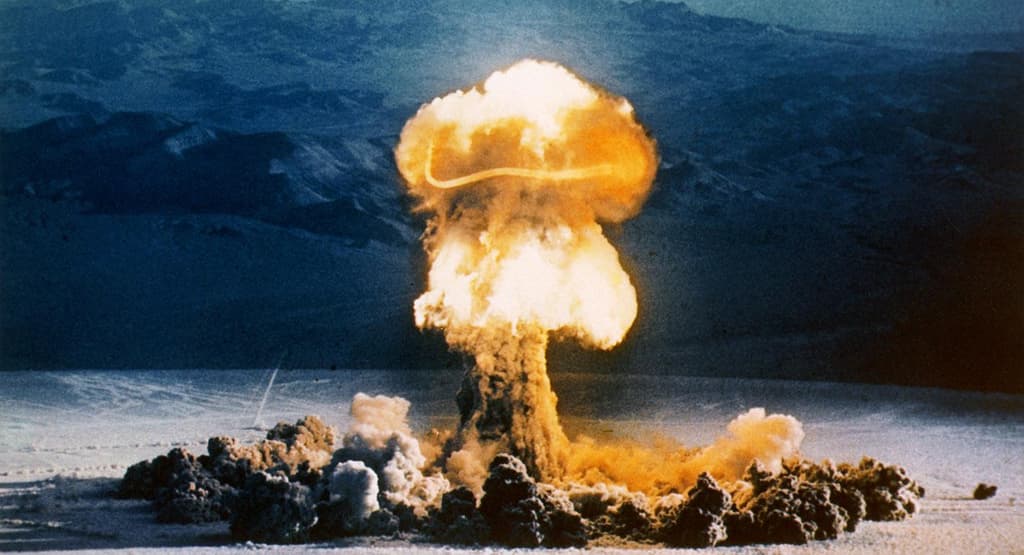
This market will resolve to "Yes" if Russia conducts a nuclear test by the listed date (ET). Otherwise, this market will resolve to "No".
A nuclear test is defined as the intentional non-combat detonation of a device by Russia that produces a nuclear chain reaction (fission or fusion), regardless of yield.
Accidents, radiological dispersal devices (bombs that spread radioactive material using conventional explosives such as "dirty bombs"), or actions by third parties will not count toward this market's resolution.
Tests not explicitly claimed by Russia may still qualify if a clear consensus of credible reporting attributes the nuclear detonation to Russia. For example, an unclaimed nuclear test analogous to the 1979 "Vela Incident" would count if credible reporting attributes it to Russia.
The resolution source for this market will be a broad consensus of credible reporting.Russia's preparations for potential nuclear explosive tests at the Novaya Zemlya site, ordered by President Putin in November 2025 following U.S. signals on testing under Trump, continue to shape trader consensus amid post-New START expiry tensions since February 2026. No full-scale detonation has occurred since 1990, despite de-ratification of the Comprehensive Nuclear-Test-Ban Treaty and mutual accusations of subcritical activities—denied by Moscow. Recent intercontinental ballistic missile trials, including Sarmat near Kazakhstan in April and launches at Kura through May 10, signal delivery system advances but fall short of explosive tests. A UN appeal on April 29 urged restraint, while Victory Day on May 9 could prompt announcements or escalatory rhetoric, maintaining market uncertainty.
This market will resolve to "Yes" if Russia conducts a nuclear test by the listed date (ET). Otherwise, this market will resolve to "No".
A nuclear test is defined as the intentional non-combat detonation of a device by Russia that produces a nuclear chain reaction (fission or fusion), regardless of yield.
Accidents, radiological dispersal devices (bombs that spread radioactive material using conventional explosives such as "dirty bombs"), or actions by third parties will not count toward this market's resolution.
Tests not explicitly claimed by Russia may still qualify if a clear consensus of credible reporting attributes the nuclear detonation to Russia. For example, an unclaimed nuclear test analogous to the 1979 "Vela Incident" would count if credible reporting attributes it to Russia.
The resolution source for this market will be a broad consensus of credible reporting.
This market will resolve to "Yes" if Russia conducts a nuclear test by the listed date (ET). Otherwise, this market will resolve to "No".
A nuclear test is defined as the intentional non-combat detonation of a device by Russia that produces a nuclear chain reaction (fission or fusion), regardless of yield.
Accidents, radiological dispersal devices (bombs that spread radioactive material using conventional explosives such as "dirty bombs"), or actions by third parties will not count toward this market's resolution.
Tests not explicitly claimed by Russia may still qualify if a clear consensus of credible reporting attributes the nuclear detonation to Russia. For example, an unclaimed nuclear test analogous to the 1979 "Vela Incident" would count if credible reporting attributes it to Russia.
The resolution source for this market will be a broad consensus of credible reporting.
Russia's preparations for potential nuclear explosive tests at the Novaya Zemlya site, ordered by President Putin in November 2025 following U.S. signals on testing under Trump, continue to shape trader consensus amid post-New START expiry tensions since February 2026. No full-scale detonation has occurred since 1990, despite de-ratification of the Comprehensive Nuclear-Test-Ban Treaty and mutual accusations of subcritical activities—denied by Moscow. Recent intercontinental ballistic missile trials, including Sarmat near Kazakhstan in April and launches at Kura through May 10, signal delivery system advances but fall short of explosive tests. A UN appeal on April 29 urged restraint, while Victory Day on May 9 could prompt announcements or escalatory rhetoric, maintaining market uncertainty.
Resumen experimental generado por IA con datos de Polymarket. Esto no es asesoramiento de trading y no influye en cómo se resuelve este mercado. · Actualizado
May 8 2026
No credible reports of Russian nuclear test by early May 2026
September 30, 2026 rises to 5%2%
By early May, no credible news sources reported any Russian nuclear test, and diplomatic warnings remained in place, keeping the market probability near its low point.
May 6 2026
Russia announces nuclear-capable missile tests at Kura range without nuclear detonation
September 30, 2026 dips to 3%2%
Russia’s Ministry of Defence announced missile tests at the Kura range from May 6 to 10, involving nuclear-capable missiles but no nuclear detonations. This showed Russia’s focus on missile testing rather than nuclear tests, further lowering market expectations.
May 6 2026
Continued Russian conventional military aggression and nuclear saber rattling reported without any nuclear test, alongside diplomatic efforts and international monitoring, keeping
December 31, 2026 dips to 8%1%
Continued Russian conventional military aggression and nuclear saber rattling reported without any nuclear test, alongside diplomatic efforts and international monitoring, keeping the market’s probability near historic lows
May 4 2026
Polymarket analysis notes that, despite Yars drills and bomber patrols, there is “absent CTBTO seismic data” and “Kremlin restraint statements,” further depressing the
December 31, 2026 drops to 4%5%
Polymarket analysis notes that, despite Yars drills and bomber patrols, there is “absent CTBTO seismic data” and “Kremlin restraint statements,” further depressing the test‑probability outlook
May 1 2026
U.S. intelligence community reiterates Russia’s nuclear arsenal modernization without confirmed nuclear tests
September 30, 2026 dips to 5%2%
The May 1 report to Congress reiterated Russia’s modernization efforts and large nuclear arsenal but did not report any nuclear test, supporting the market’s continued low probability for a test by September.
May 1 2026
U.S. report to Congress reiterates Russia’s modernization of nuclear weapons amid multiple failed tests and no evidence of recent nuclear detonations, sustaining the market’s low
December 31, 2026 dips to 9%1%
U.S. report to Congress reiterates Russia’s modernization of nuclear weapons amid multiple failed tests and no evidence of recent nuclear detonations, sustaining the market’s low probability for a test
May 1 2026
Congressional Research Service report reiterates that Russia’s “modernization” is hampered by failed tests and that the New START treaty has just expired – The report underscored
September 30, 2026 dips to 6%2%
Congressional Research Service report reiterates that Russia’s “modernization” is hampered by failed tests and that the New START treaty has just expired – The report underscored that, despite the treaty’s lapse, Russia publicly pledged to continue abiding by its limits, reinforcing trader sentiment that a test was unlikely before Sept 30.
May 1 2026
U.S. Congress receives the 2026 Annual Threat Assessment stating Russia has suffered “multiple failed tests of new systems,” reinforcing expectations of continued test moratorium
December 31, 2026 dips to 9%1%
U.S. Congress receives the 2026 Annual Threat Assessment stating Russia has suffered “multiple failed tests of new systems,” reinforcing expectations of continued test moratorium
Apr 30 2026
Russian Defense Ministry reports successful training completion of Yars missile system driver-mechanics arriving for service
Routine personnel training for nuclear-capable missile systems indicated ongoing readiness but no test, supporting low market probabilities.
Apr 30 2026
IAEA Director‑General Rafael Grossi warns that any nuclear test by Russia (or the U.S.) would spark a cascade of worldwide testing – The UN‑backed warning amplified concerns about
September 30, 2026 dips to 8%1%
IAEA Director‑General Rafael Grossi warns that any nuclear test by Russia (or the U.S.) would spark a cascade of worldwide testing – The UN‑backed warning amplified concerns about escalation, leading markets to further discount the probability of a Russian test in the near term.
Apr 30 2026
The Russian‑held Zaporizhzhia nuclear plant loses external power for an hour on the 40th anniversary of Chernobyl, raising safety concerns but providing no evidence of a test
December 31, 2026 dips to 10%2%
The Russian‑held Zaporizhzhia nuclear plant loses external power for an hour on the 40th anniversary of Chernobyl, raising safety concerns but providing no evidence of a test
Apr 27 2026
Russian forces launch massive missile and drone strikes against Ukraine, including attacks near the Zaporizhzhia nuclear plant
Escalation in conventional strikes near nuclear sites raised concerns but no nuclear test occurred, maintaining low test probability.
Apr 26 2026
Russia announces missile tests at the Kura range involving nuclear-capable systems but no confirmed nuclear detonations, reinforcing the narrative of testing without actual
December 31, 2026 dips to 10%2%
Russia announces missile tests at the Kura range involving nuclear-capable systems but no confirmed nuclear detonations, reinforcing the narrative of testing without actual nuclear explosions and maintaining low market probability
Apr 22 2026
U.S. Congressional report highlights Russia’s nuclear modernization amid failed tests but no new nuclear detonations
September 30, 2026 dips to 6%4%
The April 22 Congressional Research Service report detailed Russia’s ongoing nuclear weapons modernization despite multiple failed tests of new systems, with no indication of imminent nuclear testing. This reinforced market skepticism about a near-term test.
Apr 21 2026
Rafael Grossi, head of the International Atomic Energy Agency, warns that any nuclear test by the U.S., Russia, or others would trigger a global cascade of tests, signaling strong
December 31, 2026 dips to 11%1%
Rafael Grossi, head of the International Atomic Energy Agency, warns that any nuclear test by the U.S., Russia, or others would trigger a global cascade of tests, signaling strong international pressure against nuclear testing and contributing to market skepticism
Apr 21 2026
Head of organization overseeing nuclear test ban treaty warns US and Russia against nuclear tests
September 30, 2026 plunges to 9%42%
Rafael Grossi, IAEA Director General, warned at the UN that if the US, Russia, or any other nation resumes nuclear testing, it would trigger a global cascade of tests. This heightened diplomatic pressure likely contributed to the sharp drop in market probability from 51% to 9% in early April.
Apr 21 2026
UN chief Rafael Grossi and CTBTO executive Robert Floyd warn that a Russian nuclear test would trigger a “spiral” of further tests, underscoring Kremlin restraint
Apr 18 2026
Russian Foreign Ministry publicly rejects any possibility of using nuclear weapons in Ukraine – The statement was interpreted as a broader signal of restraint on nuclear
September 30, 2026 dips to 6%3%
Russian Foreign Ministry publicly rejects any possibility of using nuclear weapons in Ukraine – The statement was interpreted as a broader signal of restraint on nuclear activities, contributing to the continued decline in the “Yes”
Apr 2 2026
Russian Strategic Missile Forces conduct large-scale drills in Siberia involving Yars intercontinental ballistic missiles capable of carrying nuclear warheads
June 30, 2026 plunges to 2%48%
Russia held major nuclear missile drills with Yars ICBMs, demonstrating nuclear readiness and signaling deterrence without conducting nuclear tests, contributing to a sharp drop in test probability.
Apr 2 2026
Russia conducts Yars ICBM drills in Siberia, but no warhead‑test activity is reported
December 31, 2026 plunges to 12%38%
Russia conducts Yars ICBM drills in Siberia, but no warhead‑test activity is reported
Mar 31 2026
U.S. intelligence community’s 2026 Annual Threat Assessment reports multiple failed tests of new Russian nuclear systems and ongoing modernization efforts without successful
December 31, 2026 plunges to 12%38%
U.S. intelligence community’s 2026 Annual Threat Assessment reports multiple failed tests of new Russian nuclear systems and ongoing modernization efforts without successful detonations, lowering expectations of a near-term nuclear test by Russia
Mar 15 2026
U.S. intelligence briefing flags “multiple failed tests” of new Russian nuclear systems – A March testimony cited in the 2026 Annual Threat Assessment warned that Russia’s recent
September 30, 2026 plunges to 9%42%
U.S. intelligence briefing flags “multiple failed tests” of new Russian nuclear systems – A March testimony cited in the 2026 Annual Threat Assessment warned that Russia’s recent attempts at modernizing its arsenal had repeatedly failed, prompting traders to slash the perceived likelihood of a test before the end‑September deadline.
This market will resolve to "Yes" if Russia conducts a nuclear test by the listed date (ET). Otherwise, this market will resolve to "No".
A nuclear test is defined as the intentional non-combat detonation of a device by Russia that produces a nuclear chain reaction (fission or fusion), regardless of yield.
Accidents, radiological dispersal devices (bombs that spread radioactive material using conventional explosives such as "dirty bombs"), or actions by third parties will not count toward this market's resolution.
Tests not explicitly claimed by Russia may still qualify if a clear consensus of credible reporting attributes the nuclear detonation to Russia. For example, an unclaimed nuclear test analogous to the 1979 "Vela Incident" would count if credible reporting attributes it to Russia.
The resolution source for this market will be a broad consensus of credible reporting.Russia's preparations for potential nuclear explosive tests at the Novaya Zemlya site, ordered by President Putin in November 2025 following U.S. signals on testing under Trump, continue to shape trader consensus amid post-New START expiry tensions since February 2026. No full-scale detonation has occurred since 1990, despite de-ratification of the Comprehensive Nuclear-Test-Ban Treaty and mutual accusations of subcritical activities—denied by Moscow. Recent intercontinental ballistic missile trials, including Sarmat near Kazakhstan in April and launches at Kura through May 10, signal delivery system advances but fall short of explosive tests. A UN appeal on April 29 urged restraint, while Victory Day on May 9 could prompt announcements or escalatory rhetoric, maintaining market uncertainty.
This market will resolve to "Yes" if Russia conducts a nuclear test by the listed date (ET). Otherwise, this market will resolve to "No".
A nuclear test is defined as the intentional non-combat detonation of a device by Russia that produces a nuclear chain reaction (fission or fusion), regardless of yield.
Accidents, radiological dispersal devices (bombs that spread radioactive material using conventional explosives such as "dirty bombs"), or actions by third parties will not count toward this market's resolution.
Tests not explicitly claimed by Russia may still qualify if a clear consensus of credible reporting attributes the nuclear detonation to Russia. For example, an unclaimed nuclear test analogous to the 1979 "Vela Incident" would count if credible reporting attributes it to Russia.
The resolution source for this market will be a broad consensus of credible reporting.
This market will resolve to "Yes" if Russia conducts a nuclear test by the listed date (ET). Otherwise, this market will resolve to "No".
A nuclear test is defined as the intentional non-combat detonation of a device by Russia that produces a nuclear chain reaction (fission or fusion), regardless of yield.
Accidents, radiological dispersal devices (bombs that spread radioactive material using conventional explosives such as "dirty bombs"), or actions by third parties will not count toward this market's resolution.
Tests not explicitly claimed by Russia may still qualify if a clear consensus of credible reporting attributes the nuclear detonation to Russia. For example, an unclaimed nuclear test analogous to the 1979 "Vela Incident" would count if credible reporting attributes it to Russia.
The resolution source for this market will be a broad consensus of credible reporting.
Russia's preparations for potential nuclear explosive tests at the Novaya Zemlya site, ordered by President Putin in November 2025 following U.S. signals on testing under Trump, continue to shape trader consensus amid post-New START expiry tensions since February 2026. No full-scale detonation has occurred since 1990, despite de-ratification of the Comprehensive Nuclear-Test-Ban Treaty and mutual accusations of subcritical activities—denied by Moscow. Recent intercontinental ballistic missile trials, including Sarmat near Kazakhstan in April and launches at Kura through May 10, signal delivery system advances but fall short of explosive tests. A UN appeal on April 29 urged restraint, while Victory Day on May 9 could prompt announcements or escalatory rhetoric, maintaining market uncertainty.
Resumen experimental generado por IA con datos de Polymarket. Esto no es asesoramiento de trading y no influye en cómo se resuelve este mercado. · Actualizado
May 8 2026
No credible reports of Russian nuclear test by early May 2026
September 30, 2026 rises to 5%2%
By early May, no credible news sources reported any Russian nuclear test, and diplomatic warnings remained in place, keeping the market probability near its low point.
May 6 2026
Russia announces nuclear-capable missile tests at Kura range without nuclear detonation
September 30, 2026 dips to 3%2%
Russia’s Ministry of Defence announced missile tests at the Kura range from May 6 to 10, involving nuclear-capable missiles but no nuclear detonations. This showed Russia’s focus on missile testing rather than nuclear tests, further lowering market expectations.
May 6 2026
Continued Russian conventional military aggression and nuclear saber rattling reported without any nuclear test, alongside diplomatic efforts and international monitoring, keeping
December 31, 2026 dips to 8%1%
Continued Russian conventional military aggression and nuclear saber rattling reported without any nuclear test, alongside diplomatic efforts and international monitoring, keeping the market’s probability near historic lows
May 4 2026
Polymarket analysis notes that, despite Yars drills and bomber patrols, there is “absent CTBTO seismic data” and “Kremlin restraint statements,” further depressing the
December 31, 2026 drops to 4%5%
Polymarket analysis notes that, despite Yars drills and bomber patrols, there is “absent CTBTO seismic data” and “Kremlin restraint statements,” further depressing the test‑probability outlook
May 1 2026
U.S. intelligence community reiterates Russia’s nuclear arsenal modernization without confirmed nuclear tests
September 30, 2026 dips to 5%2%
The May 1 report to Congress reiterated Russia’s modernization efforts and large nuclear arsenal but did not report any nuclear test, supporting the market’s continued low probability for a test by September.
May 1 2026
U.S. report to Congress reiterates Russia’s modernization of nuclear weapons amid multiple failed tests and no evidence of recent nuclear detonations, sustaining the market’s low
December 31, 2026 dips to 9%1%
U.S. report to Congress reiterates Russia’s modernization of nuclear weapons amid multiple failed tests and no evidence of recent nuclear detonations, sustaining the market’s low probability for a test
May 1 2026
Congressional Research Service report reiterates that Russia’s “modernization” is hampered by failed tests and that the New START treaty has just expired – The report underscored
September 30, 2026 dips to 6%2%
Congressional Research Service report reiterates that Russia’s “modernization” is hampered by failed tests and that the New START treaty has just expired – The report underscored that, despite the treaty’s lapse, Russia publicly pledged to continue abiding by its limits, reinforcing trader sentiment that a test was unlikely before Sept 30.
May 1 2026
U.S. Congress receives the 2026 Annual Threat Assessment stating Russia has suffered “multiple failed tests of new systems,” reinforcing expectations of continued test moratorium
December 31, 2026 dips to 9%1%
U.S. Congress receives the 2026 Annual Threat Assessment stating Russia has suffered “multiple failed tests of new systems,” reinforcing expectations of continued test moratorium
Apr 30 2026
Russian Defense Ministry reports successful training completion of Yars missile system driver-mechanics arriving for service
Routine personnel training for nuclear-capable missile systems indicated ongoing readiness but no test, supporting low market probabilities.
Apr 30 2026
IAEA Director‑General Rafael Grossi warns that any nuclear test by Russia (or the U.S.) would spark a cascade of worldwide testing – The UN‑backed warning amplified concerns about
September 30, 2026 dips to 8%1%
IAEA Director‑General Rafael Grossi warns that any nuclear test by Russia (or the U.S.) would spark a cascade of worldwide testing – The UN‑backed warning amplified concerns about escalation, leading markets to further discount the probability of a Russian test in the near term.
Apr 30 2026
The Russian‑held Zaporizhzhia nuclear plant loses external power for an hour on the 40th anniversary of Chernobyl, raising safety concerns but providing no evidence of a test
December 31, 2026 dips to 10%2%
The Russian‑held Zaporizhzhia nuclear plant loses external power for an hour on the 40th anniversary of Chernobyl, raising safety concerns but providing no evidence of a test
Apr 27 2026
Russian forces launch massive missile and drone strikes against Ukraine, including attacks near the Zaporizhzhia nuclear plant
Escalation in conventional strikes near nuclear sites raised concerns but no nuclear test occurred, maintaining low test probability.
Apr 26 2026
Russia announces missile tests at the Kura range involving nuclear-capable systems but no confirmed nuclear detonations, reinforcing the narrative of testing without actual
December 31, 2026 dips to 10%2%
Russia announces missile tests at the Kura range involving nuclear-capable systems but no confirmed nuclear detonations, reinforcing the narrative of testing without actual nuclear explosions and maintaining low market probability
Apr 22 2026
U.S. Congressional report highlights Russia’s nuclear modernization amid failed tests but no new nuclear detonations
September 30, 2026 dips to 6%4%
The April 22 Congressional Research Service report detailed Russia’s ongoing nuclear weapons modernization despite multiple failed tests of new systems, with no indication of imminent nuclear testing. This reinforced market skepticism about a near-term test.
Apr 21 2026
Rafael Grossi, head of the International Atomic Energy Agency, warns that any nuclear test by the U.S., Russia, or others would trigger a global cascade of tests, signaling strong
December 31, 2026 dips to 11%1%
Rafael Grossi, head of the International Atomic Energy Agency, warns that any nuclear test by the U.S., Russia, or others would trigger a global cascade of tests, signaling strong international pressure against nuclear testing and contributing to market skepticism
Apr 21 2026
Head of organization overseeing nuclear test ban treaty warns US and Russia against nuclear tests
September 30, 2026 plunges to 9%42%
Rafael Grossi, IAEA Director General, warned at the UN that if the US, Russia, or any other nation resumes nuclear testing, it would trigger a global cascade of tests. This heightened diplomatic pressure likely contributed to the sharp drop in market probability from 51% to 9% in early April.
Apr 21 2026
UN chief Rafael Grossi and CTBTO executive Robert Floyd warn that a Russian nuclear test would trigger a “spiral” of further tests, underscoring Kremlin restraint
Apr 18 2026
Russian Foreign Ministry publicly rejects any possibility of using nuclear weapons in Ukraine – The statement was interpreted as a broader signal of restraint on nuclear
September 30, 2026 dips to 6%3%
Russian Foreign Ministry publicly rejects any possibility of using nuclear weapons in Ukraine – The statement was interpreted as a broader signal of restraint on nuclear activities, contributing to the continued decline in the “Yes”
Apr 2 2026
Russian Strategic Missile Forces conduct large-scale drills in Siberia involving Yars intercontinental ballistic missiles capable of carrying nuclear warheads
June 30, 2026 plunges to 2%48%
Russia held major nuclear missile drills with Yars ICBMs, demonstrating nuclear readiness and signaling deterrence without conducting nuclear tests, contributing to a sharp drop in test probability.
Apr 2 2026
Russia conducts Yars ICBM drills in Siberia, but no warhead‑test activity is reported
December 31, 2026 plunges to 12%38%
Russia conducts Yars ICBM drills in Siberia, but no warhead‑test activity is reported
Mar 31 2026
U.S. intelligence community’s 2026 Annual Threat Assessment reports multiple failed tests of new Russian nuclear systems and ongoing modernization efforts without successful
December 31, 2026 plunges to 12%38%
U.S. intelligence community’s 2026 Annual Threat Assessment reports multiple failed tests of new Russian nuclear systems and ongoing modernization efforts without successful detonations, lowering expectations of a near-term nuclear test by Russia
Mar 15 2026
U.S. intelligence briefing flags “multiple failed tests” of new Russian nuclear systems – A March testimony cited in the 2026 Annual Threat Assessment warned that Russia’s recent
September 30, 2026 plunges to 9%42%
U.S. intelligence briefing flags “multiple failed tests” of new Russian nuclear systems – A March testimony cited in the 2026 Annual Threat Assessment warned that Russia’s recent attempts at modernizing its arsenal had repeatedly failed, prompting traders to slash the perceived likelihood of a test before the end‑September deadline.
Cuidado con los enlaces externos.
Preguntas frecuentes
"¿Prueba nuclear de Rusia por...?" es un mercado de predicción en Polymarket con 6 resultados posibles donde los operadores compran y venden acciones según lo que creen que sucederá. El resultado líder actual es "31 de diciembre de 2026" con 8%, seguido de "30 de septiembre de 2026" con 5%. Los precios reflejan probabilidades en tiempo real de la comunidad. Por ejemplo, una acción cotizada a 8¢ implica que el mercado colectivamente asigna una probabilidad de 8% a ese resultado. Estas probabilidades cambian continuamente a medida que los operadores reaccionan a nuevos desarrollos. Las acciones del resultado correcto son canjeables por $1 cada una tras la resolución del mercado.
A día de hoy, "¿Prueba nuclear de Rusia por...?" ha generado $1.4 million en volumen total de trading desde que el mercado se lanzó el Nov 5, 2025. Este nivel de actividad refleja un fuerte compromiso de la comunidad de Polymarket y ayuda a garantizar que las probabilidades actuales estén respaldadas por un amplio grupo de participantes del mercado. Puedes seguir los movimientos de precios en vivo y operar en cualquier resultado directamente en esta página.
Para operar en "¿Prueba nuclear de Rusia por...?", explora los 6 resultados disponibles en esta página. Cada resultado muestra un precio actual que representa la probabilidad implícita del mercado. Para tomar una posición, selecciona el resultado que consideres más probable, elige "Sí" para operar a favor o "No" para operar en contra, introduce tu cantidad y haz clic en "Operar". Si tu resultado elegido es correcto cuando el mercado se resuelve, tus acciones de "Sí" pagan $1 cada una. Si es incorrecto, pagan $0. También puedes vender tus acciones en cualquier momento antes de la resolución.
Este es un mercado muy abierto. El líder actual para "¿Prueba nuclear de Rusia por...?" es "31 de diciembre de 2026" con solo 8%, con "30 de septiembre de 2026" muy cerca con 5%. Sin ningún resultado con una mayoría clara, los operadores lo ven como altamente incierto, lo que puede presentar oportunidades de trading únicas. Estas probabilidades se actualizan en tiempo real, así que guarda esta página en marcadores.
Las reglas de resolución para "¿Prueba nuclear de Rusia por...?" definen exactamente qué debe ocurrir para que cada resultado sea declarado ganador, incluyendo las fuentes de datos oficiales utilizadas para determinar el resultado. Puedes revisar los criterios de resolución completos en la sección "Reglas" en esta página sobre los comentarios. Recomendamos leer las reglas cuidadosamente antes de operar, ya que especifican las condiciones exactas, casos especiales y fuentes.
Sí. No necesitas operar para mantenerte informado. Esta página sirve como rastreador en vivo para "¿Prueba nuclear de Rusia por...?". Las probabilidades de los resultados se actualizan en tiempo real a medida que entran nuevas operaciones. Puedes guardar esta página en marcadores y consultar la sección de comentarios para ver lo que dicen otros operadores. También puedes usar los filtros de rango temporal en el gráfico para ver cómo han cambiado las probabilidades a lo largo del tiempo.
Las probabilidades de Polymarket son establecidas por operadores reales que ponen dinero real detrás de sus creencias, lo que tiende a generar predicciones precisas. Con $1.4 million operados en “¿Prueba nuclear de Rusia por...?”, estos precios agregan el conocimiento colectivo y la convicción de miles de participantes — a menudo superando a encuestas, pronósticos de expertos y estudios tradicionales. Los mercados de predicción como Polymarket tienen un sólido historial de precisión, especialmente cuando los eventos se acercan a su fecha de resolución. Por ejemplo, Polymarket tiene una puntuación de precisión a un mes de 94%. Para las últimas estadísticas sobre la precisión de predicción de Polymarket, visita la página de precisión en Polymarket.
Para realizar tu primera operación en "¿Prueba nuclear de Rusia por...?", regístrate en una cuenta gratuita de Polymarket y deposita fondos usando criptomonedas, tarjeta de crédito o débito, o transferencia bancaria. Una vez que tu cuenta tenga fondos, vuelve a esta página, selecciona el resultado en el que quieras operar, introduce tu cantidad y haz clic en "Operar". Si eres nuevo en los mercados de predicción, haz clic en el enlace "Cómo funciona" en la parte superior de cualquier página de Polymarket para una guía paso a paso.
En Polymarket, el precio de cada resultado representa la probabilidad implícita del mercado. Un precio de 8¢ para "31 de diciembre de 2026" en el mercado "¿Prueba nuclear de Rusia por...?" significa que los operadores colectivamente creen que hay aproximadamente una probabilidad de 8% de que "31 de diciembre de 2026" sea el resultado correcto. Si compras acciones de "Sí" a 8¢ y el resultado es correcto, recibes $1,00 por acción, una ganancia de 92¢ por acción. Si es incorrecto, esas acciones valen $0.
La fecha de finalización programada del mercado "¿Prueba nuclear de Rusia por...?" ha pasado, pero el mercado aún no ha sido resuelto oficialmente. La fecha de finalización indica cuándo se espera que el evento subyacente ocurra o sea conocible. El mercado permanece abierto para operar hasta que el resultado sea formalmente resuelto. Consulta el estado de resolución y la sección "Reglas" en esta página para actualizaciones.
El mercado "¿Prueba nuclear de Rusia por...?" tiene una discusión creciente de 7 comentarios donde los operadores comparten sus análisis, debaten resultados y discuten los últimos desarrollos. Desplázate hacia abajo a la sección de comentarios para leer lo que piensan otros participantes. También puedes filtrar por "Principales poseedores" o consultar la pestaña "Actividad" para un feed en tiempo real de operaciones.
Polymarket es el mercado de predicción más grande del mundo, donde puedes mantenerte informado y beneficiarte de tu conocimiento sobre eventos del mundo real. Los operadores compran y venden acciones sobre resultados de temas que van desde política y elecciones hasta criptomonedas, finanzas, deportes, tecnología y cultura, incluyendo mercados como "¿Prueba nuclear de Rusia por...?". Los precios reflejan probabilidades en tiempo real respaldadas por convicción financiera, ofreciendo a menudo señales más rápidas y precisas que las encuestas, los expertos o los estudios tradicionales.
Cuidado con los enlaces externos.
Preguntas frecuentes