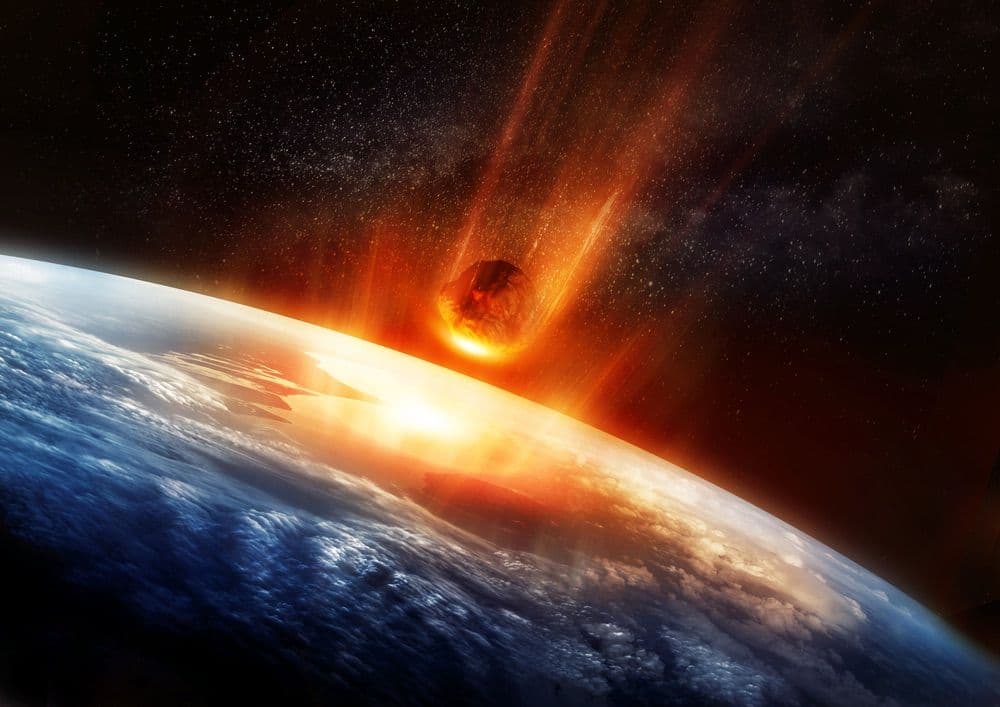
NASA's Center for Near-Earth Object Studies (CNEOS) Sentry system, leveraging advanced telescopes like Pan-STARRS and ATLAS, currently tracks no asteroids on collision courses with Earth in 2026 capable of a 10-kiloton-plus yield, anchoring the 82.5% "No" consensus on Polymarket. This reflects the rarity of such events—fewer than one per decade historically—combined with detection tech covering over 95% of kilometer-class threats and improving for smaller bolides via AI-driven surveys. Recent developments, including NASA's DART mission success in kinetic impact deflection and ongoing NEOWISE infrared scans revealing no hidden risks, further bolster trader confidence in negligible odds, with resolution hinging on verified CNEOS data through year-end.
Experimentelle KI-generierte Zusammenfassung mit Polymarket-Daten · AktualisiertGroßer Meteoreinschlag (10kt+) im Jahr 2026?
Großer Meteoreinschlag (10kt+) im Jahr 2026?
Ja
$137,748 Vol.
$137,748 Vol.
Ja
$137,748 Vol.
$137,748 Vol.
The object must be classified as a natural meteoroid; events involving artificial objects or reentry vehicles do not qualify.
The primary resolution source will be the NASA JPL Fireball and Bolide Data repository: https://cneos.jpl.nasa.gov/fireballs/. The relevant field for determining impact energy is the “Impact Energy (kt)” column. If this dataset has not been updated to include all relevant dates by February 28, 2027, or if the NASA JPL Fireball and Bolide Data repository becomes permanently unavailable, this market may resolve based on a consensus of credible sources including the European Space Agency (ESA), the International Asteroid Warning Network (IAWN), the U.S. Department of Defense, or credible reporting of a scientific consensus, such as a NASA press release.
Markt eröffnet: Dec 31, 2025, 1:18 PM ET
Resolver
0x65070BE91...The object must be classified as a natural meteoroid; events involving artificial objects or reentry vehicles do not qualify.
The primary resolution source will be the NASA JPL Fireball and Bolide Data repository: https://cneos.jpl.nasa.gov/fireballs/. The relevant field for determining impact energy is the “Impact Energy (kt)” column. If this dataset has not been updated to include all relevant dates by February 28, 2027, or if the NASA JPL Fireball and Bolide Data repository becomes permanently unavailable, this market may resolve based on a consensus of credible sources including the European Space Agency (ESA), the International Asteroid Warning Network (IAWN), the U.S. Department of Defense, or credible reporting of a scientific consensus, such as a NASA press release.
Resolver
0x65070BE91...NASA's Center for Near-Earth Object Studies (CNEOS) Sentry system, leveraging advanced telescopes like Pan-STARRS and ATLAS, currently tracks no asteroids on collision courses with Earth in 2026 capable of a 10-kiloton-plus yield, anchoring the 82.5% "No" consensus on Polymarket. This reflects the rarity of such events—fewer than one per decade historically—combined with detection tech covering over 95% of kilometer-class threats and improving for smaller bolides via AI-driven surveys. Recent developments, including NASA's DART mission success in kinetic impact deflection and ongoing NEOWISE infrared scans revealing no hidden risks, further bolster trader confidence in negligible odds, with resolution hinging on verified CNEOS data through year-end.
Experimentelle KI-generierte Zusammenfassung mit Polymarket-Daten · Aktualisiert
Vorsicht bei externen Links.
Vorsicht bei externen Links.
Häufig gestellte Fragen