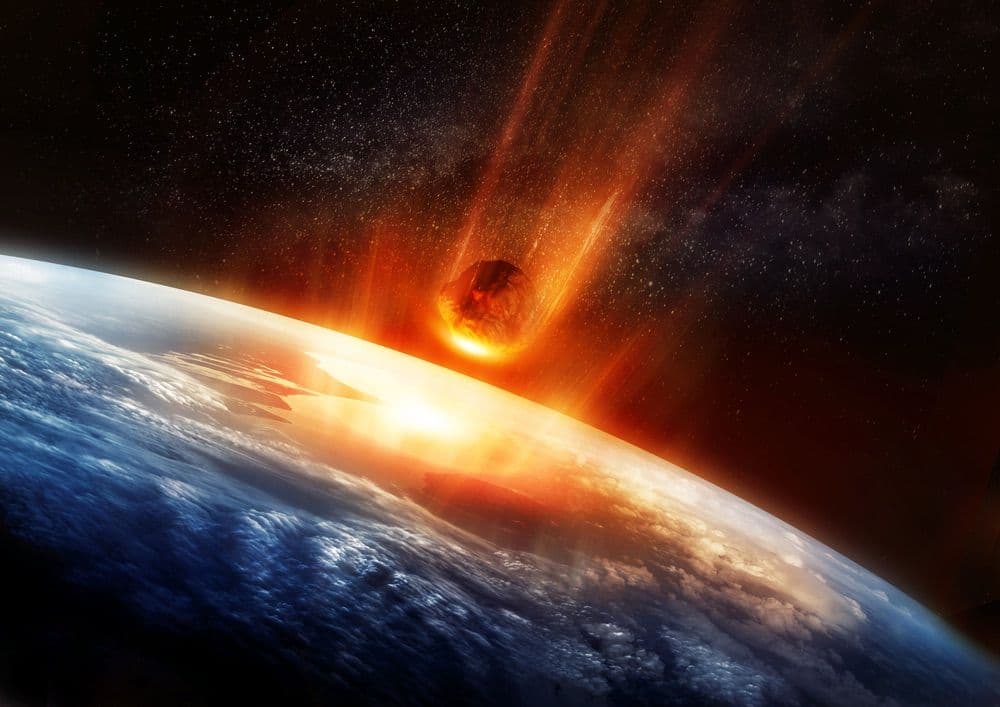
Trader consensus favoring "No" at 62.5% for a 5-kiloton TNT-equivalent meteor strike in 2026 reflects the low but non-negligible annual frequency of such bolides, as cataloged by NASA's Center for Near-Earth Object Studies (CNEOS) fireball data. Satellite detections reveal 1-3 events exceeding 5kt globally per year, like the 9.4kt Bering Sea airburst in January 2024, extrapolated from incomplete sky coverage and power-law size distributions where smaller impactors vastly outnumber large ones. No tracked near-Earth objects pose a collision risk that year per NASA's Sentry system, but unpredictable sub-30-meter meteoroids drive residual odds, tempered by historical baselines showing events rarer than daily micrometeorites yet more common than decade-scale megaton blasts. Upcoming NEO surveys may refine estimates.
Experimentelle KI-generierte Zusammenfassung mit Polymarket-Daten · Aktualisiert5kt Meteoriteneinschlag im Jahr 2026?
5kt Meteoriteneinschlag im Jahr 2026?
Ja
$270,839 Vol.
$270,839 Vol.
Ja
$270,839 Vol.
$270,839 Vol.
The object must be classified as a natural meteoroid; events involving artificial objects or reentry vehicles do not qualify.
The primary resolution source will be the NASA JPL Fireball and Bolide Data repository: https://cneos.jpl.nasa.gov/fireballs/. The relevant field for determining impact energy is the “Impact Energy (kt)” column. If this dataset has not been updated to include all relevant dates by February 28, 2027, or if the NASA JPL Fireball and Bolide Data repository becomes permanently unavailable, this market may resolve based on a consensus of credible sources including the European Space Agency (ESA), the International Asteroid Warning Network (IAWN), the U.S. Department of Defense, or credible reporting of a scientific consensus, such as a NASA press release.
Markt eröffnet: Dec 31, 2025, 12:04 PM ET
Resolver
0x65070BE91...The object must be classified as a natural meteoroid; events involving artificial objects or reentry vehicles do not qualify.
The primary resolution source will be the NASA JPL Fireball and Bolide Data repository: https://cneos.jpl.nasa.gov/fireballs/. The relevant field for determining impact energy is the “Impact Energy (kt)” column. If this dataset has not been updated to include all relevant dates by February 28, 2027, or if the NASA JPL Fireball and Bolide Data repository becomes permanently unavailable, this market may resolve based on a consensus of credible sources including the European Space Agency (ESA), the International Asteroid Warning Network (IAWN), the U.S. Department of Defense, or credible reporting of a scientific consensus, such as a NASA press release.
Resolver
0x65070BE91...Trader consensus favoring "No" at 62.5% for a 5-kiloton TNT-equivalent meteor strike in 2026 reflects the low but non-negligible annual frequency of such bolides, as cataloged by NASA's Center for Near-Earth Object Studies (CNEOS) fireball data. Satellite detections reveal 1-3 events exceeding 5kt globally per year, like the 9.4kt Bering Sea airburst in January 2024, extrapolated from incomplete sky coverage and power-law size distributions where smaller impactors vastly outnumber large ones. No tracked near-Earth objects pose a collision risk that year per NASA's Sentry system, but unpredictable sub-30-meter meteoroids drive residual odds, tempered by historical baselines showing events rarer than daily micrometeorites yet more common than decade-scale megaton blasts. Upcoming NEO surveys may refine estimates.
Experimentelle KI-generierte Zusammenfassung mit Polymarket-Daten · Aktualisiert
Vorsicht bei externen Links.
Häufig gestellte Fragen