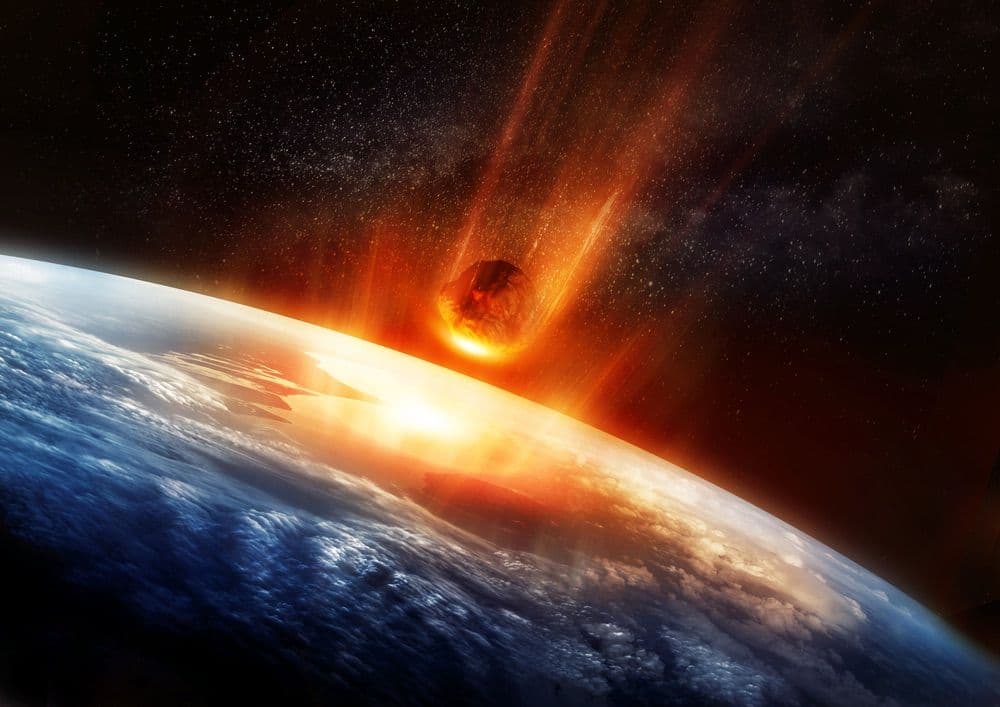
NASA's Center for Near-Earth Object Studies (CNEOS) Sentry system and ESA's risk list show no credible near-Earth objects (NEOs) on a collision course with Earth in 2026 capable of releasing 100 kilotons TNT-equivalent energy, with only two tiny asteroids—11m and 16m diameter—carrying negligible probabilities below 0.004%, far too small for such yield. This absence of tracked threats, combined with the historical rarity of 100kt+ bolides (roughly once every few years, like Chelyabinsk's 500kt in 2013), drives the 93.2% market-implied "No" odds, reflecting trader consensus on comprehensive sky surveys detecting most >10m impactors. No qualifying events occurred in Q1 2026 despite a surge in smaller fireballs (max 0.37kt). Realistic challenges include an undetected comet fragment or tiny NEO evading surveys, though continuous CNEOS monitoring and infrasound networks minimize this uncertainty.
基於Polymarket數據的AI實驗性摘要 · 更新於是
是
The object must be classified as a natural meteoroid; events involving artificial objects or reentry vehicles do not qualify.
The primary resolution source will be the NASA JPL Fireball and Bolide Data repository: https://cneos.jpl.nasa.gov/fireballs/. The relevant field for determining impact energy is the “Impact Energy (kt)” column. If this dataset has not been updated to include all relevant dates by February 28, 2027, or if the NASA JPL Fireball and Bolide Data repository becomes permanently unavailable, this market may resolve based on a consensus of credible sources including the European Space Agency (ESA), the International Asteroid Warning Network (IAWN), the U.S. Department of Defense, or credible reporting of a scientific consensus, such as a NASA press release.
市場開放時間: Jan 2, 2026, 2:23 PM ET
Resolver
0x65070BE91...The object must be classified as a natural meteoroid; events involving artificial objects or reentry vehicles do not qualify.
The primary resolution source will be the NASA JPL Fireball and Bolide Data repository: https://cneos.jpl.nasa.gov/fireballs/. The relevant field for determining impact energy is the “Impact Energy (kt)” column. If this dataset has not been updated to include all relevant dates by February 28, 2027, or if the NASA JPL Fireball and Bolide Data repository becomes permanently unavailable, this market may resolve based on a consensus of credible sources including the European Space Agency (ESA), the International Asteroid Warning Network (IAWN), the U.S. Department of Defense, or credible reporting of a scientific consensus, such as a NASA press release.
Resolver
0x65070BE91...NASA's Center for Near-Earth Object Studies (CNEOS) Sentry system and ESA's risk list show no credible near-Earth objects (NEOs) on a collision course with Earth in 2026 capable of releasing 100 kilotons TNT-equivalent energy, with only two tiny asteroids—11m and 16m diameter—carrying negligible probabilities below 0.004%, far too small for such yield. This absence of tracked threats, combined with the historical rarity of 100kt+ bolides (roughly once every few years, like Chelyabinsk's 500kt in 2013), drives the 93.2% market-implied "No" odds, reflecting trader consensus on comprehensive sky surveys detecting most >10m impactors. No qualifying events occurred in Q1 2026 despite a surge in smaller fireballs (max 0.37kt). Realistic challenges include an undetected comet fragment or tiny NEO evading surveys, though continuous CNEOS monitoring and infrasound networks minimize this uncertainty.
基於Polymarket數據的AI實驗性摘要 · 更新於
警惕外部連結哦。
警惕外部連結哦。
Frequently Asked Questions