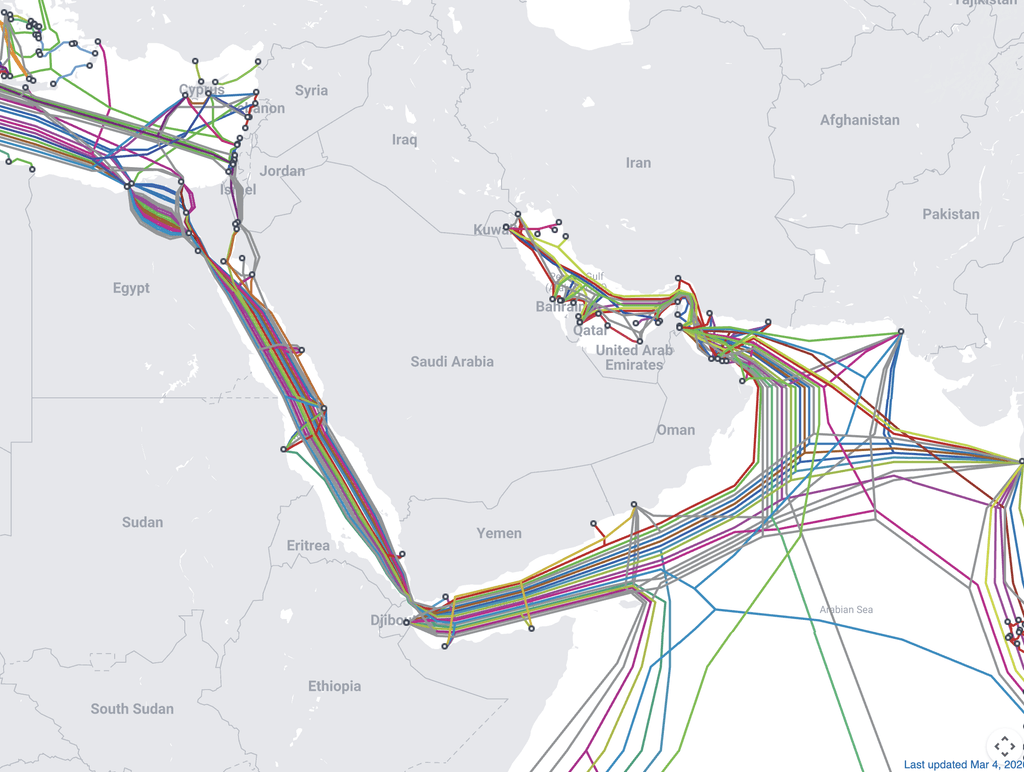
Trader consensus on Polymarket reflects 96.4% implied probability for "No" on Iran sabotaging undersea internet cables by April 30, driven by the absence of any verified actions despite repeated threats from Tehran amid the ongoing US-Iran conflict that began February 28. Iranian officials and IRGC statements since late March have warned of targeting cables in the Strait of Hormuz and Red Sea—carrying 95% of global data traffic—but no deliberate cuts have occurred, with disruptions limited to paused repairs and Houthi-related incidents. Heightened US, UK, and allied naval patrols deter overt sabotage, which risks severing Iran's own connectivity and provoking severe retaliation. With 12 days remaining, escalation via proxies, covert operations, or sudden Hormuz mining could shift odds, though mutual disruption and de-escalation signals maintain high confidence in non-occurrence.
Experimentelle KI-generierte Zusammenfassung mit Polymarket-Daten. Dies ist keine Handelsberatung und spielt keine Rolle bei der Auflösung dieses Marktes. · AktualisiertWird der Iran bis zum 30. April Unterwasser-Internetkabel sabotieren?
Wird der Iran bis zum 30. April Unterwasser-Internetkabel sabotieren?
Ja
$97,154 Vol.
$97,154 Vol.
Ja
$97,154 Vol.
$97,154 Vol.
Only actions that cause physical damage to the undersea internet cable infrastructure, e.g., physical sabotage, such as cutting, dragging, or explosive attacks, will be considered. Cyber attacks will not qualify, even if they have kinetic effects.
Qualifying incidents must occur in the region spanning the Persian Gulf, Strait of Hormuz, Gulf of Oman, Arabian Sea, Gulf of Aden, and Red Sea, including areas surrounding the Arabian Peninsula.
Attempted attacks that do not result in damage, or actions that are intercepted or fail to impact the cables, will not qualify for a "Yes" resolution.
Incidents which are broadly attributed to Iranian forces or Iranian-aligned groups will qualify regardless of the absence of definitive evidence or official Iranian denials.
The resolution source will be a consensus of credible reporting.
Markt eröffnet: Mar 23, 2026, 6:23 PM ET
Resolver
0x65070BE91...Only actions that cause physical damage to the undersea internet cable infrastructure, e.g., physical sabotage, such as cutting, dragging, or explosive attacks, will be considered. Cyber attacks will not qualify, even if they have kinetic effects.
Qualifying incidents must occur in the region spanning the Persian Gulf, Strait of Hormuz, Gulf of Oman, Arabian Sea, Gulf of Aden, and Red Sea, including areas surrounding the Arabian Peninsula.
Attempted attacks that do not result in damage, or actions that are intercepted or fail to impact the cables, will not qualify for a "Yes" resolution.
Incidents which are broadly attributed to Iranian forces or Iranian-aligned groups will qualify regardless of the absence of definitive evidence or official Iranian denials.
The resolution source will be a consensus of credible reporting.
Resolver
0x65070BE91...Trader consensus on Polymarket reflects 96.4% implied probability for "No" on Iran sabotaging undersea internet cables by April 30, driven by the absence of any verified actions despite repeated threats from Tehran amid the ongoing US-Iran conflict that began February 28. Iranian officials and IRGC statements since late March have warned of targeting cables in the Strait of Hormuz and Red Sea—carrying 95% of global data traffic—but no deliberate cuts have occurred, with disruptions limited to paused repairs and Houthi-related incidents. Heightened US, UK, and allied naval patrols deter overt sabotage, which risks severing Iran's own connectivity and provoking severe retaliation. With 12 days remaining, escalation via proxies, covert operations, or sudden Hormuz mining could shift odds, though mutual disruption and de-escalation signals maintain high confidence in non-occurrence.
Experimentelle KI-generierte Zusammenfassung mit Polymarket-Daten. Dies ist keine Handelsberatung und spielt keine Rolle bei der Auflösung dieses Marktes. · Aktualisiert
Vorsicht bei externen Links.
Vorsicht bei externen Links.
Häufig gestellte Fragen