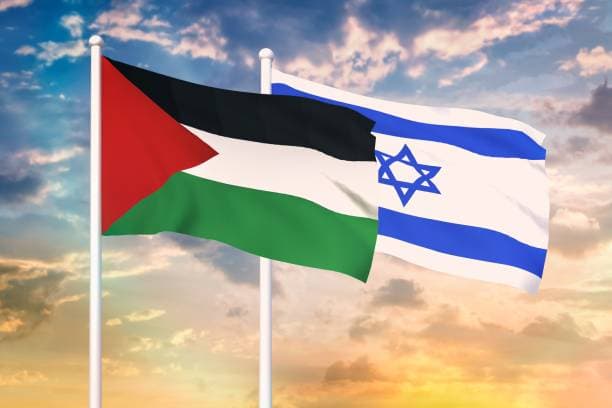
Market icon

Israel x Hamas Waffenruhe Phase II bis...?

Market icon

Israel x Hamas Waffenruhe Phase II bis...?

$2,694,825 Vol.

Mar 31, 2026
Polymarket

$2,694,825 Vol.

Polymarket

31. März 2026

$593,719 Vol.

2%

30. Juni

$444,066 Vol.

20%

On October 8, an agreement on an initial ceasefire (Phase 1) was announced, constituting a halt in fighting, a partial Israeli pullback to a “yellow line,” prisoner swaps, expanded aid, and the release of hostages. A second phase of the deal, yet to be negotiated, is expected to address further Israeli withdrawal, Hamas’s disarmament, and the establishment of new security and governance arrangements in Gaza. This market will resolve to "Yes" if an official agreement for the second phase of the Israel–Hamas ceasefire, defined as a publicly announced mutual agreement, is reached between Israel and Hamas by March 31, 2026, 11:59 PM ET. Otherwise, this market will resolve to “No”. If the agreement is officially reached before the resolution date, this market will resolve to "Yes," regardless of if/when the agreement goes into effect. For purposes of this market, a “second phase” ceasefire agreement refers to a deal publicly acknowledged by both Israel and Hamas (directly or via recognized mediators such as the U.S., Egypt, or Qatar) that goes beyond the Phase 1 initial truce and includes commitments towards a comprehensive or “full” ceasefire. Any agreement that is publicly described by the parties, or by mediators on their behalf, as the completion of “Phase 2” of the ceasefire will qualify, regardless of whether it includes further Israeli withdrawals beyond the “yellow line,” or agreements by Hamas to disarm. An extension or continuation of the Phase 1 arrangement alone will not qualify. This market's resolution will be based on official announcements from both Israel and Hamas, however a wide consensus of credible media reporting will also qualify.On October 8, an agreement on an initial ceasefire (Phase 1) was announced, constituting a halt in fighting, a partial Israeli pullback to a “yellow line,” prisoner swaps, expanded aid, and the release of hostages. A second phase of the deal, yet to be negotiated, is expected to address further Israeli withdrawal, Hamas’s disarmament, and the establishment of new security and governance arrangements in Gaza. This market will resolve to "Yes" if an official agreement for the second phase of the Israel–Hamas ceasefire, defined as a publicly announced mutual agreement, is reached between Israel and Hamas by June 30, 2026, 11:59 PM ET. Otherwise, this market will resolve to “No”. If the agreement is officially reached before the resolution date, this market will resolve to "Yes," regardless of if/when the agreement goes into effect. For purposes of this market, a “second phase” ceasefire agreement refers to a deal publicly acknowledged by both Israel and Hamas (directly or via recognized mediators such as the U.S., Egypt, or Qatar) that goes beyond the Phase 1 initial truce and includes commitments towards a comprehensive or “full” ceasefire. Any agreement that is publicly described by the parties, or by mediators on their behalf, as the completion of “Phase 2” of the ceasefire will qualify, regardless of whether it includes further Israeli withdrawals beyond the “yellow line,” or agreements by Hamas to disarm. An extension or continuation of the Phase 1 arrangement alone will not qualify. This market's resolution will be based on official announcements from both Israel and Hamas, however a wide consensus of credible media reporting will also qualify.On October 8, an agreement on an initial ceasefire (Phase 1) was announced, constituting a halt in fighting, a partial Israeli pullback to a “yellow line,” prisoner swaps, expanded aid, and the release of hostages. A second phase of the deal, yet to be negotiated, is expected to address further Israeli withdrawal, Hamas’s disarmament, and the establishment of new security and governance arrangements in Gaza. This market will resolve to "Yes" if an official agreement for the second phase of the Israel–Hamas ceasefire, defined as a publicly announced mutual agreement, is reached between Israel and Hamas by October 31, 2025, 11:59 PM ET. Otherwise, this market will resolve to “No”. If the agreement is officially reached before the resolution date, this market will resolve to "Yes," regardless of if/when the agreement goes into effect. For purposes of this market, a “second phase” ceasefire agreement refers to a deal publicly acknowledged by both Israel and Hamas (directly or via recognized mediators such as the U.S., Egypt, or Qatar) that goes beyond the Phase 1 initial truce and includes commitments towards a comprehensive or “full” ceasefire. Any agreement that is publicly described by the parties, or by mediators on their behalf, as the completion of “Phase 2” of the ceasefire will qualify, regardless of whether it includes further Israeli withdrawals beyond the “yellow line,” or agreements by Hamas to disarm. An extension or continuation of the Phase 1 arrangement alone will not qualify. This market's resolution will be based on official announcements from both Israel and Hamas, however a wide consensus of credible media reporting will also qualify.On October 8, an agreement on an initial ceasefire (Phase 1) was announced, constituting a halt in fighting, a partial Israeli pullback to a “yellow line,” prisoner swaps, expanded aid, and the release of hostages. A second phase of the deal, yet to be negotiated, is expected to address further Israeli withdrawal, Hamas’s disarmament, and the establishment of new security and governance arrangements in Gaza. This market will resolve to "Yes" if an official agreement for the second phase of the Israel–Hamas ceasefire, defined as a publicly announced mutual agreement, is reached between Israel and Hamas by November 30, 2025, 11:59 PM ET. Otherwise, this market will resolve to “No”. If the agreement is officially reached before the resolution date, this market will resolve to "Yes," regardless of if/when the agreement goes into effect. For purposes of this market, a “second phase” ceasefire agreement refers to a deal publicly acknowledged by both Israel and Hamas (directly or via recognized mediators such as the U.S., Egypt, or Qatar) that goes beyond the Phase 1 initial truce and includes commitments towards a comprehensive or “full” ceasefire. Any agreement that is publicly described by the parties, or by mediators on their behalf, as the completion of “Phase 2” of the ceasefire will qualify, regardless of whether it includes further Israeli withdrawals beyond the “yellow line,” or agreements by Hamas to disarm. An extension or continuation of the Phase 1 arrangement alone will not qualify. This market's resolution will be based on official announcements from both Israel and Hamas, however a wide consensus of credible media reporting will also qualify.On October 8, an agreement on an initial ceasefire (Phase 1) was announced, constituting a halt in fighting, a partial Israeli pullback to a “yellow line,” prisoner swaps, expanded aid, and the release of hostages. A second phase of the deal, yet to be negotiated, is expected to address further Israeli withdrawal, Hamas’s disarmament, and the establishment of new security and governance arrangements in Gaza. This market will resolve to "Yes" if an official agreement for the second phase of the Israel–Hamas ceasefire, defined as a publicly announced mutual agreement, is reached between Israel and Hamas by December 31, 2025, 11:59 PM ET. Otherwise, this market will resolve to “No”. If the agreement is officially reached before the resolution date, this market will resolve to "Yes," regardless of if/when the agreement goes into effect. For purposes of this market, a “second phase” ceasefire agreement refers to a deal publicly acknowledged by both Israel and Hamas (directly or via recognized mediators such as the U.S., Egypt, or Qatar) that goes beyond the Phase 1 initial truce and includes commitments towards a comprehensive or “full” ceasefire. Any agreement that is publicly described by the parties, or by mediators on their behalf, as the completion of “Phase 2” of the ceasefire will qualify, regardless of whether it includes further Israeli withdrawals beyond the “yellow line,” or agreements by Hamas to disarm. An extension or continuation of the Phase 1 arrangement alone will not qualify. This market's resolution will be based on official announcements from both Israel and Hamas, however a wide consensus of credible media reporting will also qualify.On October 8, an agreement on an initial ceasefire (Phase 1) was announced, constituting a halt in fighting, a partial Israeli pullback to a “yellow line,” prisoner swaps, expanded aid, and the release of hostages. A second phase of the deal, yet to be negotiated, is expected to address further Israeli withdrawal, Hamas’s disarmament, and the establishment of new security and governance arrangements in Gaza. This market will resolve to "Yes" if an official agreement for the second phase of the Israel–Hamas ceasefire, defined as a publicly announced mutual agreement, is reached between Israel and Hamas by January 31, 2026, 11:59 PM ET. Otherwise, this market will resolve to “No”. If the agreement is officially reached before the resolution date, this market will resolve to "Yes," regardless of if/when the agreement goes into effect. For purposes of this market, a “second phase” ceasefire agreement refers to a deal publicly acknowledged by both Israel and Hamas (directly or via recognized mediators such as the U.S., Egypt, or Qatar) that goes beyond the Phase 1 initial truce and includes commitments towards a comprehensive or “full” ceasefire. Any agreement that is publicly described by the parties, or by mediators on their behalf, as the completion of “Phase 2” of the ceasefire will qualify, regardless of whether it includes further Israeli withdrawals beyond the “yellow line,” or agreements by Hamas to disarm. An extension or continuation of the Phase 1 arrangement alone will not qualify. This market's resolution will be based on official announcements from both Israel and Hamas, however a wide consensus of credible media reporting will also qualify.Indirect ceasefire talks between Israel and Hamas, mediated by Qatar, Egypt, and the United States, have stalled on Phase II terms, which would extend beyond initial hostage releases to include full Israeli troop withdrawal from Gaza, demilitarization of Hamas, and a permanent end to hostilities. The dominant recent driver remains Israel's rejection last week of Hamas's latest counterproposal demanding an unconditional ceasefire, amid intensified military operations in Khan Younis and northern Gaza, where airstrikes killed dozens over the past 48 hours. Netanyahu's insistence on dismantling Hamas capabilities contrasts with Palestinian demands for sovereignty guarantees, prolonging the deadlock. Upcoming Doha negotiations and potential US diplomatic pressure represent key catalysts that could influence trader assessments of near-term resolution prospects.

Indirect ceasefire talks between Israel and Hamas, mediated by Qatar, Egypt, and the United States, have stalled on Phase II terms, which would extend beyond initial hostage releases to include full Israeli troop withdrawal from Gaza, demilitarization of Hamas, and a permanent end to hostilities. The dominant recent driver remains Israel's rejection last week of Hamas's latest counterproposal demanding an unconditional ceasefire, amid intensified military operations in Khan Younis and northern Gaza, where airstrikes killed dozens over the past 48 hours. Netanyahu's insistence on dismantling Hamas capabilities contrasts with Palestinian demands for sovereignty guarantees, prolonging the deadlock. Upcoming Doha negotiations and potential US diplomatic pressure represent key catalysts that could influence trader assessments of near-term resolution prospects.

Experimentelle KI-generierte Zusammenfassung mit Polymarket-Daten · Aktualisiert
On October 8, an agreement on an initial ceasefire (Phase 1) was announced, constituting a halt in fighting, a partial Israeli pullback to a “yellow line,” prisoner swaps, expanded aid, and the release of hostages. A second phase of the deal, yet to be negotiated, is expected to address further Israeli withdrawal, Hamas’s disarmament, and the establishment of new security and governance arrangements in Gaza. This market will resolve to "Yes" if an official agreement for the second phase of the Israel–Hamas ceasefire, defined as a publicly announced mutual agreement, is reached between Israel and Hamas by March 31, 2026, 11:59 PM ET. Otherwise, this market will resolve to “No”. If the agreement is officially reached before the resolution date, this market will resolve to "Yes," regardless of if/when the agreement goes into effect. For purposes of this market, a “second phase” ceasefire agreement refers to a deal publicly acknowledged by both Israel and Hamas (directly or via recognized mediators such as the U.S., Egypt, or Qatar) that goes beyond the Phase 1 initial truce and includes commitments towards a comprehensive or “full” ceasefire. Any agreement that is publicly described by the parties, or by mediators on their behalf, as the completion of “Phase 2” of the ceasefire will qualify, regardless of whether it includes further Israeli withdrawals beyond the “yellow line,” or agreements by Hamas to disarm. An extension or continuation of the Phase 1 arrangement alone will not qualify. This market's resolution will be based on official announcements from both Israel and Hamas, however a wide consensus of credible media reporting will also qualify.On October 8, an agreement on an initial ceasefire (Phase 1) was announced, constituting a halt in fighting, a partial Israeli pullback to a “yellow line,” prisoner swaps, expanded aid, and the release of hostages. A second phase of the deal, yet to be negotiated, is expected to address further Israeli withdrawal, Hamas’s disarmament, and the establishment of new security and governance arrangements in Gaza. This market will resolve to "Yes" if an official agreement for the second phase of the Israel–Hamas ceasefire, defined as a publicly announced mutual agreement, is reached between Israel and Hamas by June 30, 2026, 11:59 PM ET. Otherwise, this market will resolve to “No”. If the agreement is officially reached before the resolution date, this market will resolve to "Yes," regardless of if/when the agreement goes into effect. For purposes of this market, a “second phase” ceasefire agreement refers to a deal publicly acknowledged by both Israel and Hamas (directly or via recognized mediators such as the U.S., Egypt, or Qatar) that goes beyond the Phase 1 initial truce and includes commitments towards a comprehensive or “full” ceasefire. Any agreement that is publicly described by the parties, or by mediators on their behalf, as the completion of “Phase 2” of the ceasefire will qualify, regardless of whether it includes further Israeli withdrawals beyond the “yellow line,” or agreements by Hamas to disarm. An extension or continuation of the Phase 1 arrangement alone will not qualify. This market's resolution will be based on official announcements from both Israel and Hamas, however a wide consensus of credible media reporting will also qualify.On October 8, an agreement on an initial ceasefire (Phase 1) was announced, constituting a halt in fighting, a partial Israeli pullback to a “yellow line,” prisoner swaps, expanded aid, and the release of hostages. A second phase of the deal, yet to be negotiated, is expected to address further Israeli withdrawal, Hamas’s disarmament, and the establishment of new security and governance arrangements in Gaza. This market will resolve to "Yes" if an official agreement for the second phase of the Israel–Hamas ceasefire, defined as a publicly announced mutual agreement, is reached between Israel and Hamas by October 31, 2025, 11:59 PM ET. Otherwise, this market will resolve to “No”. If the agreement is officially reached before the resolution date, this market will resolve to "Yes," regardless of if/when the agreement goes into effect. For purposes of this market, a “second phase” ceasefire agreement refers to a deal publicly acknowledged by both Israel and Hamas (directly or via recognized mediators such as the U.S., Egypt, or Qatar) that goes beyond the Phase 1 initial truce and includes commitments towards a comprehensive or “full” ceasefire. Any agreement that is publicly described by the parties, or by mediators on their behalf, as the completion of “Phase 2” of the ceasefire will qualify, regardless of whether it includes further Israeli withdrawals beyond the “yellow line,” or agreements by Hamas to disarm. An extension or continuation of the Phase 1 arrangement alone will not qualify. This market's resolution will be based on official announcements from both Israel and Hamas, however a wide consensus of credible media reporting will also qualify.On October 8, an agreement on an initial ceasefire (Phase 1) was announced, constituting a halt in fighting, a partial Israeli pullback to a “yellow line,” prisoner swaps, expanded aid, and the release of hostages. A second phase of the deal, yet to be negotiated, is expected to address further Israeli withdrawal, Hamas’s disarmament, and the establishment of new security and governance arrangements in Gaza. This market will resolve to "Yes" if an official agreement for the second phase of the Israel–Hamas ceasefire, defined as a publicly announced mutual agreement, is reached between Israel and Hamas by November 30, 2025, 11:59 PM ET. Otherwise, this market will resolve to “No”. If the agreement is officially reached before the resolution date, this market will resolve to "Yes," regardless of if/when the agreement goes into effect. For purposes of this market, a “second phase” ceasefire agreement refers to a deal publicly acknowledged by both Israel and Hamas (directly or via recognized mediators such as the U.S., Egypt, or Qatar) that goes beyond the Phase 1 initial truce and includes commitments towards a comprehensive or “full” ceasefire. Any agreement that is publicly described by the parties, or by mediators on their behalf, as the completion of “Phase 2” of the ceasefire will qualify, regardless of whether it includes further Israeli withdrawals beyond the “yellow line,” or agreements by Hamas to disarm. An extension or continuation of the Phase 1 arrangement alone will not qualify. This market's resolution will be based on official announcements from both Israel and Hamas, however a wide consensus of credible media reporting will also qualify.On October 8, an agreement on an initial ceasefire (Phase 1) was announced, constituting a halt in fighting, a partial Israeli pullback to a “yellow line,” prisoner swaps, expanded aid, and the release of hostages. A second phase of the deal, yet to be negotiated, is expected to address further Israeli withdrawal, Hamas’s disarmament, and the establishment of new security and governance arrangements in Gaza. This market will resolve to "Yes" if an official agreement for the second phase of the Israel–Hamas ceasefire, defined as a publicly announced mutual agreement, is reached between Israel and Hamas by December 31, 2025, 11:59 PM ET. Otherwise, this market will resolve to “No”. If the agreement is officially reached before the resolution date, this market will resolve to "Yes," regardless of if/when the agreement goes into effect. For purposes of this market, a “second phase” ceasefire agreement refers to a deal publicly acknowledged by both Israel and Hamas (directly or via recognized mediators such as the U.S., Egypt, or Qatar) that goes beyond the Phase 1 initial truce and includes commitments towards a comprehensive or “full” ceasefire. Any agreement that is publicly described by the parties, or by mediators on their behalf, as the completion of “Phase 2” of the ceasefire will qualify, regardless of whether it includes further Israeli withdrawals beyond the “yellow line,” or agreements by Hamas to disarm. An extension or continuation of the Phase 1 arrangement alone will not qualify. This market's resolution will be based on official announcements from both Israel and Hamas, however a wide consensus of credible media reporting will also qualify.On October 8, an agreement on an initial ceasefire (Phase 1) was announced, constituting a halt in fighting, a partial Israeli pullback to a “yellow line,” prisoner swaps, expanded aid, and the release of hostages. A second phase of the deal, yet to be negotiated, is expected to address further Israeli withdrawal, Hamas’s disarmament, and the establishment of new security and governance arrangements in Gaza. This market will resolve to "Yes" if an official agreement for the second phase of the Israel–Hamas ceasefire, defined as a publicly announced mutual agreement, is reached between Israel and Hamas by January 31, 2026, 11:59 PM ET. Otherwise, this market will resolve to “No”. If the agreement is officially reached before the resolution date, this market will resolve to "Yes," regardless of if/when the agreement goes into effect. For purposes of this market, a “second phase” ceasefire agreement refers to a deal publicly acknowledged by both Israel and Hamas (directly or via recognized mediators such as the U.S., Egypt, or Qatar) that goes beyond the Phase 1 initial truce and includes commitments towards a comprehensive or “full” ceasefire. Any agreement that is publicly described by the parties, or by mediators on their behalf, as the completion of “Phase 2” of the ceasefire will qualify, regardless of whether it includes further Israeli withdrawals beyond the “yellow line,” or agreements by Hamas to disarm. An extension or continuation of the Phase 1 arrangement alone will not qualify. This market's resolution will be based on official announcements from both Israel and Hamas, however a wide consensus of credible media reporting will also qualify.Indirect ceasefire talks between Israel and Hamas, mediated by Qatar, Egypt, and the United States, have stalled on Phase II terms, which would extend beyond initial hostage releases to include full Israeli troop withdrawal from Gaza, demilitarization of Hamas, and a permanent end to hostilities. The dominant recent driver remains Israel's rejection last week of Hamas's latest counterproposal demanding an unconditional ceasefire, amid intensified military operations in Khan Younis and northern Gaza, where airstrikes killed dozens over the past 48 hours. Netanyahu's insistence on dismantling Hamas capabilities contrasts with Palestinian demands for sovereignty guarantees, prolonging the deadlock. Upcoming Doha negotiations and potential US diplomatic pressure represent key catalysts that could influence trader assessments of near-term resolution prospects.

Indirect ceasefire talks between Israel and Hamas, mediated by Qatar, Egypt, and the United States, have stalled on Phase II terms, which would extend beyond initial hostage releases to include full Israeli troop withdrawal from Gaza, demilitarization of Hamas, and a permanent end to hostilities. The dominant recent driver remains Israel's rejection last week of Hamas's latest counterproposal demanding an unconditional ceasefire, amid intensified military operations in Khan Younis and northern Gaza, where airstrikes killed dozens over the past 48 hours. Netanyahu's insistence on dismantling Hamas capabilities contrasts with Palestinian demands for sovereignty guarantees, prolonging the deadlock. Upcoming Doha negotiations and potential US diplomatic pressure represent key catalysts that could influence trader assessments of near-term resolution prospects.

Experimentelle KI-generierte Zusammenfassung mit Polymarket-Daten · Aktualisiert

Vorsicht bei externen Links.

Häufig gestellte Fragen

„Israel x Hamas Waffenruhe Phase II bis...?" ist ein Prognosemarkt auf Polymarket mit 6 möglichen Ergebnissen, bei dem Händler Anteile auf Basis ihrer Einschätzung kaufen und verkaufen. Das aktuell führende Ergebnis ist „30. Juni" mit 20%, gefolgt von „31. März 2026" mit 2%. Die Preise spiegeln Echtzeit-Wahrscheinlichkeiten der Community wider. Ein Anteilspreis von 20¢ bedeutet, dass der Markt diesem Ergebnis eine Wahrscheinlichkeit von 20% zuweist. Diese Quoten ändern sich laufend, wenn Händler auf neue Entwicklungen reagieren. Anteile am richtigen Ergebnis können bei Marktauflösung für jeweils $1 eingelöst werden.

Stand heute hat „Israel x Hamas Waffenruhe Phase II bis...?" ein Gesamthandelsvolumen von $2.7 million generiert, seit der Markt am Oct 9, 2025 gestartet wurde. Dieses Aktivitätsniveau spiegelt starkes Engagement der Polymarket-Community wider und stellt sicher, dass die aktuellen Quoten von einem breiten Pool an Marktteilnehmern geprägt werden. Sie können Live-Preisbewegungen verfolgen und direkt auf dieser Seite auf jedes Ergebnis handeln.

Um auf „Israel x Hamas Waffenruhe Phase II bis...?" zu handeln, durchsuchen Sie die 6 verfügbaren Ergebnisse auf dieser Seite. Jedes Ergebnis zeigt einen aktuellen Preis, der die implizierte Wahrscheinlichkeit des Marktes darstellt. Um eine Position einzunehmen, wählen Sie das Ergebnis, das Sie für am wahrscheinlichsten halten, wählen Sie „Ja" um dafür oder „Nein" um dagegen zu handeln, geben Sie Ihren Betrag ein und klicken Sie auf „Handeln". Liegt Ihr gewähltes Ergebnis bei Marktauflösung richtig, zahlen Ihre „Ja"-Anteile jeweils $1 aus. Liegt es falsch, zahlen sie $0. Sie können Ihre Anteile auch jederzeit vor der Auflösung verkaufen.

Der aktuelle Favorit für „Israel x Hamas Waffenruhe Phase II bis...?" ist „30. Juni" mit 20%, was bedeutet, dass der Markt diesem Ergebnis eine Wahrscheinlichkeit von 20% zuweist. Das nächstliegende Ergebnis ist „31. März 2026" mit 2%. Diese Quoten werden in Echtzeit aktualisiert, wenn Händler Anteile kaufen und verkaufen. Schauen Sie regelmäßig vorbei oder speichern Sie diese Seite als Lesezeichen.

Die Auflösungsregeln für „Israel x Hamas Waffenruhe Phase II bis...?" definieren genau, was passieren muss, damit jedes Ergebnis als Gewinner erklärt wird – einschließlich der offiziellen Datenquellen zur Bestimmung des Ergebnisses. Sie können die vollständigen Auflösungskriterien im Abschnitt „Regeln" auf dieser Seite über den Kommentaren einsehen. Wir empfehlen, die Regeln vor dem Handeln sorgfältig zu lesen, da sie die genauen Bedingungen, Sonderfälle und Quellen festlegen.