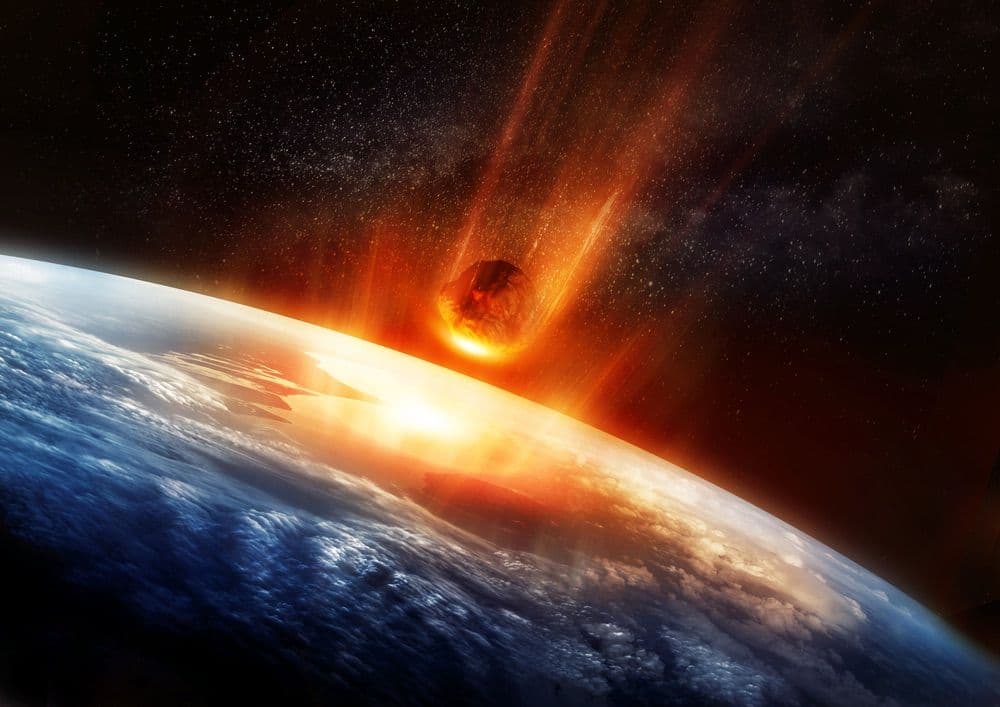
NASA’s Center for Near-Earth Object Studies and the Sentry impact-monitoring system report no known asteroids on collision trajectories with Earth in 2026, consistent with the absence of objects large enough to deliver 100 kilotons of kinetic energy. Comprehensive sky surveys have cataloged most near-Earth objects above roughly 140 meters, while smaller impactors capable of airbursts or ground strikes remain statistically rare on annual timescales. Continuous orbital refinements and new detections have further reduced residual uncertainty. A challenge could arise only from a previously undetected small body discovered weeks or days before potential impact, though current survey cadence makes such an event unlikely within the market’s timeframe.
Polymarket डेटा का संदर्भ देने वाला प्रयोगात्मक AI-जनरेटेड सारांश। यह ट्रेडिंग सलाह नहीं है और इस बाज़ार के समाधान में कोई भूमिका नहीं निभाता। · अपडेट किया गया100kt meteor strike in 2026?
100kt meteor strike in 2026?
The object must be classified as a natural meteoroid; events involving artificial objects or reentry vehicles do not qualify.
The primary resolution source will be the NASA JPL Fireball and Bolide Data repository: https://cneos.jpl.nasa.gov/fireballs/. The relevant field for determining impact energy is the “Impact Energy (kt)” column. If this dataset has not been updated to include all relevant dates by February 28, 2027, or if the NASA JPL Fireball and Bolide Data repository becomes permanently unavailable, this market may resolve based on a consensus of credible sources including the European Space Agency (ESA), the International Asteroid Warning Network (IAWN), the U.S. Department of Defense, or credible reporting of a scientific consensus, such as a NASA press release.
बाज़ार खुला: Jan 2, 2026, 2:23 PM ET
Resolver
0x65070BE91...The object must be classified as a natural meteoroid; events involving artificial objects or reentry vehicles do not qualify.
The primary resolution source will be the NASA JPL Fireball and Bolide Data repository: https://cneos.jpl.nasa.gov/fireballs/. The relevant field for determining impact energy is the “Impact Energy (kt)” column. If this dataset has not been updated to include all relevant dates by February 28, 2027, or if the NASA JPL Fireball and Bolide Data repository becomes permanently unavailable, this market may resolve based on a consensus of credible sources including the European Space Agency (ESA), the International Asteroid Warning Network (IAWN), the U.S. Department of Defense, or credible reporting of a scientific consensus, such as a NASA press release.
Resolver
0x65070BE91...NASA’s Center for Near-Earth Object Studies and the Sentry impact-monitoring system report no known asteroids on collision trajectories with Earth in 2026, consistent with the absence of objects large enough to deliver 100 kilotons of kinetic energy. Comprehensive sky surveys have cataloged most near-Earth objects above roughly 140 meters, while smaller impactors capable of airbursts or ground strikes remain statistically rare on annual timescales. Continuous orbital refinements and new detections have further reduced residual uncertainty. A challenge could arise only from a previously undetected small body discovered weeks or days before potential impact, though current survey cadence makes such an event unlikely within the market’s timeframe.
Polymarket डेटा का संदर्भ देने वाला प्रयोगात्मक AI-जनरेटेड सारांश। यह ट्रेडिंग सलाह नहीं है और इस बाज़ार के समाधान में कोई भूमिका नहीं निभाता। · अपडेट किया गया
बाहरी लिंक से सावधान रहें।
बाहरी लिंक से सावधान रहें।
अक्सर पूछे जाने वाले प्रश्न